
The Misgendering Machines: Why AI Can't "Compute" Gender
8252_The Misgendering Machines TransHCI Implications of Automatic Gender Recognition.
The paper presents a critical socio-technical analysis of Automatic Gender Recognition (AGR) technologies, revealing how they algorithmically enforce a binary and trans-exclusive model of gender. By auditing 58 pattern recognition papers and 12 HCI studies, it demonstrates that current AI systems fail to account for transgender identities, leading to significant ethical and safety risks.
TL;DR
Automatic Gender Recognition (AGR) is widely touted as a tool for "smart" advertising and security. However, this paper by Os Keyes proves that AGR is not just technically flawed—it is ideologically weaponized. By analyzing decades of AI research, the paper reveals that these systems are hardcoded to ignore transgender existence, effectively acting as "misgendering machines" that automate social exclusion.
Contextualizing the "Binary" Bias
In the world of Computer Vision, gender is often treated like a simple classification task—no different than distinguishing a cat from a dog. But gender is not a physiological constant; it is a complex social performance.
The author identifies that the field of Human-Computer Interaction (HCI) and Machine Learning (ML) has fallen into a trap of Physiological Essentialism. This is the belief that gender is written into your bone structure or skin texture, an assumption that erases millions of trans and non-binary people.
Methodology: Auditioning the Algorithms
The study performed a deep dive into the "top 7" pattern recognition venues, coding 58 papers to see how they "operationalized" gender. The criteria were simple:
- Binary: Does the paper assume only "man" and "woman" exist?
- Immutable: Does it assume gender can never change?
- Physiological: Does it believe gender is purely biological?
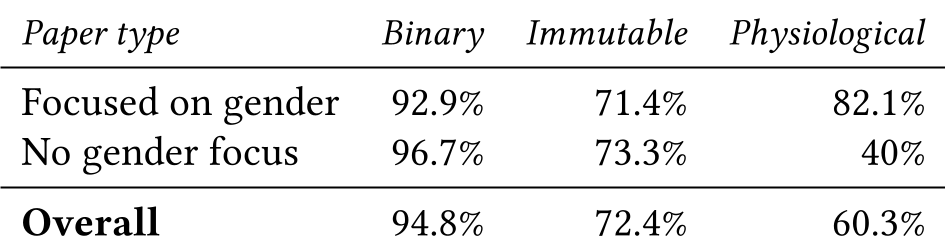 Table 3: Findings reveal a staggering 94.8% of papers adhere to a binary model.
The "Broken" Logic of AGR
The research highlights that while AI experts are getting better at "learning" features, they are failing "Gender 101." Many papers even group gender with "race" and "age" as "biological traits," ignoring the social construction of these categories.
The danger isn't just a "wrong label." The author points to proposed use-cases like Automated Bathroom Access Control. If an algorithm flags a trans person as "incorrectly gendered," it doesn't just produce an error; it triggers a security alert, potentially leading to police involvement and physical violence.
Findings in HCI: The Silence of the Experts
Shockingly, the author found that HCI researchers who use AGR (like the Face++ API) rarely question the tool. They report "95% accuracy" without ever checking if that accuracy holds for trans users. This "silence" in academia reinforces the erasure of trans needs in product design.
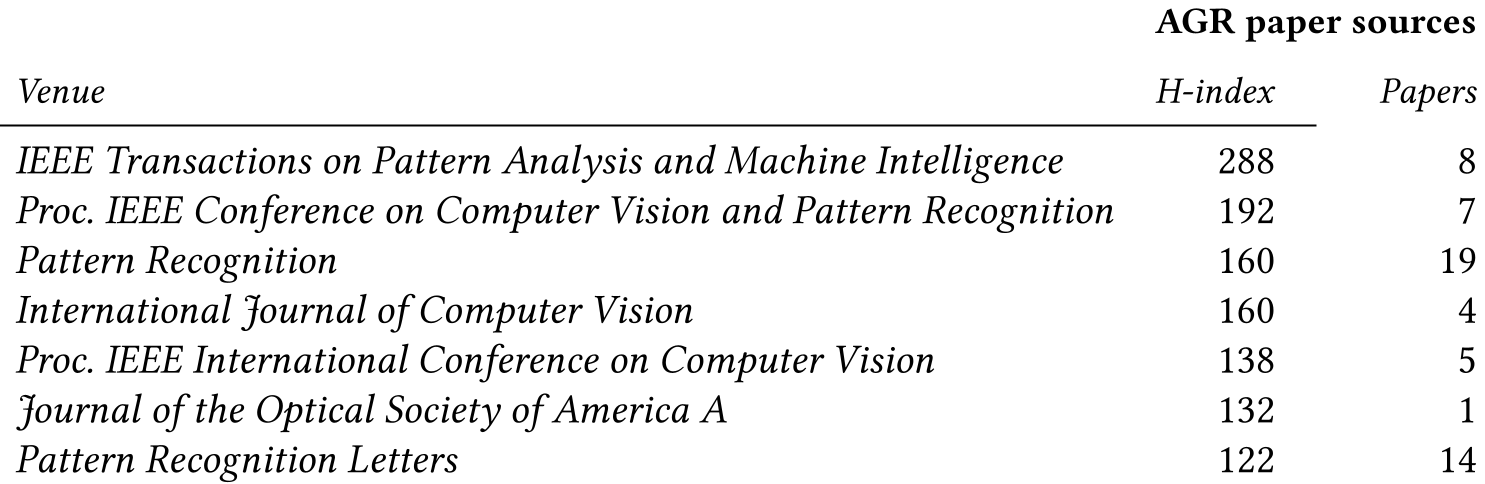 Table 1: The venues surveyed represent the "gold standard" of AI research, yet they consistently host trans-exclusive work.
Critical Insight: Can We Fix AGR?
The most provocative takeaway from this work is that AGR cannot be "fixed."
You cannot simply add trans people to a training dataset to solve the problem. Why? Because the very premise of AGR—that an external observer (an algorithm) can define your gender better than you can—is fundamentally anti-trans. Transitioning is an act of reclaiming self-definition; an AI that "assigns" you a category based on your jawline is a direct reversal of that autonomy.
Conclusion and Future Directions
The author calls for a "hermeneutics of suspicion." We must stop using AGR for:
- Market Analysis: Use behavior/interest-based tracking instead.
- Access Control: Eliminate gendered surveillance entirely.
- Research: Rely on self-disclosed gender rather than facial inference.
If we want to build a future where technology empowers everyone, we must first dismantle the "Misgendering Machines" that we’ve built into our infrastructure.
Summary by Senior Academic Tech Editor. This work serves as a foundational critique of algorithmic bias and trans-competent interaction design.