
Mixsourcing: Bridging the Gap Between Mechanical Crowdsourcing and Creative Remixing
Mixsourcing: a remix framework as a form of crowdsourcing
The paper introduces "Mixsourcing," a novel crowdsourcing framework that leverages remixing as a primary modality for creative collaboration. By combining the structured task assignment of traditional crowdsourcing with the expressive freedom of peer-production, the authors developed and tested a prototype system called "Turn This Into That" to facilitate cross-medium creative exchanges.
TL;DR
"Mixsourcing" is a hybrid framework that transforms remixing into a viable crowdsourcing modality. Unlike platforms that treat participants as "human processors," Mixsourcing encourages individual expression and social connection. Through a prototype called "Turn This Into That," the authors demonstrate that creative work can be successfully crowdsourced by using specific "creative triggers" and social accountability rather than financial incentives.
Context: The Sterility of Traditional Crowdsourcing
Crowdsourcing has long been synonymous with Amazon Mechanical Turk—a world of micro-tasks where "creativity" is often a bug, not a feature. Even when utilized for art (like the Johnny Cash Project), individual contributors are often reduced to a single frame in a video, their unique artistic intent lost in the "undifferentiated mass."
The authors point out a critical gap: Remixing (video mashups, memes) is a thriving form of organic peer-production, but it lacks the structure and consistency of crowdsourcing. Meanwhile, Crowdsourcing lacks the spark and community of remixing.
The Mixsourcing Framework: Why Social Ties Matter
The core of the paper lies in the shift from Instruction to Inspiration. The authors conducted a two-phase pilot that revealed a striking truth about human motivation:
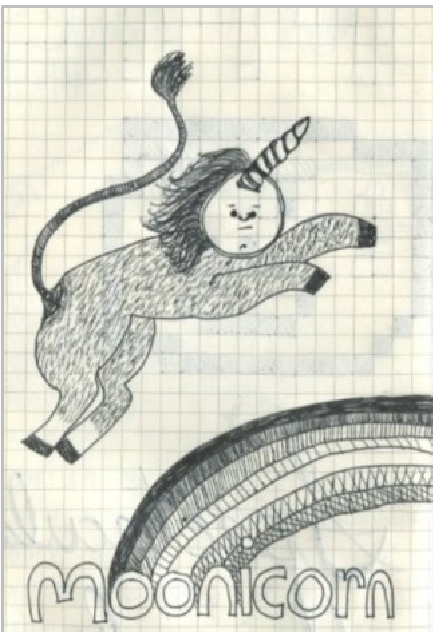
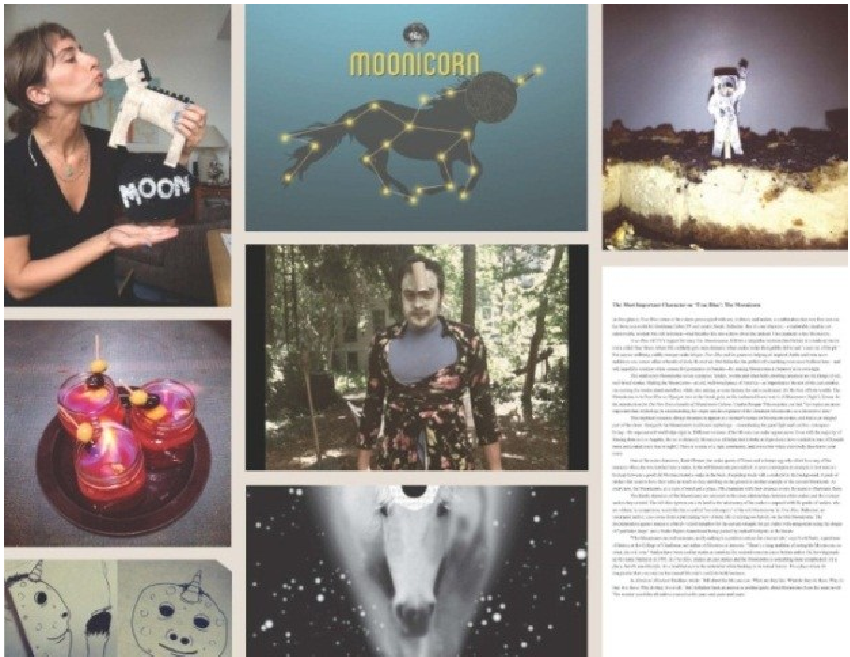
- Phase 1 (Personalized): A researcher asked 22 students to remix a "Moonicorn" (a unicorn with a moon head) based on their specific skills (e.g., making a cocktail, a video, or a toy). The result? Over 50% participation and high-quality creative output.
- Phase 2 (Public): The same request was sent to 200 people via mailing lists without personalization. Scarcely anyone created anything; they only shared brief ideas.
The "Mixsourcing Framework" visualised below aims to capture the magic of Phase 1 by connecting existing sources with individual remixers through a structured "Turn This Into That" prompt.

Methodology: "Turn This Into That"
To scale the "Moonicorn" success, the authors built a platform that allows users to post a piece of media (the "This") and a specific challenge (the "That").
- The Workflow: A user finds a source (e.g., a Pink Floyd album cover) and challenges others to "Turn this into a 3ft line drawing."
- The Glue: Unlike a closed task, the platform uses a Gallery of Tasks to provide social proof and inspiration, fostering a sense of community obligation.
- Narrative Sharing: Participants are encouraged to share the "why" and "how" of their process, turning a task into a story.
Experimental Insights: High-Effort Creativity
The pilot results were remarkably diverse. One participant didn't just write a cocktail recipe; they actually crafted the "Sanguine Moonicorn" drink (complete with "moonicorn blood" and "tears") and sent a photo. This level of intrinsic motivation is unheard of in traditional crowdsourcing contexts.
The authors conclude that Diffusion of Responsibility is the "killer" of creative crowdsourcing. When a task is for everyone, it is for no one. By personalizing the challenge—even within a digital system—participation becomes a "flexing of creative muscles" for a social circle.
Critical Analysis & Conclusion
While the study acknowledges the benefit of pre-existing social ties, the implications for modern platforms are profound. In an era of AI-driven content, the "Mixsourcing" framework suggests that the future of human-AI collaboration isn't just about generating an image; it’s about the social exchange of remixing that image.
Takeaway: To get high-quality human creativity from the "crowd," stop treating them like a crowd. Treat them like a community of artists waiting for a specific, personalized spark.
Limitations: The success of the prototype relied heavily on smaller, high-trust social circles. How this scales to millions of users without losing the "personalized" feel remains an open research question.