
MNR-Air: Revolutionizing Urban Air Quality Mapping via Motorbike Crowdsourcing
MNR-Air: An Economic and Dynamic Crowdsourcing Mechanism to Collect Personal Lifelog and Surrounding Environment Dataset. A Case Study in Ho Chi Minh City, Vietnam
The paper introduces MNR-Air, a low-cost, dynamic crowdsourcing mechanism designed to collect high-density air pollution and personal lifelog data. By deploying portable sensor boxes on motorbikes in Ho Chi Minh City, the authors created the MNR-HCM dataset and developed AQI-T-RM, a smart navigation application that suggests travel routes with minimal air pollution exposure.
TL;DR
MNR-Air is an innovative framework that transforms ordinary motorbikes into mobile environmental stations. By equipping riders with low-cost "sensor boxes," the project has mapped Ho Chi Minh City's air quality with unprecedented 10-meter granularity. This data powers a navigation app that reduces air pollution exposure by 30%, proving that mobile crowdsourcing can beat massive fixed-sensor networks in both cost and performance.
Problem: The "Macro" Blind Spot in Environmental Sensing
Most citizens rely on apps like AirVisual or IQAir for air quality updates. However, these platforms typically provide a single AQI value for an entire city. For a resident of a sprawling metropolis like Ho Chi Minh City, a city-wide average is practically useless. Pollution varies wildly between a riverside park and a congested construction site just two blocks away.
The scientific community faces a similar struggle:
- Fixed Stations are prohibitively expensive to deploy at high density.
- Satellite Data lacks ground-level precision.
- Commercial Data is often gated behind expensive paywalls.
Methodology: High-Density Sensing on Two Wheels
The authors' core insight was to leverage the most pervasive element of Vietnamese urban life: the motorbike.
1. The Sensor Box Architecture
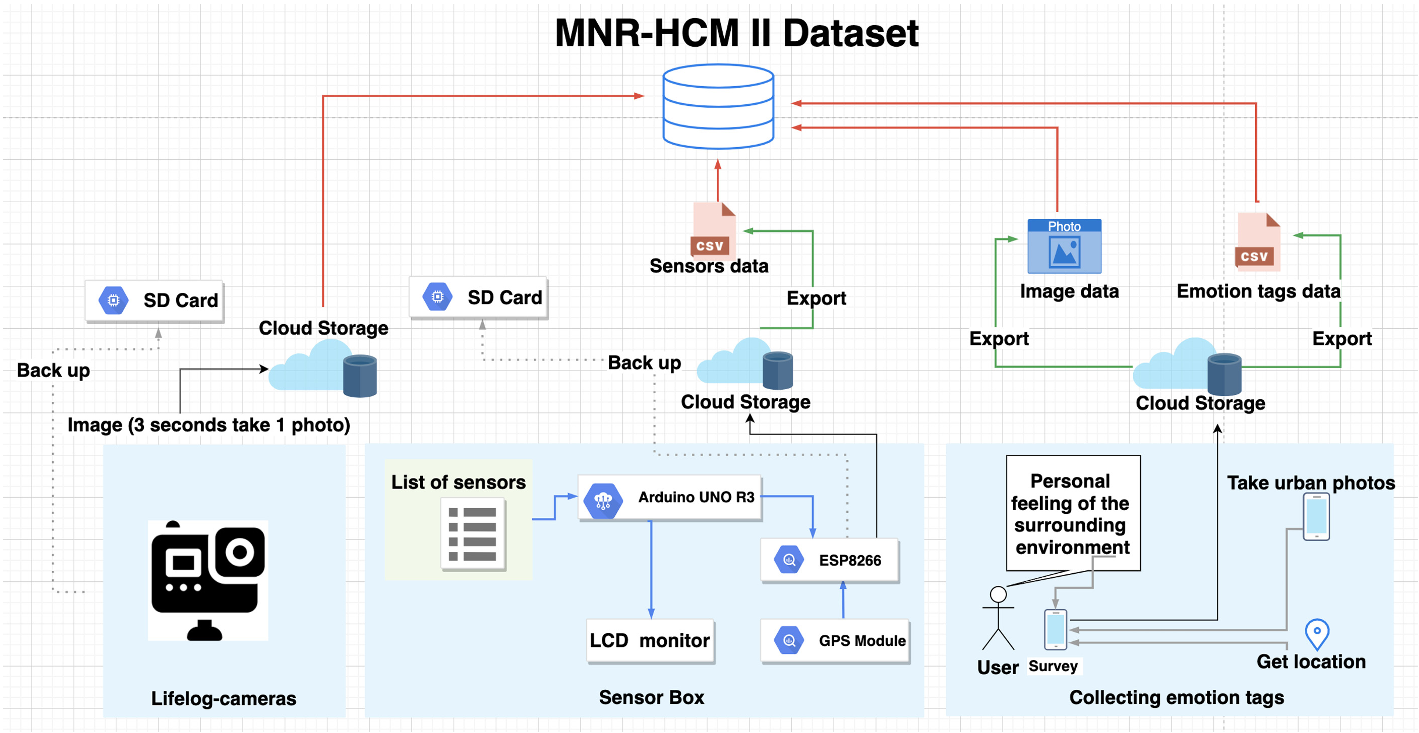
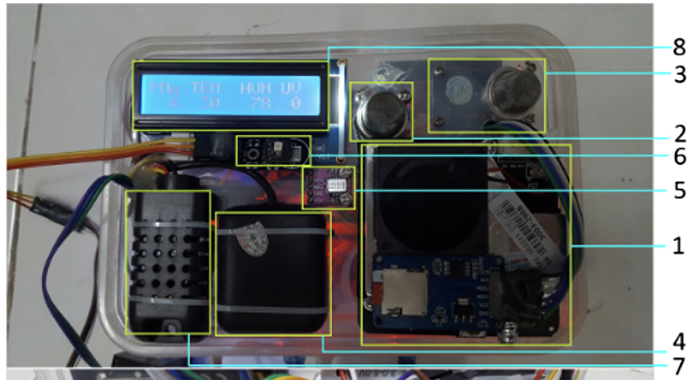
The hardware is built on a "low-cost but calibrated" philosophy. Utilizing an Arduino-based core, the team integrated sensors for PM2.5, PM10, CO, NO2, SO2, and O3, alongside a GPS module and a lifelog camera.
2. The Humidity Correction Insight
Low-cost light-scattering PM sensors are notoriously sensitive to humidity, which can lead to "swelling" of particles and inaccurate readings. The authors implemented a specific mathematical correction to normalize the data: This allows the 5-dollar sensor to mimic the behavior of professional-grade equipment.
Experiments & Results: Crowdsourcing Wins
The team patrolled a 17km route in Ho Chi Minh City three times a day. This resulted in the MNR-HCM dataset, which uniquely combines chemical sensor data with the "first-perspective" visual records and human cognitive feedback (subjective feelings of stress/cleanliness).
SOTA Comparison: Personal vs. Static
The researchers compared their AQI-T-RM app against the CAR (Clean Air Routing) model used in Taipei.
| Metric | AQI-T-RM (This Work) | CAR (Prior SOTA) |
|---|---|---|
| Sensors Used | 2 Mobile Boxes | 2,963 Fixed Stations |
| Exposure Reduction | 30.25% | 17.1% |
| Accuracy Scope | Every Corner/Street | Grid-based Interpolation |
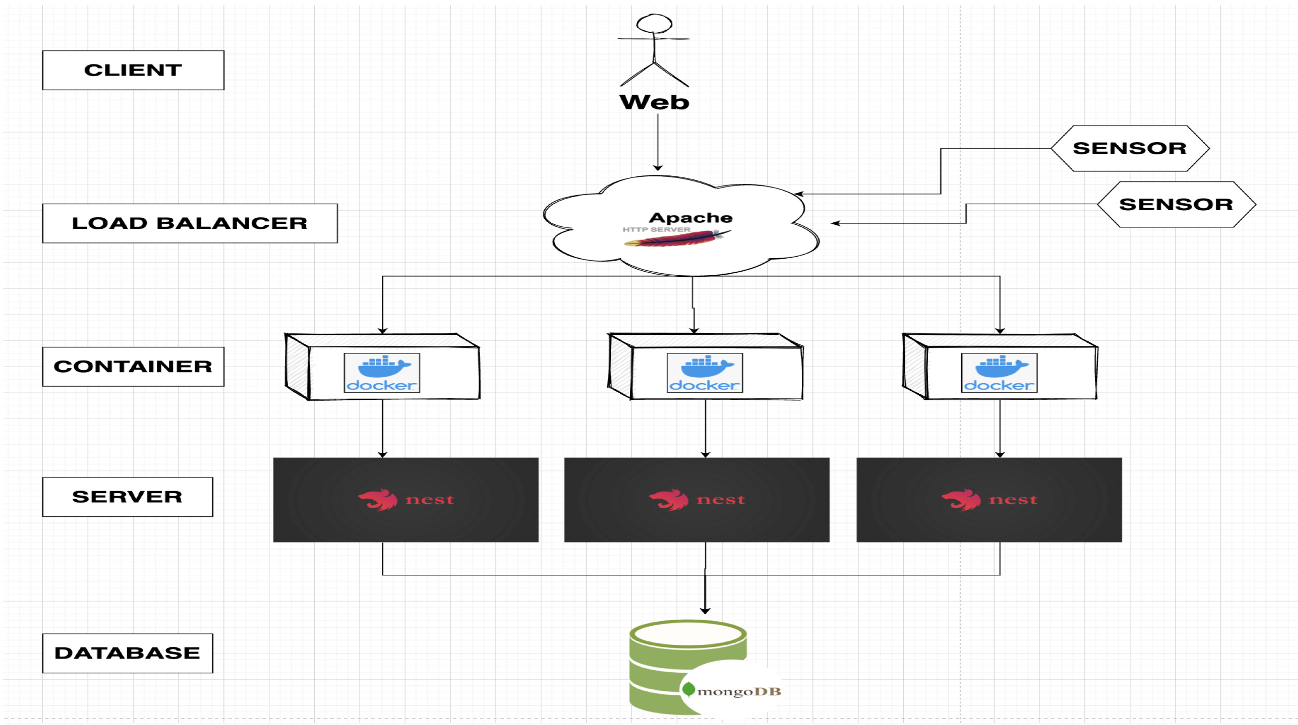
The results are striking: By moving the sensors through the city, even a handful of devices can provide more actionable navigation data than thousands of static ones.
Critical Analysis & Conclusion
Takeaway
MNR-Air demonstrates that dynamic granularity is more important than static volume. By placing sensors on vehicles, the "grid" moves with the population, capturing the exact air that citizens breathe while commuting.
Limitations & Future Work
While the results are promising, the current dataset is limited to 20 days and specific routes. To be truly "Smart City" ready, the system needs:
- Scaling: Increasing the number of volunteers to cover the entire city 24/7.
- Privacy: While the authors mention face blurring, the continuous collection of lifelog images requires rigorous data governance.
- Incentivization: How to motivate thousands of citizens to carry these boxes long-term?
Ultimately, MNR-Air provides a blueprint for developing nations to build world-class environmental monitoring systems without the multi-million dollar price tag of traditional infrastructure.