
AI-Powered Pedagogy: Optimizing Ideological Education via Mobile BP Neural Networks
Analysis on the construction of ideological and political education system for college students based on mobile artificial intelligence terminal
This paper presents an Intelligent Tutoring System (ITS) for college ideological and political education based on mobile AI terminals. It utilizes an optimized Back-Propagation (BP) Neural Network enhanced by Genetic Algorithms to improve convergence speed and global optimization for personalized student diagnostic modeling.
TL;DR
This paper explores the construction of a modern Ideological and Political (I&P) education system for college students, leveraging Mobile AI Terminals and Optimized BP Neural Networks. By combining Genetic Algorithms (GA) with Back-Propagation, the research addresses the low intelligence of traditional teaching aids, producing a system that adapts to individual student needs while reducing server-side load through mobile-centric architecture.
The Cognitive Gap in Traditional Instruction
Traditional Computer-Aided Instruction (CAI) often operates on rigid, predefined rules. In complex subjects like Ideological and Political education—which requires both factual memorization and conceptual analysis—these systems fail to provide human-like reasoning. The author identifies that current Intelligent Tutoring Systems (ITS) struggle with "defining knowledge" and lack the flexibility to handle the fast-paced, mobile lifestyle of modern students.
Methodology: The Fusion of GA and BP
The core technical contribution lies in the optimization of the Back-Propagation Network (BPN). Standard BPNs often suffer from slow convergence and a tendency to get stuck in local optima.
1. Neural Network Architecture
The system employs a three-layer forward neural network (Input, Hidden, Output).
- Input Layer: Receives learner mastery levels and concept terms.
- Hidden Layer: Utilizes a Sigmoid Function () for transformation.
- Output Layer: Outputs 15 distinct states corresponding to specific political knowledge points.
2. Genetic Algorithm (GA) Optimization
To solve the global optimization problem, the author introduces a GA to initialize and refine weights. The process involves:
- Searching the solution space for a population of potential network weights.
- Selection, mutation, and (ideally avoiding) disaster operations to evolve toward a true Pareto optimal solution.
 Figure 1: Conceptual framework of the AI-driven teaching assistant system.
System Architecture & Functionality
The system is built on a Three-Tier Architecture:
- Presentation Layer: Mobile interface for students and teachers (Java/NetBeans).
- Middle Layer: Servlet and JavaBean logic running on a Tomcat server.
- Data Layer: SQL Server 2005 managing knowledge bases and student models.
A standout feature is the Student Module, which acts as an "Expert System." It diagnoses student errors not just for what they got wrong, but why they lack a specific skill, allowing the Teaching Module to adjust strategies dynamically.
Experimental Results and Insights
The study contrasts the Generalized Predictive Control (GPC) algorithm with the proposed Dynamic BP-assisted GPC.
- Convergence Speed: The GA-optimized approach reaches stability in fewer generations (approx. 30-50) compared to non-optimized versions.
- Response Accuracy: As shown in Fig. 9 of the paper, the dynamic BP error correction resulted in a control system with faster response times and significantly reduced overshoot.
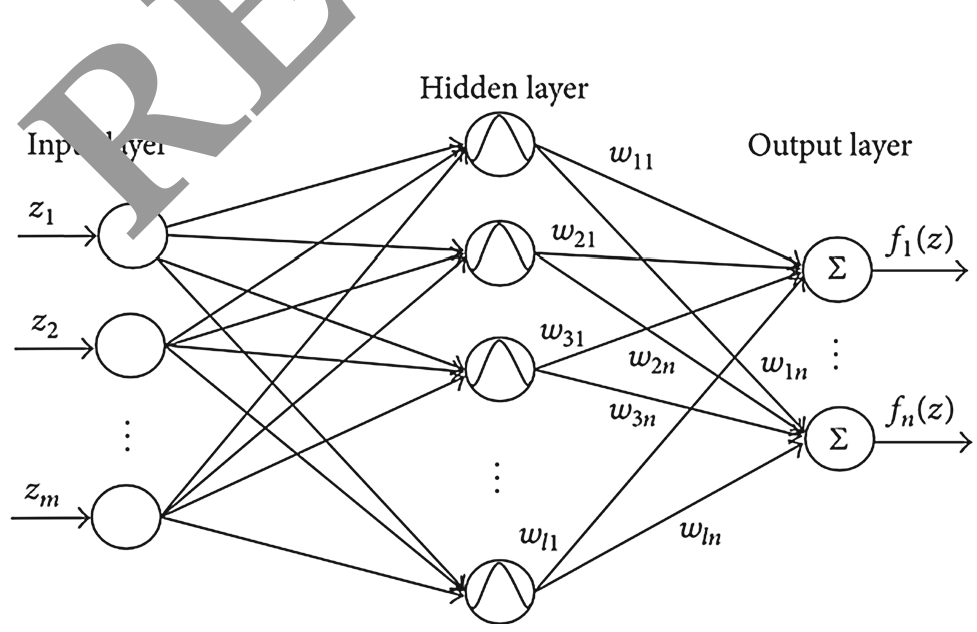 Figure 2: Performance comparison between traditional GPC and dynamic BP-enhanced GPC.
Critical Analysis & Conclusion
The paper successfully demonstrates that AI is not just a tool for automation but a catalyst for individualized pedagogy. By shifting the computational burden to mobile terminals and utilizing distributed AI, the system achieves a "virtuous circle" of learning and feedback.
Limitations: However, the research points out that as the student base grows, the system faces challenges in concurrent database access and potential performance degradation when storing massive amounts of personalized longitudinal data.
Future Outlook: The author proposes that AI in education will evolve through three stages: primary (assistant), intermediate (manager), and advanced (autonomous thinking and planning). This work marks a robust step into the intermediate phase, where AI begins to manage the logic of ideological instruction.