
COGNITUS: Turning Spectators into Professional Film Crews – What Drives Contributor Loyalty?
User generated content for enhanced professional productions: a mobile application for content contributors and a study on the factors influencing their satisfaction and loyalty
This paper introduces a mobile application designed to bridge the gap between User-Generated Content (UGC) and professional broadcasting by enabling spectators at live events to contribute high-quality footage. The study identifies that while demographic factors like age and gender do not influence contributor satisfaction, technical factors such as connectivity and personal filming confidence are critical determinants of loyalty and engagement.
TL;DR
Professional broadcasting is evolving to include the raw, authentic perspectives of the crowd. This paper presents a mobile application that allows event-goers to contribute footage to major broadcasters like the BBC. Through field trials at football matches and arts festivals, researchers discovered that your age or social media prowess doesn't determine if you'll be a loyal contributor—instead, it's all about your connection speed and your confidence behind the lens.
Background Positioning
In an era of "Second Screen" viewing and Social TV, the COGNITUS platform moves beyond simple hashtags. It is a SOTA (State-Of-The-Art) integration framework that takes raw UGC, enhances it via server-side processing (up-scaling), and delivers it to professional producers for mainstream broadcast.
Problem & Motivation: The "Authenticity" Gap
Broadcasters face a dilemma: professional cameras offer quality but lack the "intimacy" of a fan in the stands. Conversely, typical UGC is often shaky, low-res, and legally complicated. The authors recognized that the bottleneck wasn't just technical quality, but the human factor—why do some users stop contributing, and what makes a spectator feel like a "loyal" part of the production team?
Methodology: The Core Application
The COGNITUS app was designed with a "User-Centered" approach, focusing on three pillars: Discovery (finding calls for content), Capture/Enhancement (recording and basic editing), and Social Reward (badges and followers).
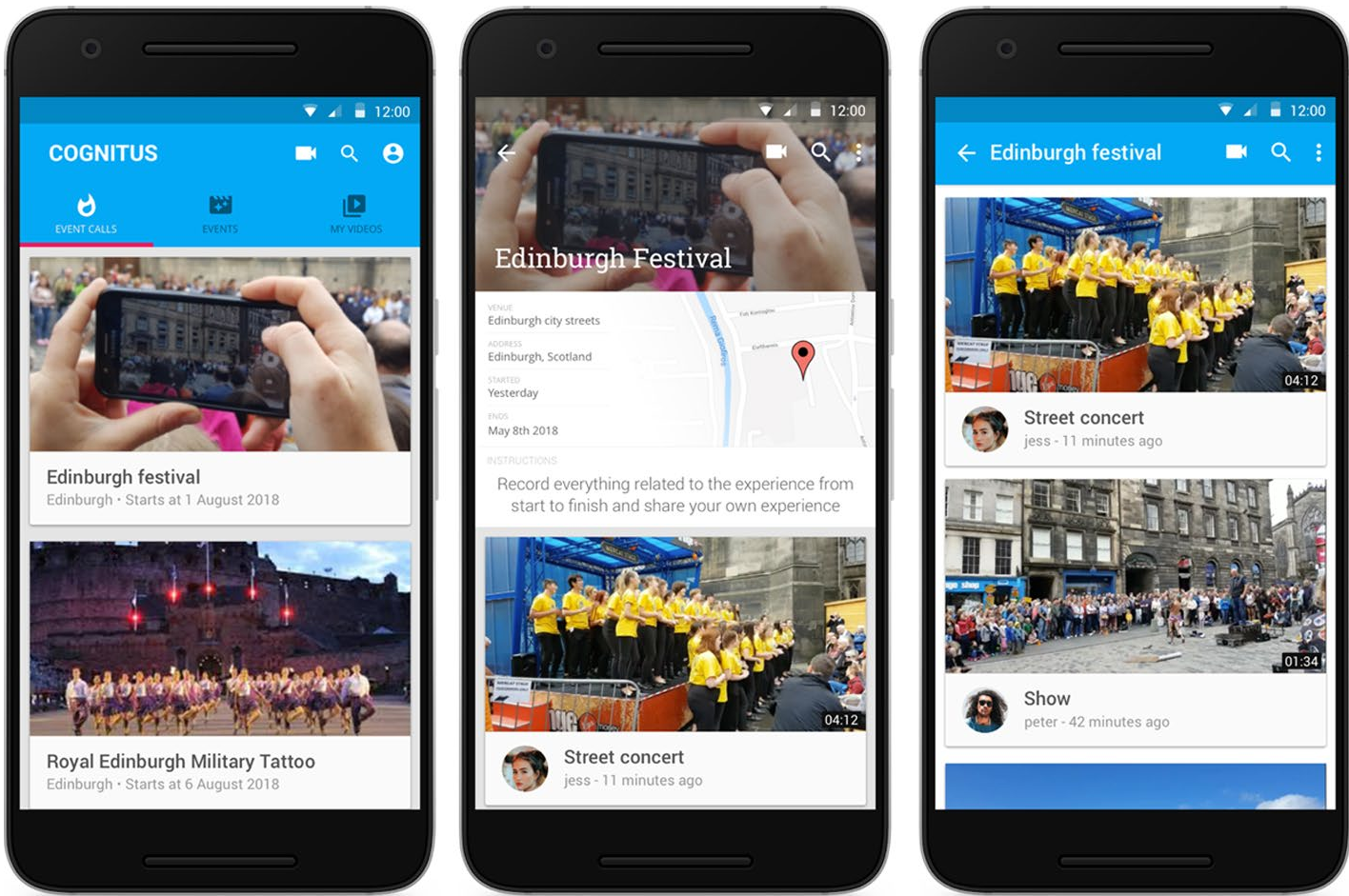 Figure 1: The App UI showing event calls and content browsing, designed for rapid interaction during live events.
The "In-the-Wild" Field Study
The researchers didn't stay in the lab. They tested the app during:
- Cultural Festivals (UK): 16 participants, generating 1,100 videos.
- Football Matches (Greece): 22 participants, generating 817 videos.
This dual-country setup provided a rich dataset to test five hypotheses regarding user demographics and behavior.
Experiments & Results: Debunking Demographic Myths
The most surprising find? Demographics don't matter. The study found no statistically significant difference in satisfaction (SUS) or loyalty (NPS) based on age or gender. The "Digital Native" myth (that younger people are better contributors) was proven irrelevant in this context.
Key Metrics
- Average SUS Score: 76 (Acceptable/Grade B).
- Net Promoter Score (NPS): 24 (Positive).
- Top Frustration: 36.8% of users cited connection speed (Wi-Fi/4G) as their main pain point.
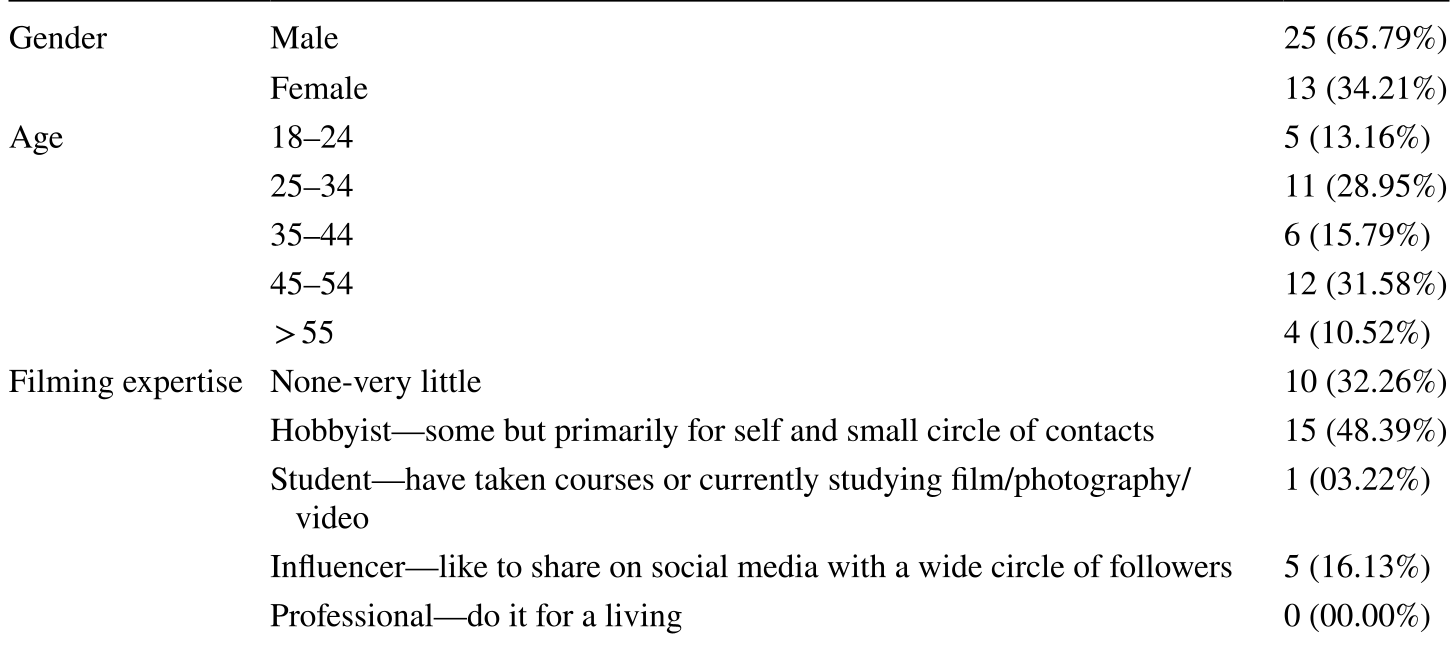 Table 1: The study covered a wide age range (18 to 55+), proving that older demographics are just as willing to contribute as younger ones.
What Actually Matters?
The study highlighted a "Confidence Gap." Users who felt unsure about their filming skills in public gave lower satisfaction ratings. Furthermore, network congestion at live events led some users to perceive the app as "buggy," even when the issue was external connectivity.
Critical Analysis & Conclusion
Takeaway
For developers and broadcasters, the path to successful UGC integration isn't through targeting Gen Z. It's through Technical Reliability and User Empowerment.
Limitations
- Platform Lock: The study only used Android devices, potentially biasing results towards a specific tech ecosystem.
- Small Sample Size: While 38 participants provided deep qualitative data, a larger-scale deployment is needed to validate the NPS across wider cultures.
Future Outlook
As 5G rolls out, the "Connectivity Bottleneck" will likely vanish, allowing real-time 4K UGC streaming. The next frontier will be AI Assistive Filming: apps that use AR to tell the user where to point the camera to get the "perfect shot" for the director, bridging the gap between a hobbyist and a professional.