
DTIM: Privacy-Preserving and Truthful Incentives for Distributed Mobile Crowdsourcing
Promoting Users’ Participation in Mobile Crowdsourcing: A Distributed Truthful Incentive Mechanism (DTIM) Approach
The paper introduces the Distributed Truthful Incentive Mechanism (DTIM), a decentralized auction-based framework for mobile crowdsourcing. It coordinates multiple buyers (task requesters) and sellers (smartphones) to maximize service quality under independent budget constraints while ensuring participant truthfulness and privacy.
TL;DR
The Distributed Truthful Incentive Mechanism (DTIM) is a decentralized auction framework designed for mobile crowdsourcing. It addresses the critical challenge of recruiting smartphone users to perform sensing tasks when task requesters have independent budgets and users are strategically self-interested. By shifting the auction from a central server to local interactions, DTIM protects privacy while guaranteeing that neither buyers nor sellers can gain an advantage through dishonest bidding.
Background: The Privacy-Efficiency Paradox
Mobile crowdsourcing relies on a large number of participants to provide high-quality service. However, users are often reluctant to participate due to battery drain and privacy risks. While previous works focused on Centralized Incentive Mechanisms, they introduced a single point of failure and a significant privacy threat: every participant's budget and cost profile had to be shared with a central entity.
The authors of DTIM argue that a truly robust crowdsourcing system must be Distributed, Heterogeneous, and Truthful.
Methodology: The Dual-Process Auction
DTIM operates in rounds to account for the dynamic nature of mobile users. Each round consists of two core phases:
1. Winning Candidate Selection (Buyer-Side)
Each Task Requester () acts as a buyer with a fixed budget . They evaluate sellers based on the Cost per Unit Quality (): Buyers greedily select sellers with the lowest until the budget is exhausted. The crucial innovation here is the payment rule: the payment is determined by either the budget shared proportionally among winners or the quality of the "first loser" (the -th seller), ensuring that a seller’s payment is tied to a critical value that discourages overbidding.
2. Final Selection (Seller-Side)
In a distributed system, a seller () might win multiple auctions simultaneously. DTIM allows the seller to locally calculate their utility for each winning task and select the one that yields the highest net revenue.
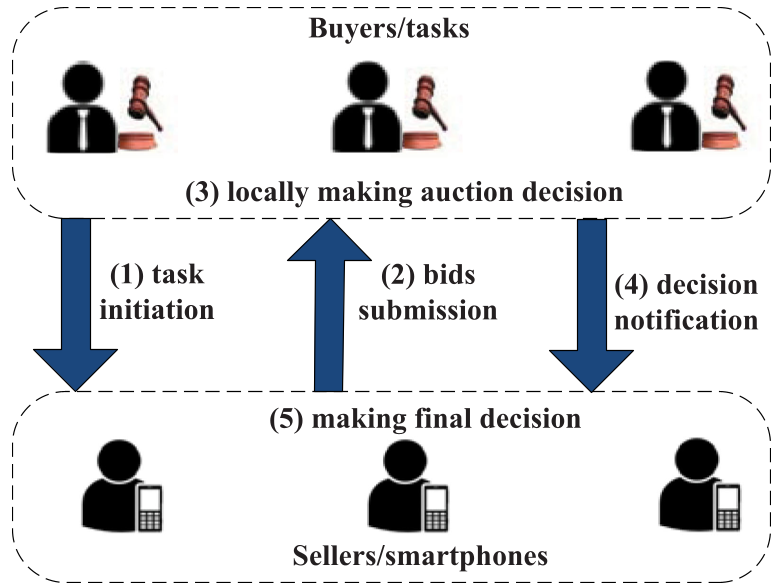 Figure 1: The 5-step interaction between Buyers and Sellers in DTIM.
Mathematical Properties & Truthfulness
The paper utilizes Myerson’s Theorem to prove that DTIM is Strategy-proof. This means the best strategy for any smartphone user is to report their true cost and true sensing quality.
- Monotonicity: If a user wins with a specific bid, they will also win with a lower bid.
- Critical Value: The payment rule ensures that the price paid to the seller is the maximum they could have bid while still winning the auction.
Experimental Results
Using the GeoLife Trajectory Dataset (based on real-world movement in Beijing), the authors validated the system's efficiency.
Performance Highlights:
- Individual Rationality: Every participant earned a non-negative utility, proving that the mechanism is fair (See Fig 3).
- System Efficiency: Compared to sequential auctions, DTIM achieved significantly higher aggregate service quality. Even without global knowledge, its performance remained surprisingly close to the theoretical optimum calculated via Mixed Integer Linear Programming (MILP).
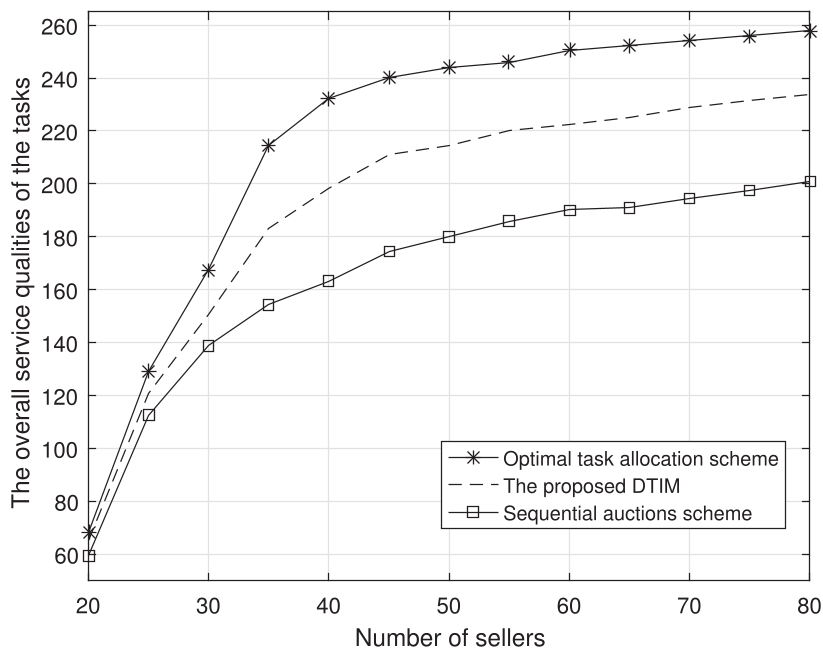 Figure 2: Performance of DTIM vs. Sequential and Optimal (MILP) baselines as the number of sellers increases.
The Cost of Cheating
Simulation results in Figure 6 confirm that when users bid their true cost (Ratio = 1), they maximize their utility. Deviating from the truth (Ratio < 1 or > 1) resulted in lower or even negative utility, validating the truthfulness claim.
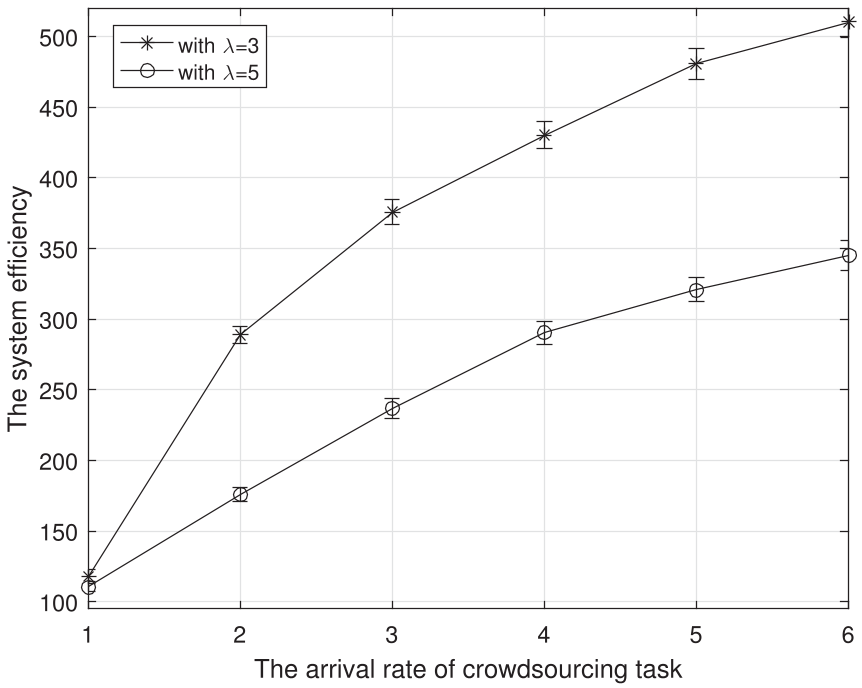 Figure 3: Overall utility of a seller under different bidding ratios (Truth = 1.0).
Critical Insight & Conclusion
DTIM succeeds because it balances the local greed of participants with a global structure that mimics a competitive market. By tying payments to a critical value based on the -th runner-up, it eliminates the incentive for "bid shading."
Limitations: The model assumes that while users might lie about costs, the buyers will not cheat on their budgets. In a fully adversarial environment, a verification mechanism for buyer budgets would be an essential next step for DTIM.
Overall, DTIM represents a major step forward for Privacy-Preserving Mobile Crowdsourcing, proving that we do not need to sacrifice truthfulness or efficiency to achieve a decentralized system.