
Preserving the Unseen: A Secure Crowdsourcing Framework for Collective Memory
Towards a Mobile Crowdsourcing System for Collective Memory Management
The paper introduces a trustworthy mobile crowdsourcing (CS) system designed for the collection, management, and dissemination of collective memory (CM). It specifically targets displaced populations and integrates an extended Role-Based Access Control (RBAC) model to ensure data security and user trust.
TL;DR
This research addresses the "communication barrier" of collective memory in displaced communities by proposing a mobile crowdsourcing system. By combining multimedia storytelling with a sophisticated Role-Based Access Control (RBAC) model, the authors provide a secure platform where refugees and their descendants can digitize "intangible" heritage with full control over their data's visibility.
The Problem: The Fragility of Displaced Memories
When people are displaced due to conflict or natural disasters, they often lose physical bonds with their tangible cultural heritage. What remains is Collective Memory (CM)—an interpretation of the past shared by a group.
Current digital libraries and cultural portals often suffer from two major flaws:
- Static Participation: They allow users to upload content but offer little control over the lifecycle (editing or retracting) of that content.
- Trust Deficit: Cultural experts and sensitive communities are often hesitant to use digital platforms because of unauthorized access risks and the lack of a structured validation process (expert annotation).
Methodology: Trust Through Architecture
The researchers developed a system that bridges the gap between casual "crowdsourcing" and professional "cultural management."
1. Extended RBAC Model
A core contribution is the security layer. Unlike simple "user vs. admin" setups, this system defines five roles:
- Volunteers: The primary content creators (mobile-focused).
- Specialists: Historians who annotate and rate stories.
- Advanced Users: Community members who curate collections.
- Cultural Managers: Supervisors who oversee the legal and offensive content filters.
- Regular Users: The general public who consume the validated memories.
2. System Architecture
The backend utilizes a RESTful API and three specific databases:
- UCC (User Contributed Content): For private, unpublished drafts.
- PPC (Public Presented Content): For verified, published history.
- SUI & SEC: For authentication and logging actions to ensure accountability.
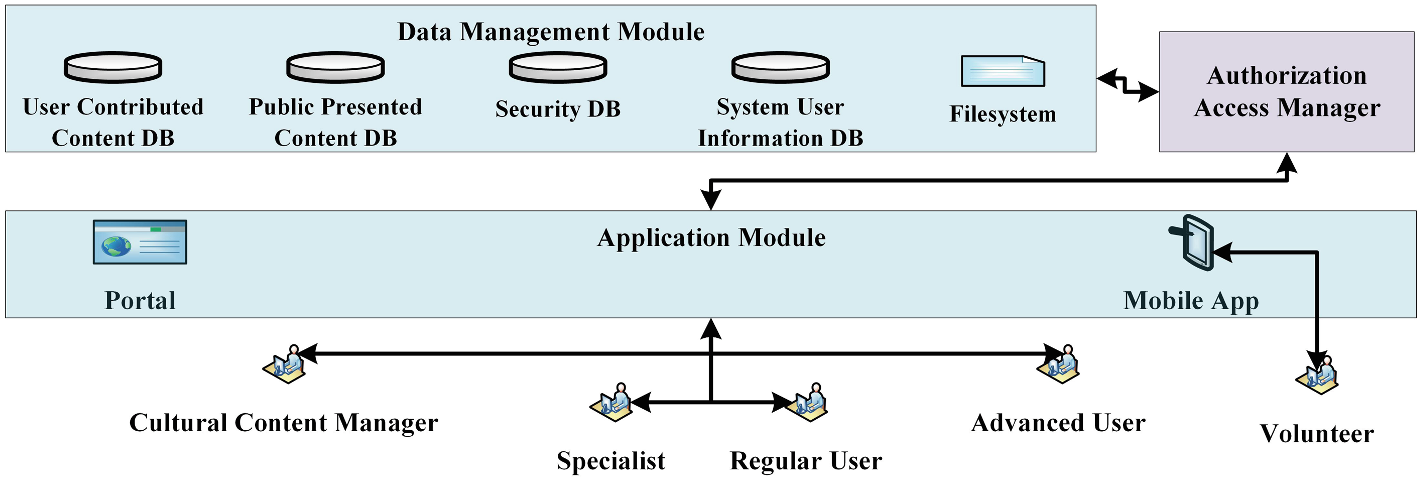 Figure: The multi-modular architecture ensuring secure data flow between mobile users and the public portal.
Real-World Case Study: The 20th Century Refugee Wave
To test the system, the authors focused on the descendants of refugees who moved to Greece from the Ottoman Empire. The mobile app allows users to:
- Add Story: Input narrative text, metadata, and location.
- Attach Memorabilia: Upload photos of official documents, family diaries, or letters.
- Link Narratives: Associate specific people with historical events.
- The Kill Switch: Critically, volunteers can unpublish a story, moving it back from the public database (PPC) to their private draft space (UCC).
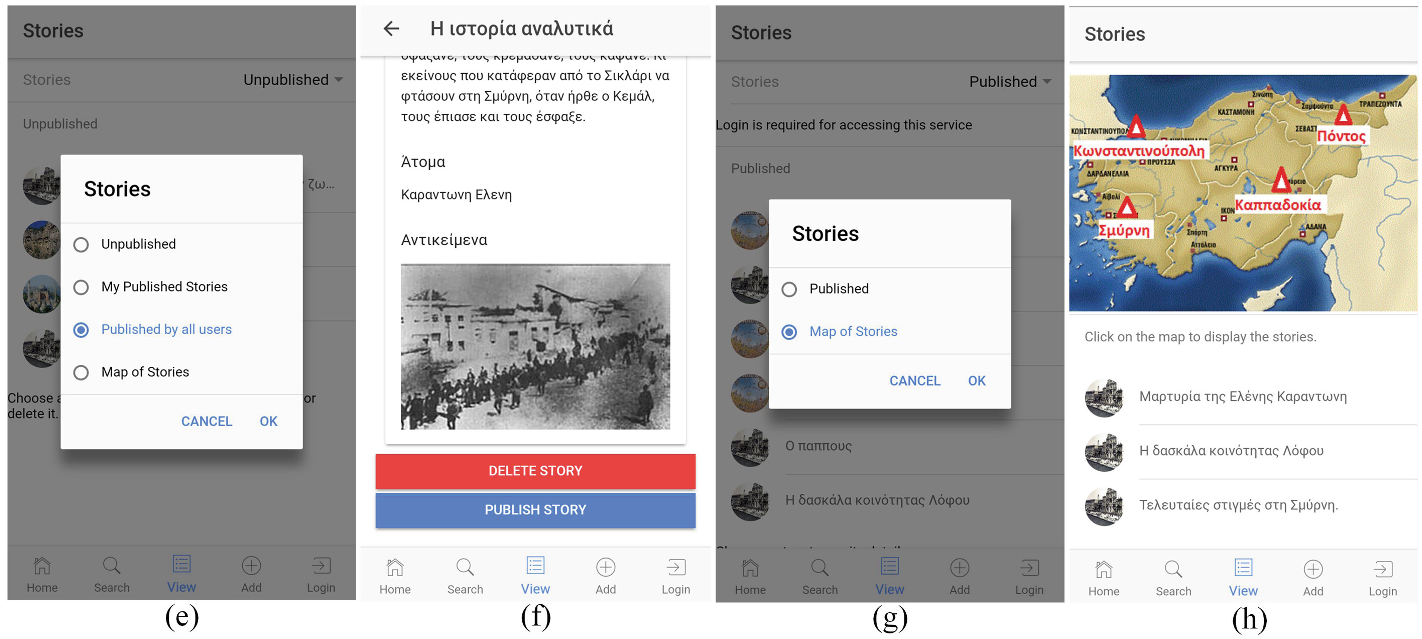 Figure: The mobile workflow—from filling story details to publishing visible markers on a "Map of Stories".
Experimental Comparison: Identifying the Gap
The authors compared their prototype against seven other mobile cultural modules (S1-S7). The results (see table below) highlight a significant technical oversight in the industry: the Right to be Forgotten.
- Unpublishing/Deletion: Only the proposed system allowed users to both unpublish and delete their contributions via the mobile app.
- Expert Integration: While many systems allow "searching," few allow the specific role of "specialist annotation" to validate the historical accuracy of crowdsourced data.
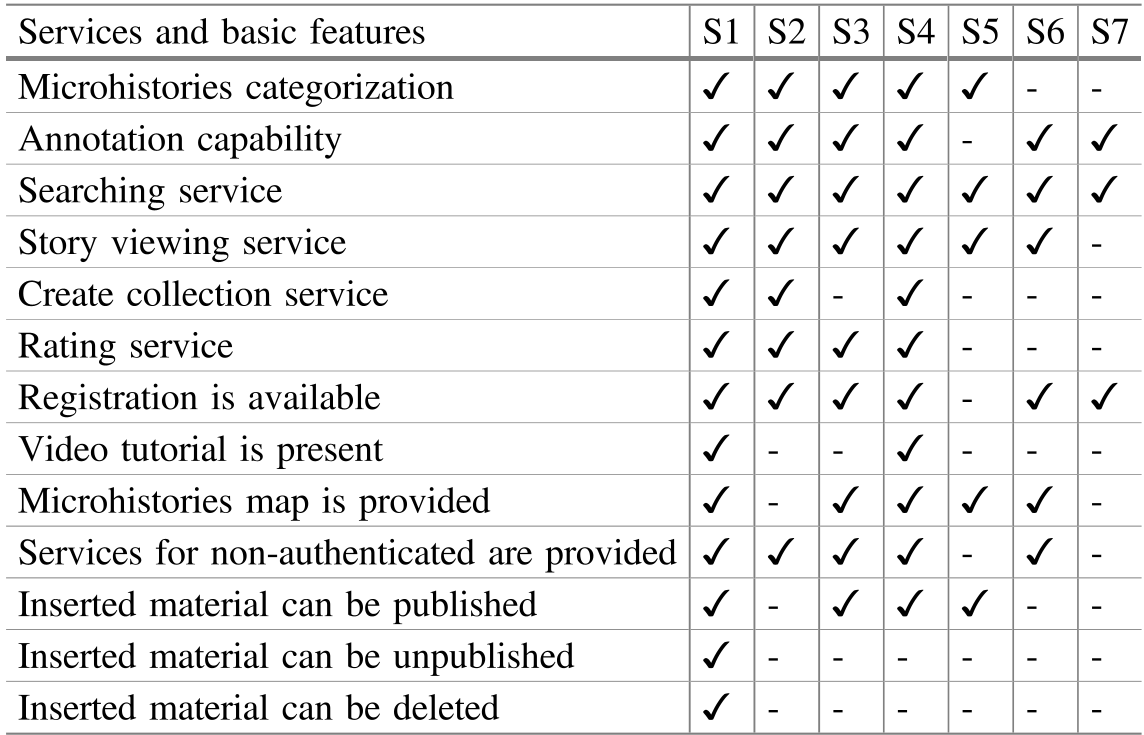 Table: Comparison of services across different cultural heritage platforms.
Critical Insight: Why This Matters
The importance of this work lies in its Inductive Bias toward trust. By treating "Collective Memory" as sensitive data rather than just "social media content," the authors allow for a more ethical approach to smart city development.
Limitations: The evaluation was conducted with a limited student group and a specific historical context. Scaling this to handle diverse global languages and high-latency mobile networks in disaster zones remains an open challenge.
Future Work: The authors suggest using this framework for "intergenerational dialogue," potentially integrating AI to connect stories from different families who shared the same historical path.