
LinkedUI: Reinventing the Mobile OS through Social Integration
The consumption of integrated social networking services on mobile devices
This paper introduces LinkedUI, an innovative mobile social network aggregator that integrates Facebook, Twitter, and Flickr directly into a device's core user interface. Through a 4-week field study on Nokia N900 devices, the authors characterize the "consumption" of social awareness streams, highlighting a shift from siloed applications to a deeply integrated hypertext-based mobile experience.
Executive Summary
TL;DR: Long before "widgets" and "integrated feeds" were standard, this Nokia Research study explored LinkedUI, a system that dismantled social app silos to weave Facebook and Twitter directly into the phone's fabric. The study reveals that mobile social use is defined by "Habitual Checking" (brief, frequent glances) and "Serendipitous Discovery" (bumping into content while doing other tasks).
Background: Published in 2011, this work is a seminal field study in Human-Computer Interaction (HCI). It sits at the intersection of mobile OS design and social psychology, moving the focus from what people post to how they passively consume information.
Problem & Motivation: The Curse of the Application Silo
In the early 2010s, "checking Facebook" meant finding an icon, waiting for an app to load, and navigating a specific silo. The authors argued this was unnatural for mobile use.
The Insight: Social updates are "social awareness streams"—low-intensity signals that help people feel connected. To maximize their value, these streams should be like electricity: always available, integrated into the environment (the Phonebook, the Home Screen, the Search bar), and requiring zero effort to access.
Methodology: Deep Hypertext Integration
LinkedUI wasn't just another aggregator app; it was a total UI replacement for the Nokia N900.
1. Unified Activity Stream
Instead of checking three apps, LinkedUI provided a single, chronologically merged feed.
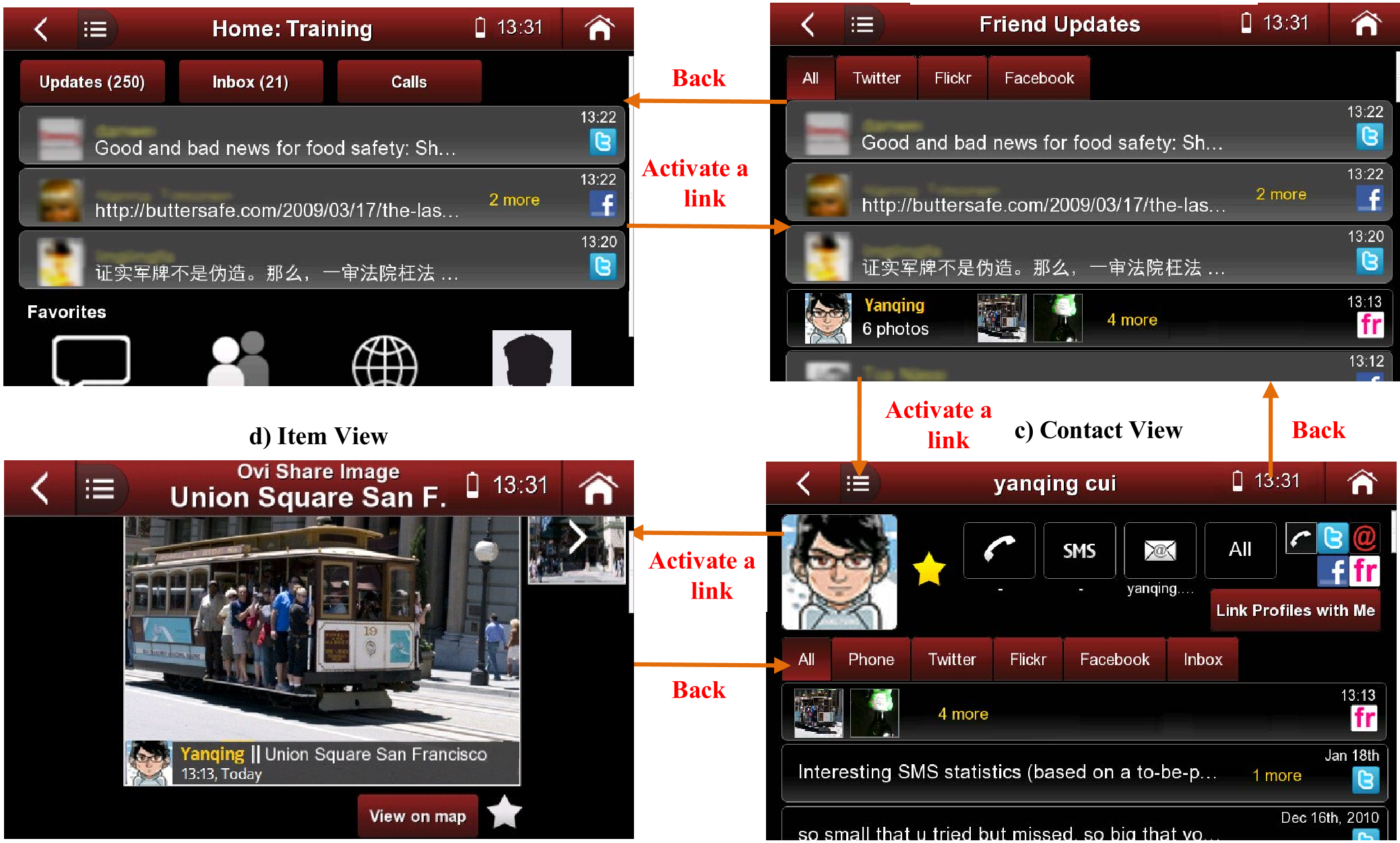 Figure 1: The LinkedUI architecture showing how navigation flows between Home, Activity, and Contact views.
2. Contextual Social Data
The system used "hypertext navigation." If a contact called you, LinkedUI would show their latest status update on the incoming call screen—providing immediate context for the conversation.
Experimental Results: The 1-Minute Habit
The 4-week field study provided fascinating quantitative data on how "integrated" social media changes user behavior.
The Frequency of "Glancing"
The data showed that social media consumption on mobile is characterized by micro-breaks.
- Median Session Duration: 0.93 minutes.
- Checking Interval: 50% of users re-checked the device within 33 minutes.
 Figure 2: CDF of session durations, illustrating the dominance of extremely short interactions.
The Relevance Filter
Users only "clicked" (interacted deeply) with 5.7% of the content. The study found that users were acting like newspaper readers—scanning headlines and only diving deep into:
- Ultra-fresh content: 50% of clicks happened within an hour of the post arriving.
- Close ties: Content from specific contacts was prioritized, while "internet bots" and over-posters were ignored.
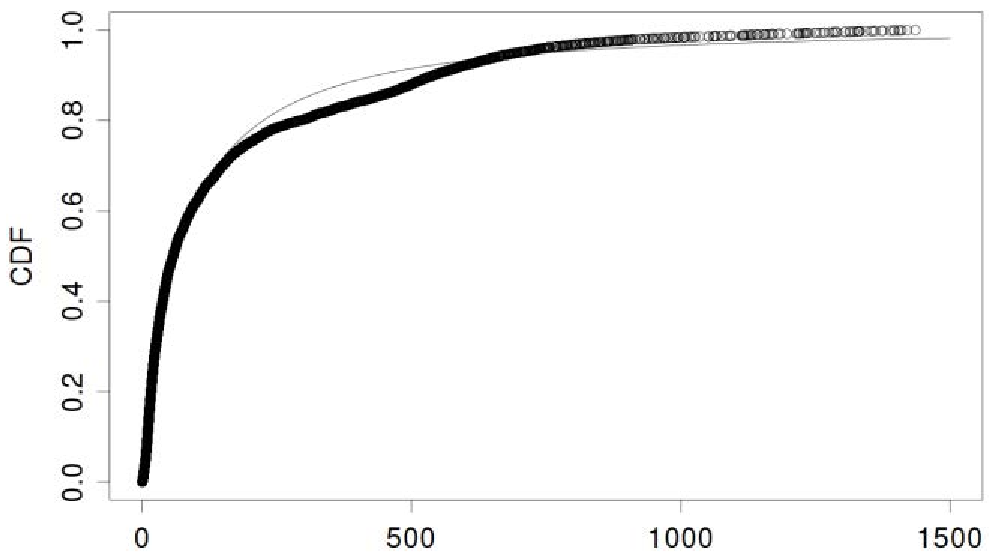 Figure 3: Scatterplot showing how users selectively attend to specific contacts regardless of their posting volume.
Critical Analysis & Conclusion
Takeaway: This paper successfully predicted the "ambient" nature of modern smartphones. It showed that when social media is integrated into the OS, it becomes a stress-reliever rather than a chore, because the user doesn't have to "seek" the information—it finds them.
Limitations: Since the study used a tech-savvy group in 2011, the "Information Overload" they felt was based on hundreds of items per day. In 2026, with AI-curated feeds, this volume has scaled by 100x, making the paper's call for "Access to Relevant Content" more prophetic than ever.
Future Outlook: The future of mobile UI is likely to return to this "Linked" concept—where AI agents surface social context exactly when you need it (e.g., during a call or while scheduling a meeting), moving even further away from the "Application Silo" model that still dominates today.