
In the Hands of Children: How Mobile Phones Sparked Spontaneous Pervasive Play
In the hands of children: exploring the use of mobile phone functionality in casual play settings
This paper presents an ethnographic study on how Swedish children (aged 10-12) repurpose standard mobile phone functionalities for unsupervised social play. By observing activities at "Parklekar" (play centers), the authors identify how features like Bluetooth, cameras, and ringtones are appropriated to create "pervasive games" without dedicated software.
TL;DR
Long before the era of TikTok and Pokémon GO, children were already transforming mobile phones into sophisticated play tools. This 2008 study by Jarkiewicz et al. reveals how 10-12-year-olds in Sweden appropriated standard phone features—like Bluetooth and cameras—to invent their own "pervasive games," proving that social interaction and creative flexibility are more important than high-end game graphics.
Background: Beyond Parental Control
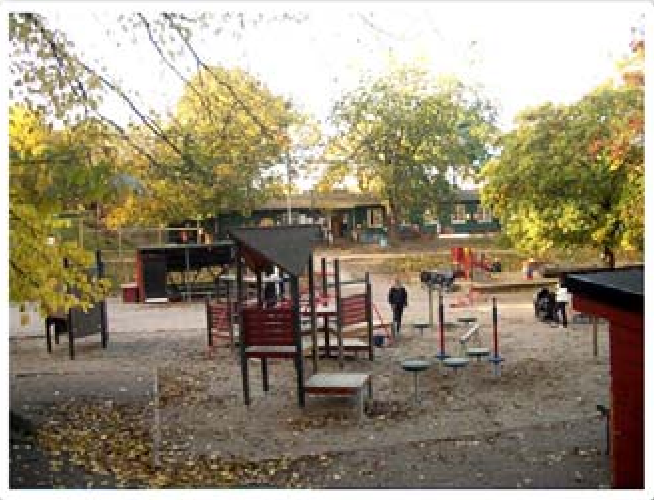
While parents often view mobile phones as "safety leashes" to keep track of their children, children view them as multi-functional toolkits for social exploration. This research moves the focus away from classroom-based learning and adult-centric gaming to the "Parklekar"—unsupervised Swedish play centers—to see what happens when technology meets raw, spontaneous imagination.
The "MacGyvers" of the Playground: Key Findings
The researchers observed that children rarely used the pre-installed, single-player games. Instead, they "hacked" the phone's basic utilities to augment physical games:
- Strategic Communication: In games like "Cops and Robbers," video calls were used as remote surveillance tools, and ringtones were used as "sonar" to locate hidden players.
- The "Photo War": Children invented a game where the objective was to capture a "sharp" image of a moving opponent. This turned a technical limitation (slow shutter speeds of 2008-era cameras) into a core gameplay mechanic.
- Media as Social Currency: Sharing a song via Bluetooth wasn't just file transfer; it was a "gift-giving" ritual. Conversely, content that was locked by DRM (Digital Rights Management) was deemed "useless" because it couldn't be used to build social bonds.
Methodology: The Ethnographic Lens
The study utilized a two-pronged approach:
- Open Observation: Researchers spent 6 weeks watching 150 children, intervening only to ask for "play-by-play" explanations of tech-mediated interactions.
- Focus Groups: Small groups of 4-5 children discussed their habits. The group setting was crucial as it encouraged children to trigger each other's memories about collective play rather than giving "correct" individual answers.
Critical Insight: The Power of Open Design
The most striking example of appropriation was the "Camp Game." A child had a specific software that turned moving (living) objects white on the camera. The entire group organized a complex game around this single, unique device. This highlights a critical design principle: Openness. When a tool is flexible, it becomes a resource for the whole group, not just the owner.
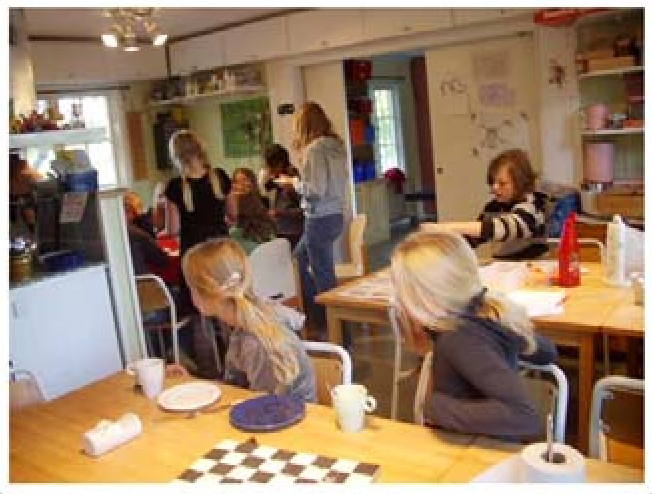 Figure: The social nature of mobile use—content is rarely consumed in isolation.
Conclusion and Value for Today
This paper serves as a timeless reminder that children are not passive consumers of technology; they are active creators. In an age where digital experiences are increasingly siloed and "on-rails," this research advocates for:
- Physicality: Tech should get kids moving, not just sitting.
- Sociability: Features that facilitate sharing and group coordination are superior to individual achievements.
- Flexibility: Leave room for the users to "misuse" the technology.
As we design the next generation of AR and Meta-experiences, we should look back at the "Photo War" of 2008 to remember that the best games are often the ones the players invent themselves.