
Mobile Sensor-Aware Crowdsourcing: Turning Smartphones into Global Task Hubs
Towards Mobile Sensor-Aware Crowdsourcing: Architecture, Opportunities and Challenges
The paper proposes a reference architecture for a hybrid, mobile sensor-aware crowdsourcing platform. It moves beyond traditional web-based interfaces to leverage the diverse sensors in modern smartphones, enabling location-aware tasks and automated quality control.
TL;DR
Crowdsourcing is evolving from sedentary web tasks to dynamic, real-world interactions. This paper proposes a Hybrid Mobile Crowdsourcing Architecture that leverages smartphone sensors (GPS, Accelerometers, Audio) to enable context-aware tasks, improve response quality, and create a "Smart City" backbone where anyone can be both a requester and a worker.
Problem: The Browser Bottleneck
For years, crowdsourcing has been synonymous with platforms like Amazon Mechanical Turk. While successful, these platforms are "browser-locked." This creates three major limitations:
- Lack of Context: The platform doesn't know if a worker is exhausted, in a noisy environment, or physically near a location relevant to the task.
- Limited Task Types: You can't easily ask a "web worker" to record the noise level of a specific street corner or provide labeled sensor data for training AI.
- Quality Control Overhead: Filtering "spam" or low-effort responses requires significant manual effort or redundant tasks, driving up costs.
Methodology: The Sensor-Aware Architecture
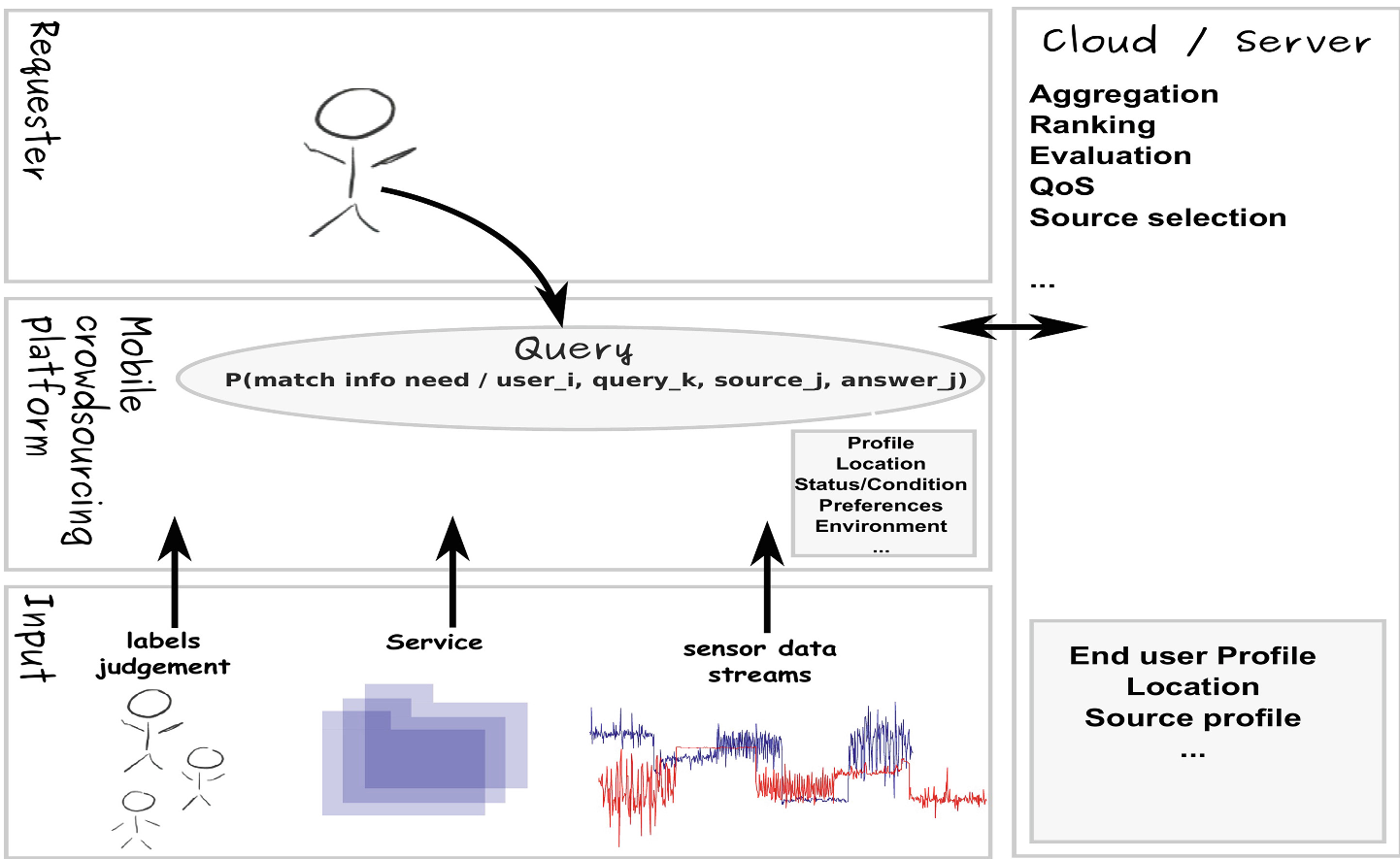
The authors propose moving the "Worker Client" from the PC to the smartphone. This isn't just about a smaller screen; it's about implicit data procurement.
1. The Reference Architecture
The system utilizes a cloud server to aggregate responses while maintaining worker profiles that include not just skills, but also contextual history.
2. Intelligent Task Allocation
By utilizing sensors, the platform can perform "Cognitive Load" estimation. For example:
- Eye-gaze tracking can detect fatigue.
- Microphone/Loudness sensors can determine if a worker is in a location conducive to high-concentration tasks (like translation).
- GPS allows for "Hyper-local" tasks, such as asking someone to verify a shelf price in a nearby grocery store.
Opportunities: Shifting the Paradigm
The paper identifies several "game-changers" for the industry:
- Participatory Sensing: Workers can provide "labeled sensor data." This is a goldmine for Ubiquitous Computing researchers who need thousands of hours of data (e.g., "accelerometer data while riding a bike") to train machine learning models.
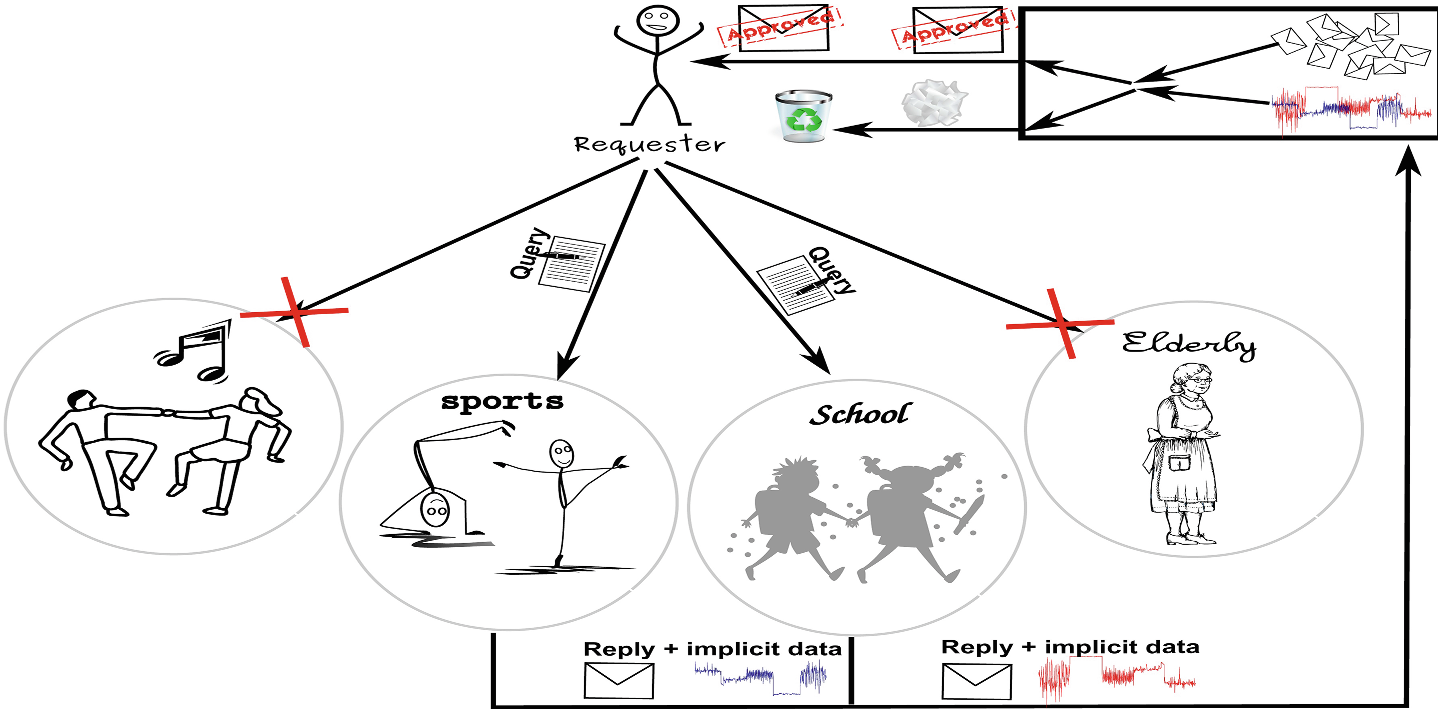
- Crowdsourcing for the Masses: By making the requester interface mobile, the hierarchy between "Employer" and "Worker" dissolves. A person on the street could "crowdsource" someone to bring them a coffee or translate a menu in real-time.
- Smart City Actuators: The platform can act as the "social nervous system" of a city, connecting government queries to local citizens' sensors and inputs.
Challenges & Critical Analysis
While the vision is bold, the authors acknowledge significant hurdles:
- The Privacy Paradox: Collecting GPS and activity data is highly invasive. The paper suggests anonymization and strict data policies, but the "trust" factor remains a barrier to entry.
- Hardware Constraints: Mobile devices have limited battery life and small screens. Designing a "Human Intelligence Task" (HIT) that is solvable in 30 seconds while walking is a UI/UX challenge.
- Data Noise: Raw sensor data is messy. Extracting "meaningful features" in real-time requires high-performance cloud processing.
Conclusion
This work serves as a foundational roadmap for the next generation of crowdsourcing. By treating the smartphone not just as a screen, but as a context-aware sensor pod, we can transform crowdsourcing from a digital assembly line into a pervasive, real-time utility for smart cities and AI research.