
Beyond PKI: Leveraging Social Graphs for Mobile Trust Authentication
Mobile social network based trust authentication
This paper introduces a Trust Authentication Scheme for mobile social networks that leverages the "Six Degrees of Separation" principle. It combines Bayesian Belief Network (BBN) propagation with friendship graphs (e.g., Facebook) to quantify the reliability of messages from strangers in mobile environments.
TL;DR
Encryption ensures a message isn't tampered with, but it doesn't ensure the sender is telling the truth. This paper proposes a social-network-based trust framework that uses your Facebook friend graph to calculate the "credibility" of strangers. By moving beyond simple shortest paths to Maximum Bottleneck path analysis, the researchers provide a more robust way to detect malicious reports in mobile environments like vehicular networks.
The Missing Link: Semantic Trust
In the world of mobile computing—specifically Vehicular Ad-hoc Networks (VANETs)—we often rely on information from people we don't know. If a driver reports "rocks on the road" to clear traffic for themselves, current PKI (Public Key Infrastructure) systems will successfully verify the driver's identity, but they cannot verify the truthfulness of the claim.
The authors argue that human trust is transitive: if I trust Bob, and Bob trusts Claire, I have a basis to trust Claire. By mapping this onto a massive social graph, we can transform a "stranger" into a "friend of a friend (x6)," allowing for a mathematical derivation of belief.
Methodology: Propagating Belief
The core of the system relies on the Bayesian Belief Network (BBN). Each user assigns a trust score to their immediate friends. When a user receives a message from a stranger, the system finds a path through the social graph and calculates an aggregate trust value.
The paper explores three main strategies for path selection:
- Min Hop Path: Finding the shortest route (the "Six Degrees" approach). It's fast but ignores the quality of the individual links.
- Maximum Bottleneck (Maximin): It searches for the path where the "weakest link" (the lowest trust score) is as high as possible.
- Bottleneck Distribution Average: To prevent "bribing" attacks where a malicious node influences a single friend, this method averages the top 10 bottleneck paths to find anomalies.
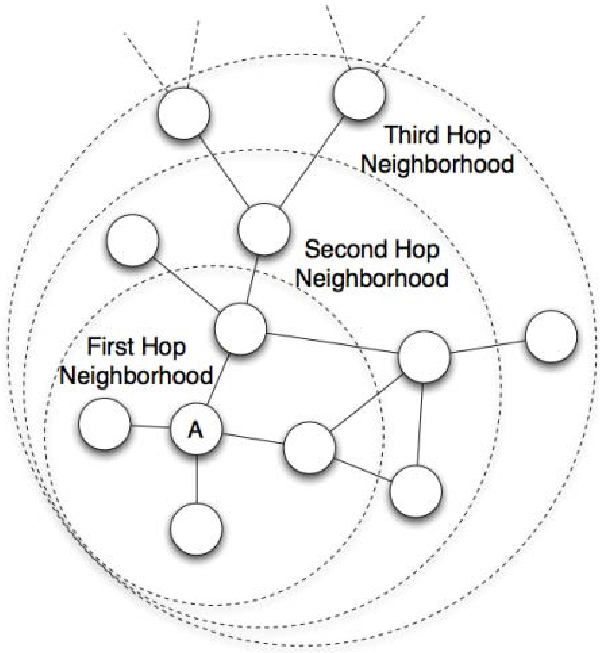 Figure 1: The Trust Transitivity Principle where trust is derived through referrals.
The Mathematical Intuition
The trust score is computed recursively: This formula ensures that if an intermediate node () is untrustworthy ( is low), the final belief in the target () is heavily penalized, regardless of how much claims to trust .
Experimental Validation
The authors validated their approach using two distinct datasets: an artificial network of 1,000 nodes and the Wikipedia Vote Network (real-world data of users voting for administrators).
Key Findings:
- The Small World is Real: In the Wikipedia dataset, the average path length for "Min Hop" was only 4.5, confirming that users are closely connected.
- Stability vs. Distance: The "Maximum Bottleneck" method resulted in longer paths (avg ~17 hops in artificial data) but offered significantly lower standard deviation in trust scores. This suggests that "taking the long way" through highly trusted intermediaries is more reliable than taking a "shortcut" through a stranger.
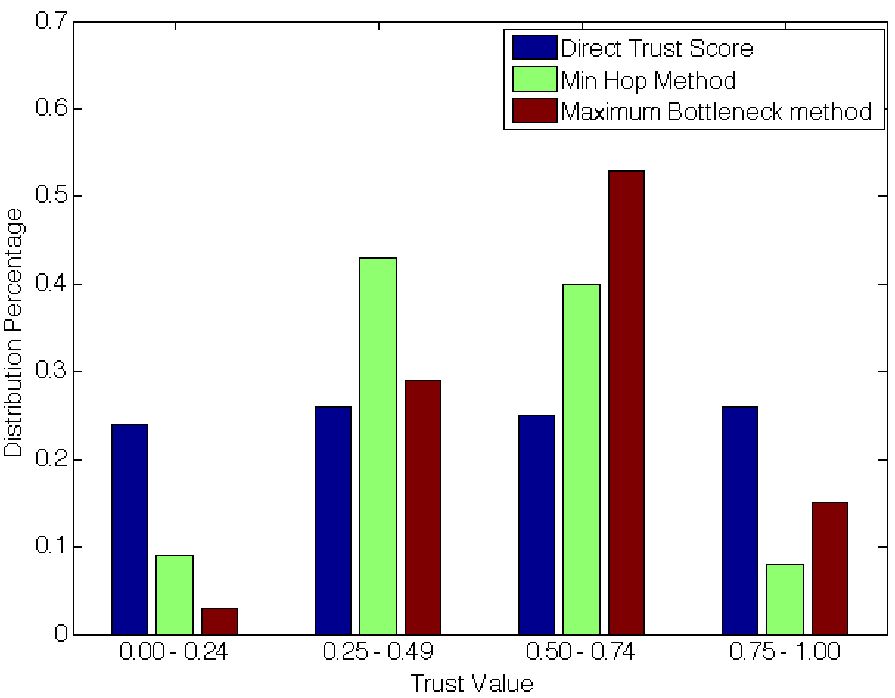 Figure 2: Performance comparison showing the higher trust concentration in the Maximum Bottleneck method.
Critical Perspective
Why this works
The genius of this approach is its resistance to "Sybil attacks" (creating fake accounts). While an attacker can create 1,000 fake friends, those fake friends are only connected to the attacker. To influence your trust score, the attacker must find a path to you, which requires tricking one of your actual, verified friends.
Limitations
- Privacy Concerns: The model assumes access to a global friend graph. In today's era of heightened privacy (post-Cambridge Analytica), APIs for "whole-graph" downloads are largely restricted.
- Latency: Propagating Bayesian calculations over 17 hops in a real-time vehicular environment might introduce delays that are unacceptable for safety-critical applications.
- Cold Start: What happens to users who are not active on social media? They become "isolated nodes" with zero reachable trust.
Conclusion
This work shifts the focus of network security from identity to reputation. By treating the social network as a giant sensor array for human character, the authors provide a compelling blueprint for how future mobile systems can filter "fake news" and malicious actors using the existing web of human relationships.