
Dissecting Mobile YouTube Traffic: Why Your Smartphone Buffers Differently
Mobile social networks
This paper presents a comprehensive characterization of YouTube mobile network traffic over 3G networks. It introduces a methodology to analyze traffic patterns across high-end iOS, high-end Android, and mid-range Android devices, revealing specific streaming strategies like dual-threshold buffering and 3GP-based encoding.
TL;DR
This study provides a deep dive into how YouTube optimized its traffic for the 3G era. Unlike desktop traffic, mobile YouTube utilizes specific 3GP containers, more aggressive throttling, and device-dependent buffering strategies. Notably, high-end Android devices use a "dual-threshold" mechanism to pause and resume downloads, whereas iOS devices favor a continuous single-stream approach.
Problem & Motivation: The Mobile Blind Spot
By 2014, YouTube had dominated global Internet traffic, yet most academic models were built on "wired" assumptions. The researchers at the University of Granada noticed that mobile users weren't just "smaller PCs"; they operated on constrained 3G radio links and varied hardware. Existing literature lacked a granular comparison of how different operating systems (iOS vs. Android) and mobile-specific formats (like 3GP) altered the network load.
Methodology: Capturing the Pulse of 3G
The team monitored three distinct terminals:
- iOS-H: High-end Apple device.
- Android-H: High-end Android device.
- Android-M: Mid-range Android device with limited RAM.
By using packet sniffers (tcpdump and pirni) alongside the YouTube Android Player API, they could sync network packets with actual playback "events" (like buffer-full or playback-start), allowing them to see exactly why the server stopped sending data.
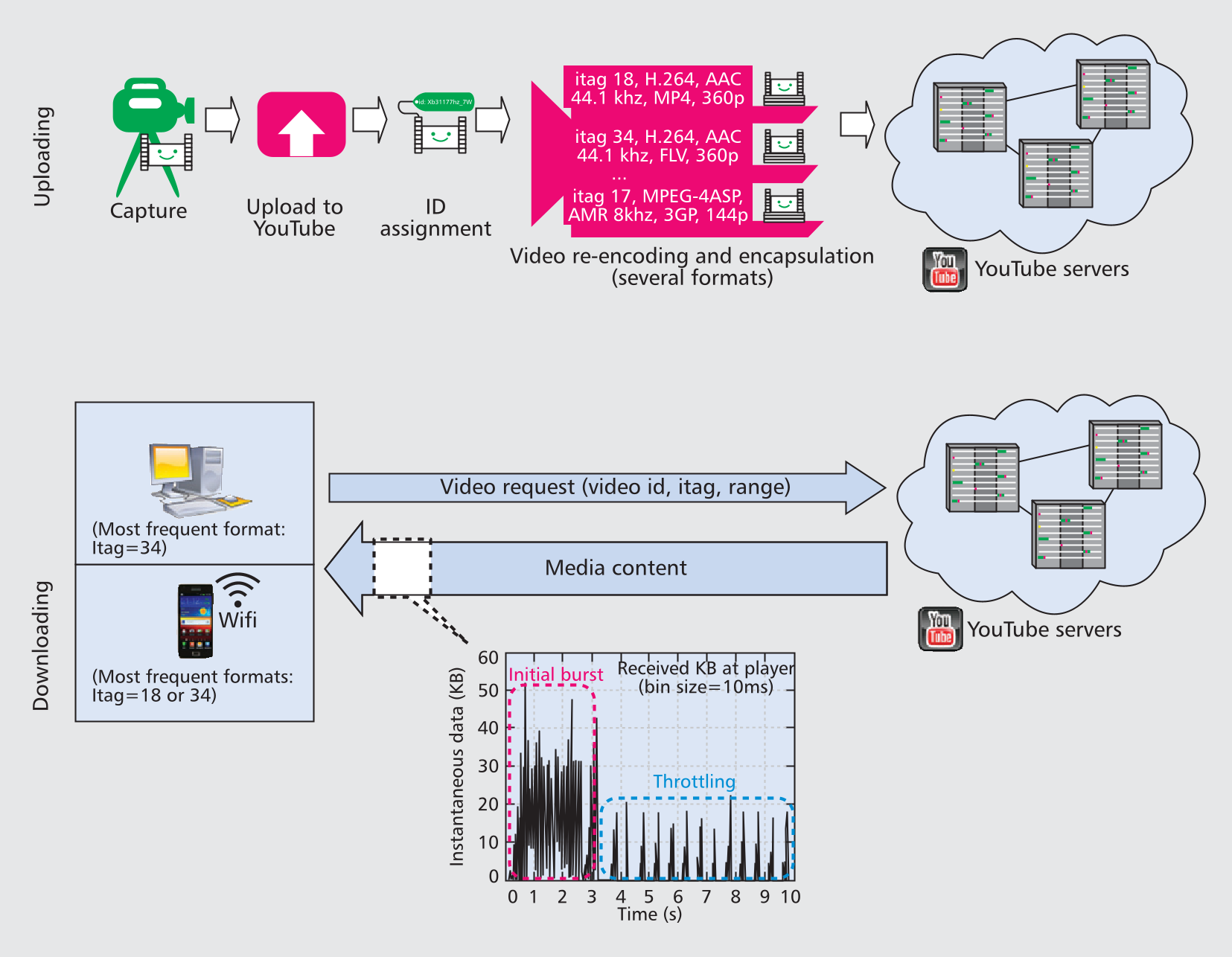 Figure 1: The standard signaling and data flow for YouTube mobile requests.
Methodology: The Server and Client Dance
The paper identifies a crucial two-phase transmission strategy:
- Initial Burst Phase: The server sends ~34 seconds of video data as fast as the network allows to fill the player's buffer immediately.
- Throttling Phase: To save bandwidth (in case the user closes the video), the server slows down. In mobile, this "Throttling Factor" is 2.0—meaning it sends data at twice the encoding rate—which is more aggressive than the 1.25 factor used for PCs.
The Dual-Threshold Policy (Android-H)
The most technical insight is the Dual-Threshold Policy observed in high-end Android devices. Instead of one long download, the client uses HTTP Range requests to fetch segments.
- Upper Threshold (~100s): When the buffer hits 100 seconds of video, the client sends a
TCP_RESETor closes the connection to stop the flow. - Lower Threshold (~40s): When the user watches enough video that the buffer drops to 40 seconds, the client opens a new connection to grab the next segment.
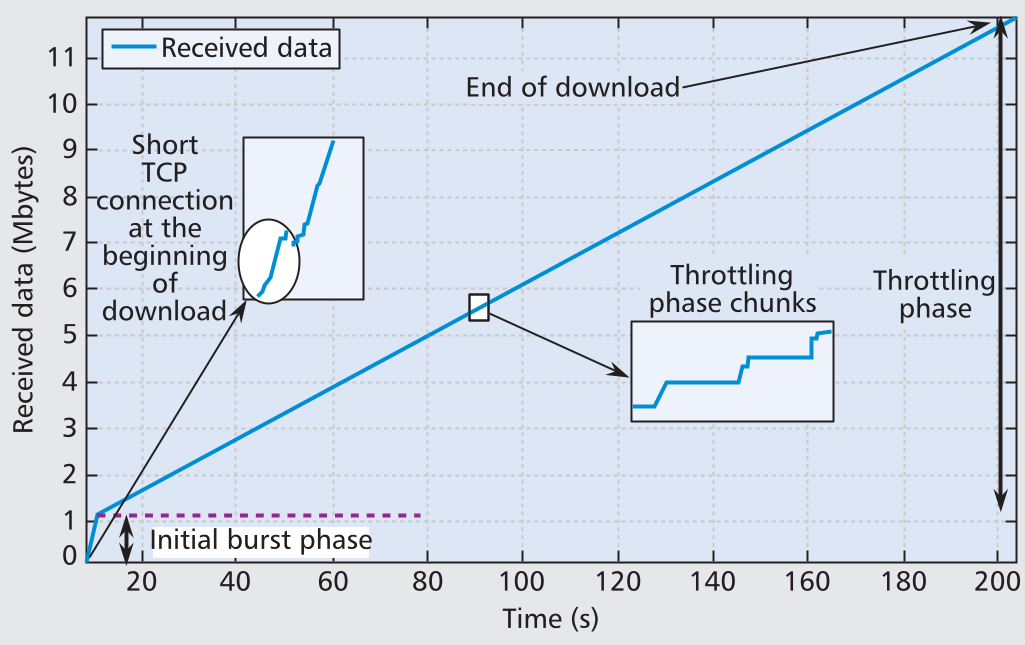 Figure 2: Contrast between Android-M (throttled by TCP window) and Android-H (segmented via dual-thresholds).
Experiments & Results: Quantitative Differences
The researchers found that mobile YouTube defaults to itags 17 and 36 (3GP containers). These formats are lighter, with encoding rates usually under 275 kb/s, specifically designed for 3G's instability.
Another key finding: Android-M (mid-range) terminals often throttled their own downloads not through logic, but through physical limitations. The TCP Receive Window would fill up due to memory constraints, effectively slowing the download—a hardware-induced throttling that high-end devices avoided.
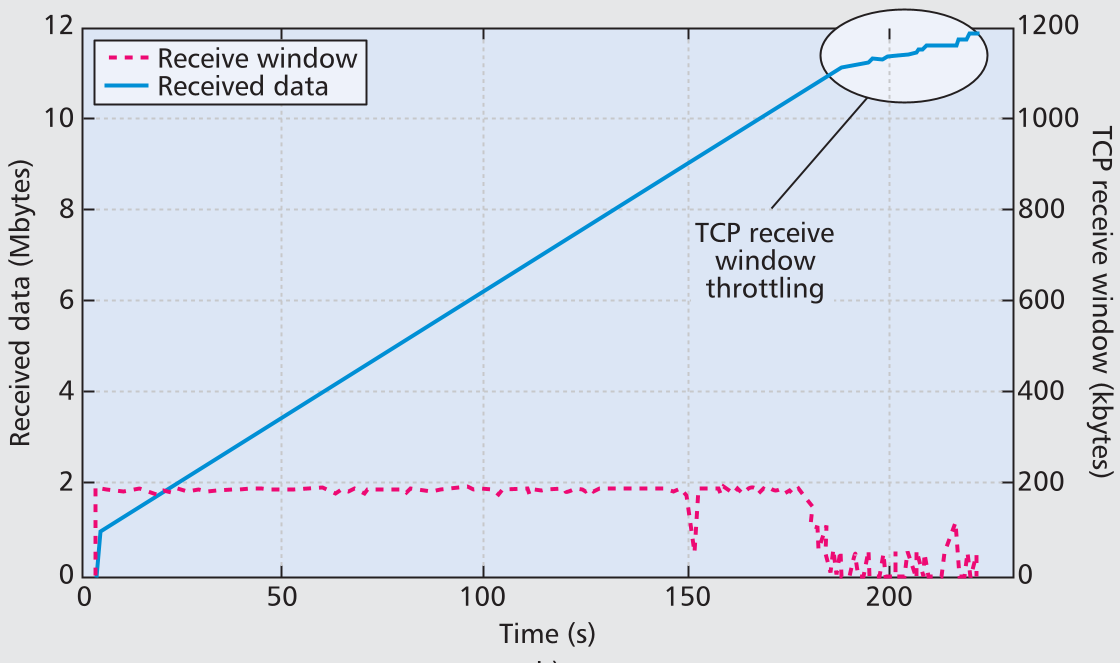 Figure 3: Initial burst size and Throttling Factor comparison.
Critical Analysis & Conclusion
Takeaway
This work highlights that traffic engineering cannot be OS-agnostic. The same YouTube video generates entirely different traffic patterns on an iPhone versus an Android due to how the respective players manage their buffers.
Limitations
While groundbreaking for its time, the study is limited to the 3G era and the then-current YouTube native apps. Modern YouTube uses DASH (Dynamic Adaptive Streaming over HTTP) and much higher resolutions (4K), which likely employ even more complex adaptive bitrate (ABR) algorithms.
Future Impact
The "Dual-Threshold" discovery remains a foundational concept for Quality of Experience (QoE) researchers. It reminds us that to optimize a network, you must understand the "greedy" nature of the application-layer buffer.