
Deconstructing Social Ties: How Your GPS Data Reveals Your Relationships
On the use of mobility data for discovery and description of social ties
The paper introduces a novel information theory-based framework to discover and describe social ties (acquaintances, friends, cohabitees) using only spatio-temporal mobility data. By proposing two new indicators, IPL and IPR, the authors successfully distinguish between relationship types based on the purpose and frequency of shared location visits.
TL;DR
Can your daily commute and weekend outings prove who your friends are versus who your colleagues are? This paper presents a framework that uses Information Theory to separate our "routine-based" movements from our "intention-based" social interactions. By introducing two metrics—IPL (Interest in Places) and IPR (Interest in Person)—the researchers can distinguish between cohabitees, buddies, and coworkers using nothing but timestamped location coordinates.
Background: The "Interaction" Gap
Most social network analysis is "easy" when we have access to emails or phone logs—a message is a clear signal of interaction. However, mobility data is "interaction-poor." Just because two people are in the same building doesn't mean they know each other. Existing methods often use Normalized Mutual Information (NMI) to measure behavioral similarity, but as the authors point out, a naive NMI approach can't distinguish between a husband and wife versus two strangers who simply happen to have similar 9-to-5 office schedules.
Methodology: Why Purpose Matters
The core insight of this paper is that social ties are formed at "stay points"—places where people hang out—rather than the paths they take to get there.
The Two-Indicator Solution
The authors move beyond simple correlation by splitting shared information into two distinct buckets:
- IPL (Interest in common Places): This measures how much people share information over frequently visited spots. High IPL suggests a tie bound by the location itself (e.g., "we both work here").
- IPR (Interest in Person): This targets infrequently visited stay points. If you see two people together at a random cafe or a niche musical event, that "unlikely" event carries more information about their personal bond than seeing them together in a cafeteria.
 Figure: The process of extracting social tie types from raw mobility data.
The Mathematics of Spontaneity
The paper defines Shared Information Content (). Unlike standard Mutual Information, which looks at the whole sequence, looks at the probability of simultaneous presence. By scaling this by the frequency of visits, the IPR indicator effectively filters out the "noise" of daily routines to find the "signal" of social choice.
Experiments: Putting Sensors to the Test
The researchers deployed custom-built GPS loggers to a group of colleagues and couples for three weeks.
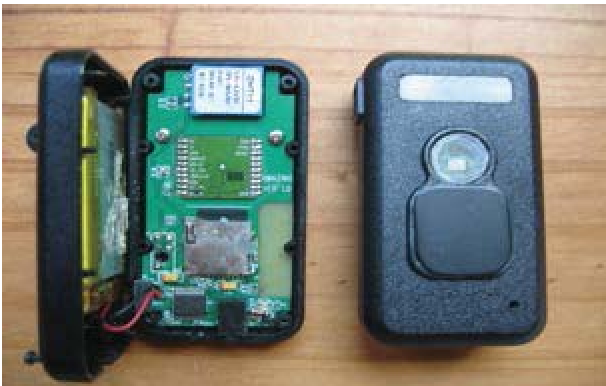 Figure: The custom GPS data logger used in the study.
Key Findings:
- Colleagues vs. Friends: Coworkers showed high IPL (shared office) but nearly zero IPR.
- The "Buddy" Effect: Buddies who work together AND hang out showed high scores in both indicators.
- The Power of the Obvious: Cohabitees were identified by high IPL during nighttime hours, whereas "buddies" peaked during the day.
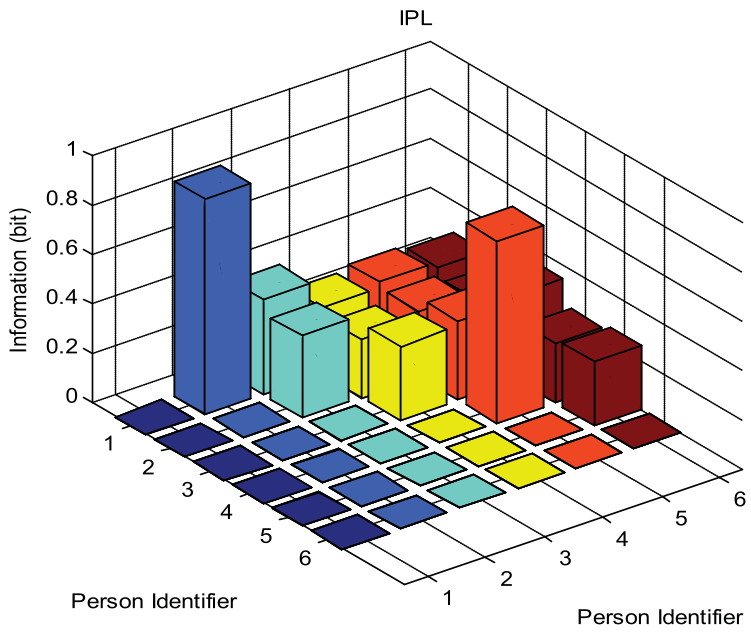 Figure: The IPL results (left) and IPR results (right) showing the clear distinction between social groups.
Critical Analysis & Conclusion
The brilliance of this work lies in its Inductive Bias: it assumes that social relationships satisfy the theory of Homophily (birds of a feather flock together) and that the "rarity" of a shared event determines its social significance.
Limitations:
- Sample Size: The study used a small group (6 people). Larger datasets with more "accidental" co-occurrences (like a crowded subway) might introduce noise.
- Privacy: While theoretically fascinating, this research highlights how easily "anonymous" GPS traces can be de-anonymized to reveal intimate personal relationships.
Takeaway: By mathematically separating "Interest in Place" from "Interest in Person," we can finally map the social fabric of a city using the silent data generated by our pockets every day.