
Beyond Follower Counts: Quantifying Mobilization Capacity via Action Sequence Learning
Measurement of mobilization capacity via actions sequence learning within institutional Facebook fan pages
This paper introduces a method for measuring the mobilization capacity of Facebook fan pages by applying Action Sequence Learning (GSP algorithm) to user interactions. Built upon Pierre Bourdieu’s sociological theories, the study analyzes how institutional pages stimulate social exchanges through sequences of "Like," "Comment," and "Share."
TL;DR
In the landscape of Digital Sociology, a "Like" is more than a metric—it is a social exchange. This paper moves beyond vanity metrics (follower counts) to propose a methodology for measuring Mobilization Capacity. By utilizing Action Sequence Learning (GSP), the authors quantify how effectively institutional Facebook pages convert posts into sequences of social interactions, validating Pierre Bourdieu's theories in the digital realm.
Background: Relocating Sociology to the Digital Field
The study is positioned at the intersection of Digital Sociology and Unsupervised Learning. It treats Facebook Fan Pages as "Agents" operating within a "Field" (the Social Network), where their goal is to accumulate Social Capital.
The core intuition is that mobilization is not about how many people see a post, but how many are moved to perform a sequence of actions. Traditional research often misses the order and co-occurrence of these actions, treating them as isolated variables rather than a continuous practice of sociability.
Methodology: From Qualitative Theory to Quantitative Sequences
The authors adopt a 4-step workflow:
- ETL (Extract, Transform, Load): Data was scraped via Facebook API and Selenium, capturing Post type, Likes, Comments, and Shares.
- Transformation: Numerical values were converted into categorical indicators. If comments > 0, it was labeled K; if 0, K̄. This allowed the algorithm to process the data as strings of behaviors.
- Action Sequence Learning: Using the GSP (Generalized Sequential Pattern) algorithm, the system learned patterns of size 3 (e.g.,
<K, L, S>). - Mobilization Metric: Mobilization is defined by the frequency of "active" sequences (where interactions occurred) versus "inactive" sequences (where followers remained silent).
 The framework emphasizes the flow from theoretical sociability to automated sequence extraction.
Key Findings: The "Scale Paradox"
The results from 14 institutional campuses provide a striking empirical validation of Bourdieu’s claim: Mobilization capacity is independent of the network's breadth.
| Metric | High Mobilization Example (GYM) | Low Mobilization Example (URU) |
|---|---|---|
| Followers | 11,711 | 3,043 |
| 0-Action Posts | 4.73% | 50.05% |
| 3-Action (KLS) Rate | 34.91% | 5.13% |
As shown in the data, the page "URU" had over half of its posts result in zero mobilization, despite having a mid-sized follower base. Conversely, "GYM" managed to trigger all three interaction types (Like, Comment, and Share) in nearly 35% of its total interactions.
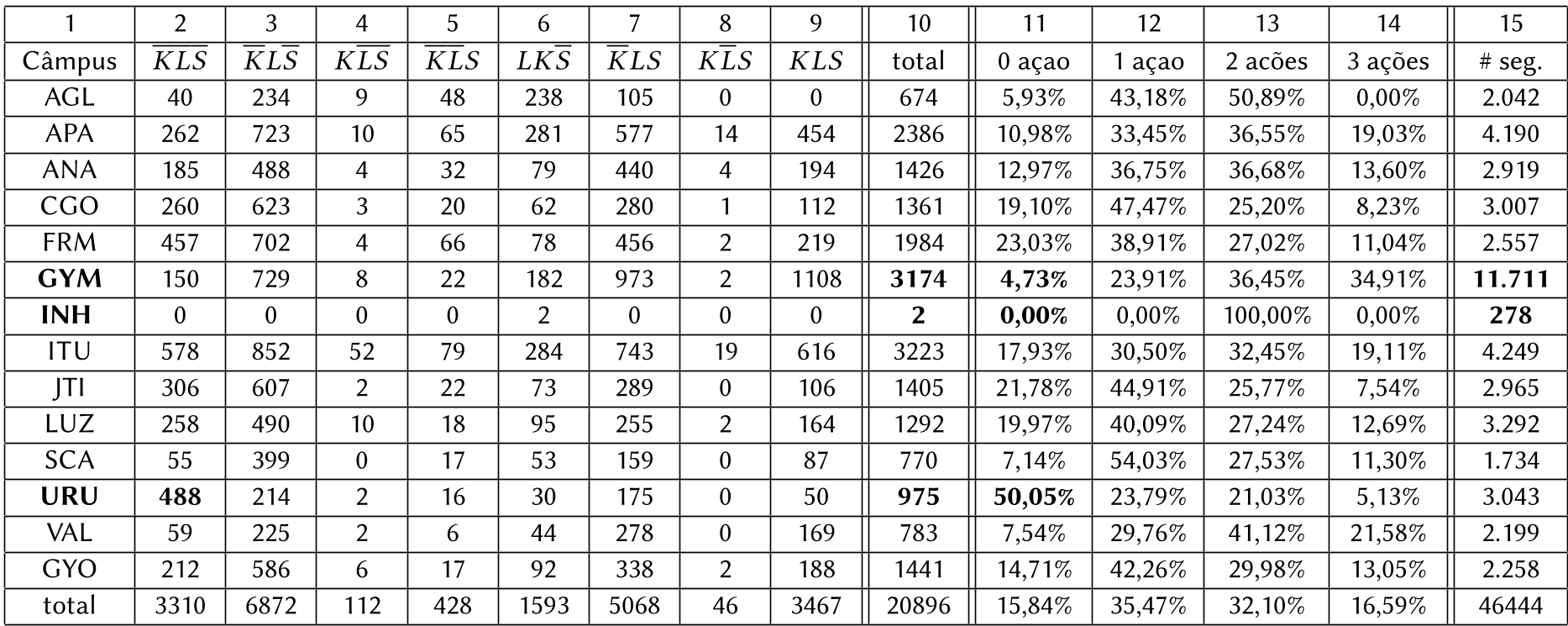 Table 1: Detailed breakdown of action sequences and mobilization percentages across 14 fan pages.
Critical Insight & Conclusion
The significance of this work lies in its Inductive Bias: it assumes that the interplay between different actions (Like vs. Comment vs. Share) is what defines social mobilization.
Takeaway:
- For Researchers: This provides a replicable template for bridging qualitative social theory with unsupervised pattern mining.
- For Social Media Managers: Stop chasing "Reach." A high "Share" sequence indicates true mobilization and accumulation of social capital, whereas high "Likes" but low "Comments" might suggest superficial engagement.
Limitations: The study is localized to educational institutions and uses a specific sequence length (3). Future work could expand these sequences to include time-deltas (how fast the mobilization happens) and sentiment analysis of the "K" (Comment) component.