
MobiSN: Redefining Social Connectivity in Infrastructure-less Mobile Environments
MobiSN: Semantics-Based Mobile Ad Hoc Social Network Framework
This paper introduces MobiSN, a novel framework for Mobile Ad Hoc Social Networks (MANETs). It utilizes an ontology-based semantics matching mechanism and a custom Semantics-based Distance-Vector (SDV) routing protocol to enable decentralized friend discovery and resource sharing without requiring internet access.
TL;DR
MobiSN is a pioneering framework that transforms Mobile Ad Hoc Networks (MANETs) into intelligent social ecosystems. By replacing simple keyword matching with ontological semantics and introducing a Semantics-based Distance-Vector (SDV) routing protocol, it enables mobile devices to spontaneously form communities and discover "friends" based on deep interest similarity rather than just shared strings.
Problem & Motivation: The "Keyword Trap" in Mobile Networks
Traditional mobile social applications like Nokia Sensor or Jambo Networks share a fundamental flaw: they are semantically blind. If User A lists "AI" and User B lists "Artificial Intelligence," a standard keyword-match system sees zero overlap.
In highly heterogeneous mobile environments, this leads to:
- Low Recall: Missing perfectly compatible friends due to vocabulary differences.
- High Overhead: Traditional routing (flooding) kills battery life and clogs bandwidth by broadcasting queries to every reachable node.
The authors' insight was to treat a user's social profile not as a list of words, but as a location in a conceptual hierarchy (Ontology).
Methodology: The Core Innovations
1. Ontological Profile Matching
MobiSN utilizes a dual-layer ontology (T-Box for concepts, A-Box for specific user instances). The core "magic" happens in the Concept Distance calculation:
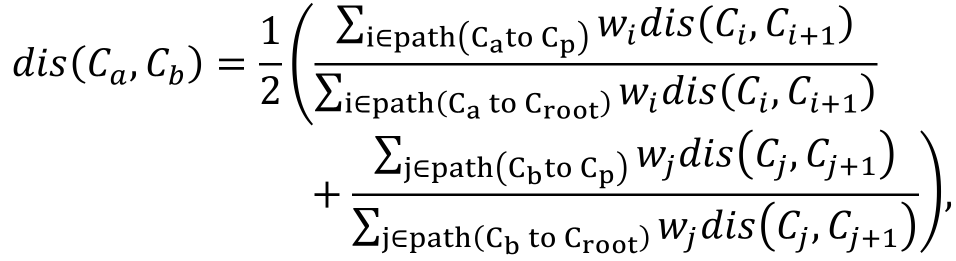
By calculating the shortest path between concepts in an ontology tree (considering node depth and edge weights), the system can mathematically prove that a user interested in "Mamba" is semantically close to one interested in "SSMs," even if the words differ.
2. SDV Routing & The "Leap" Mechanism
To avoid the "Broadcast Storm" problem, the Semantics-based Distance-Vector (SDV) protocol allows nodes to maintain routing tables containing neighbors' ontological summaries up to hops.
- Local Knowledge: Nodes only forward queries to neighbors whose cached profiles suggest a high similarity.
- The Leap: If no local neighbors match, the query "leaps" over barren network areas to known long-distance links cached from previous successful responses.
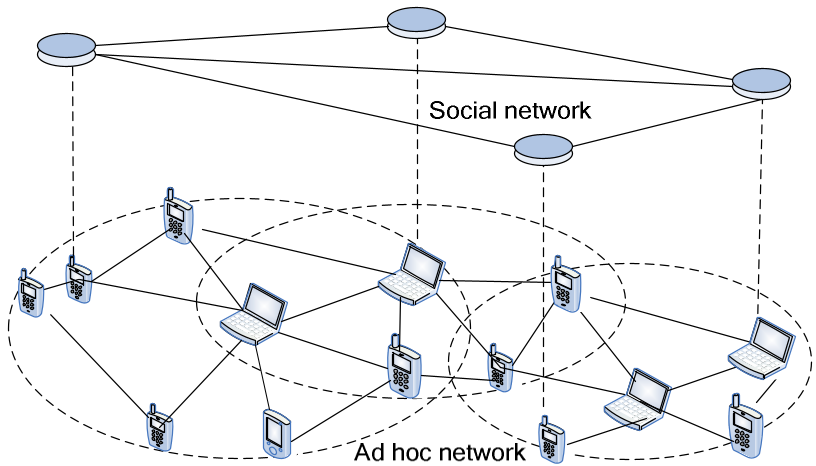 Figure 1: The dual-layered architecture connecting physical ad-hoc links to virtual social links.
Experiments & Results: Precision Meets Efficiency
Semantic Dominance
The evaluation shows that ontology-based discovery (O1) finds significantly more friends than instance-level (E1) or class-level (E2) exact matches. By adjusting the threshold , users can tune their "social reach" depending on the density of the environment.
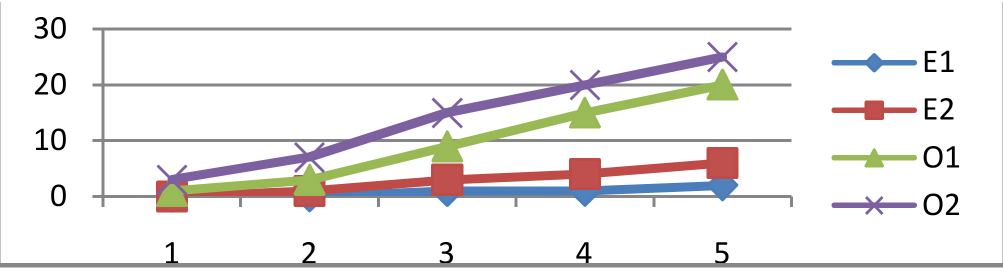 Figure 2: Number of friends discovered vs. routing hops. Ontology matching (O1) consistently outperforms syntax-based methods.
Routing Efficiency
While flooding catches more results, its overhead is prohibitive. MobiSN's SDV achieves a "sweet spot"—it matches the success rate of complex protocols but with a fraction of the overhead, primarily by shifting the cost to proactive maintenance (periodic small table updates) rather than reactive query storms.
Critical Analysis & Future Outlook
MobiSN's primary contribution is the rigorous integration of semantic inference into the routing layer. In 2026, where edge-AI and decentralized privacy are paramount, this framework remains highly relevant.
Limitations:
- Ontology Dependency: The system requires a shared T-Box. If two devices use completely different Ontological schemas, the matching breaks.
- Maintenance Cost: In extremely high-mobility environments (e.g., vehicular networks), the cost of updating the SDV routing tables might eventually rival flooding.
Takeaway: This work provides a blueprint for "Intelligent Edge Socializing," moving us away from centralized servers like Facebook and toward a future of autonomous, context-aware mobile communities.