
SNARE RCO: Quantifying the Invisible Value of Organizational Social Networks
A Model to Evaluate the Relational Capital of Organizations (SNARE RCO)
This paper introduces SNARE RCO, a comprehensive evaluation model designed to quantify the Relational Capital Value (RCV) within organizations. By integrating Social Network Analysis (SNA) with traditional intellectual capital frameworks, the model provides a mathematical approach to measuring the intangible value derived from internal and external social relationships.
TL;DR
Relational capital—the value of social relationships—is often the "dark matter" of organizational assets: essential but invisible. This paper proposes SNARE RCO, a mathematical model that integrates Social Network Analysis (SNA) with human and structural capital metrics to calculate a tangible Relational Capital Value (RCV). It transforms subjective social interactions into quantifiable data points.
Background & Motivation: Beyond the Balance Sheet
In modern organizations, the total value isn't just in the hardware or the bank balance; it resides in Intellectual Capital. Academic consensus typically splits this into:
- Human Capital: What's in people's heads.
- Structural Capital: The processes and internal structures.
- Relational Capital: The value of who knows whom and how they collaborate.
The authors argue that previous models failed because they treated these as independent silos. In reality, a brilliant employee (Human Capital) is only as valuable as their ability to solve problems for others through the network (Relational Capital). The motivation behind SNARE RCO is to bridge this gap by providing a "Social Network Analysis and Reengineering Environment."
Methodology: The RCV Formula
The core of the paper is a calibrated mathematical framework. The Relational Capital Value (RCV) is not just a sum of nodes, but a weighted function of four primary inputs:
- Organizational Valuable Factors (OVF): High-level metrics like brand count and partner numbers.
- Network Valuable Factors (NVF): Graph-theory metrics like network density and size.
- Social Entity Valuable Factors (SEVF): Individual traits such as technical expertise combined with network centralities (Indegree/Outdegree).
- Relational Value (RV): The actual "transactions" or interactions between entities.
The Dyadic Producer-Consumer Model
The authors suggest that every connection has a direction. In a specific context (e.g., problem-solving), Entity A might be the Consumer (seeking help) and Entity B the Producer (providing expertise). The value of the link is derived from Entity B's competence and the "proximity" or strength of the relationship.
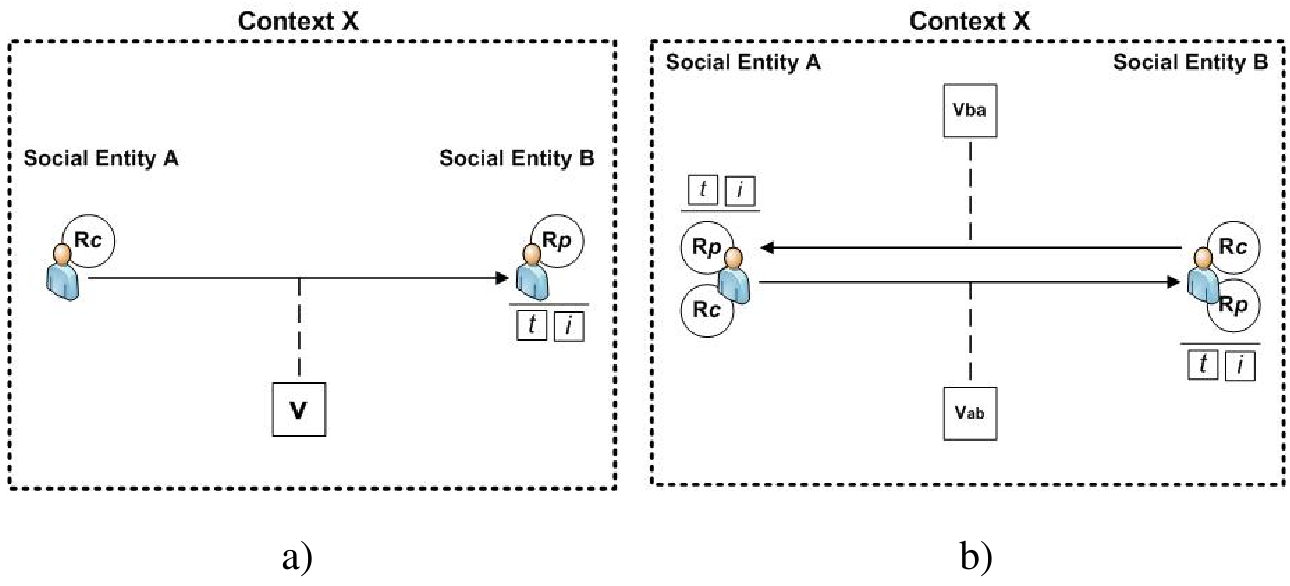 Figure 1: Representations of consumer/producer roles in a dyad.
The Global Formula
The total RCV is calculated as: Where are calibration weights that allow an analyst to tune the model based on the specific organization's priorities.
Experimental Validation: Simulated Scenarios
The authors tested the model using SNARE Explorer, a real-time simulation tool. They created seven distinct scenarios among three social entities to observe how RCV fluctuates as relationships are added or tightened.
 Figure 2: Seven simulated relational scenarios demonstrating network growth.
Key Finding: While organizational and individual factors provided a "baseline" value, the rapid growth in RCV was driven primarily by the RV Sum—the intensification of interactions. This confirms that even with the same staff, an organization can significantly increase its value simply by improving its internal collaboration network.
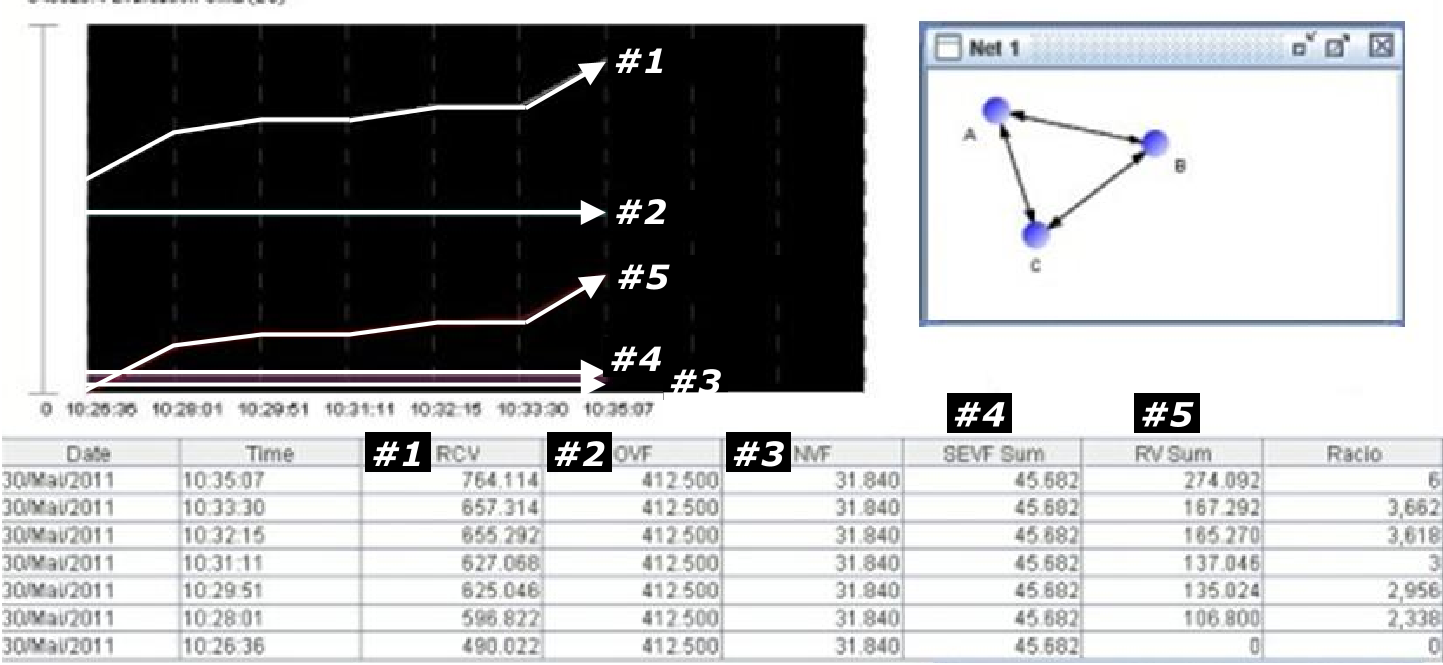 Figure 3: Graphical evolution of RCV across scenarios, showing the sensitivity to relational increases.
Critical Insight & Conclusion
The SNARE RCO model provides a much-needed bridge between Graph Theory and Management Science. It acknowledges that "intangibles" are subjective but argues that they can be measured by looking at the reduction of uncertainty.
Takeaways for the Industry:
- Integration is Key: Don't measure employee performance in a vacuum. A "high-performer" with zero network connections contributes less to Relational Capital than a "mid-performer" who acts as a crucial information hub.
- Dynamic Calibration: The model’s use of weights (Ow, Nw, etc.) is its strongest suit, allowing it to be adapted for different industries (e.g., a creative agency vs. a manufacturing plant).
Current Limitations: The model relies on accurate data regarding "who talks to whom," which often requires intrusive questionnaires. Future work should look into automating this data collection through digital footprints (Email, Slack, Teams) while maintaining privacy.