
MNIIM: Shattering "Data Islands" to Unified Social Network Experiences
A Model Integrating Information of Multiple Social Networks
The paper introduces the Multi-Social Networks’ Information Integration Model (MNIIM), a lightweight framework designed to aggregate data from various social platforms (e.g., microblogs, positioning, and identities) into a single mobile interface. It leverages a mapping mechanism to handle heterogeneous data without direct manipulation of raw information, significantly reducing hardware overhead.
TL;DR
With users scattered across multiple platforms like LinkedIn, Facebook, and Twitter, mobile performance often takes a hit. MNIIM (Multi-Social Networks’ Information Integration Model) solves this by using a lightweight mapping mechanism that aggregates fragmented social data into a single portal, boosting read rates by over 50% while slashing memory usage.
Context & Motivation: The "Isolated Island" Problem
The modern social landscape is a double-edged sword. While diverse platforms offer unique features, they create Information Isolation Islands. For the user, this means:
- Fragmentation: Constant switching between apps to stay updated.
- Hardware Bottlenecks: Mobile devices struggle to maintain the memory and CPU requirements of multiple heavy social apps running in parallel.
While older systems like TSIMMIS or Garlic successfully integrated heterogeneous databases, they weren't designed for the high-frequency, unstructured, and dynamic nature of modern Social Network Systems (SNS).
Methodology: The Power of Mapping
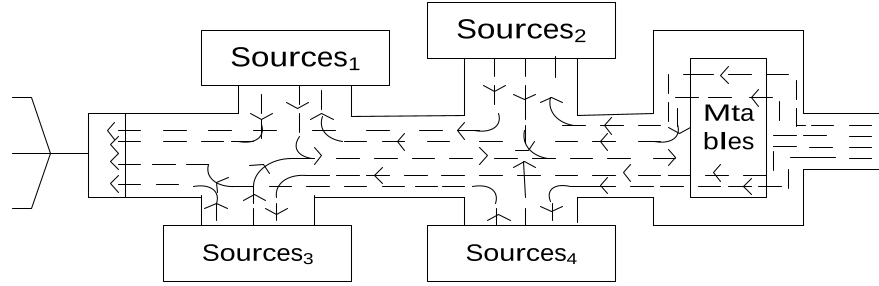
The core innovation of MNIIM is its avoidance of direct raw data manipulation. Instead, it operates on a two-phase logic:
1. Generating the Mapping Table
The model extracts characteristic values (φ) from raw social data. These values act as "proxies" or metadata (e.g., timestamps, platform tags, location IDs). By processing these lightweight proxies instead of full JSON blobs or media files, the system drastically reduces latency.
2. Inverse Mapping
When the user requests specific content, the system uses the mapping table to "inverse" the search, fetching only the necessary data segments from the source platforms. This ensures that the mobile client remains lightweight while providing a unified chronological feed.
Experimental Results: Quantitative Gains
To validate MNIIM, the authors developed the UET (User Experience Test) model, measuring four rigid indices: Microblogs Read Rate (TRR), Operation Times (OT), Position Fetch Rate (PFR), and Degree of Pleasure (DP).
- Efficiency: The Microblogs Read Rate increased by 51.32%.
- User Friction: Operation times (logins, switches) descended by 32.85%.
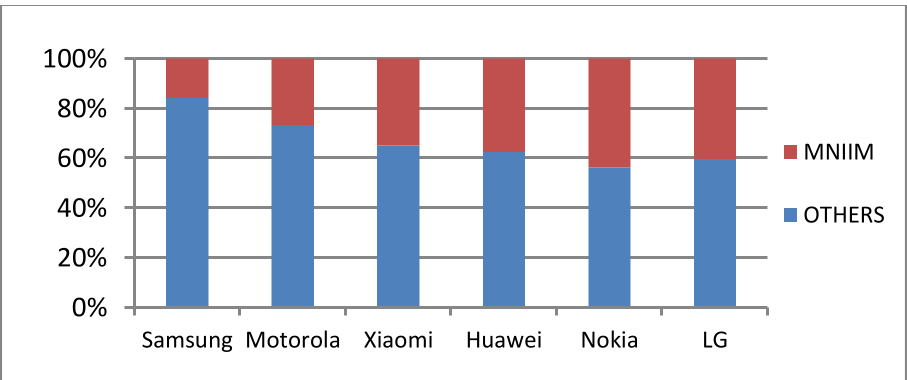
- Memory Footprint: As shown in the comparison below, MNIIM consumes significantly less RAM than the cumulative cost of running individual social apps.
Critical Insight & Conclusion
MNIIM's success lies in its methodology of abstraction. By treating social data as a set of mathematical mappings rather than static database entries, it bypasses the traditional overhead of data integration.
Limitations: While effective for text and location, the paper notes that the optimization for unstructured dynamic information and real-time multimedia still faces challenges. However, for users seeking efficiency on constrained hardware, MNIIM provides a robust blueprint for the future of "Super Apps."