
Intelligent Farming: Mastering Environmental Control via Decision Tree Modeling
Modeling of Environmental Factors for Finding Optimal Conditions on Cultivating Farm Products
This paper presents an agricultural knowledge-sharing and environmental control system targeting small-scale farmhouses. It employs the ID3 decision tree algorithm to model farmer expertise and predict environmental transitions, such as temperature and soil moisture, based on sensor data.
TL;DR
With a shrinking and aging farmer population, Japan's agricultural sector is turning to technology for survival. This paper introduces a system designed specifically for small-scale farmhouses that leverages wireless sensor networks and the ID3 decision tree algorithm. By transforming raw environmental data into logical rules, the system helps predict critical changes like soil wetness and temperature spikes, effectively digitizing the "instinct" of veteran farmers.
Background: The Crisis of the Small-Scale Farmer
Agriculture remains a cornerstone of Japan's industry, yet the statistics are sobering: a 33% decrease in the number of farmers over a decade, with an average age approaching 66. While large-scale industrial farms have access to high-end automation, small-scale operations are often left behind. The motivation for this research is to create a low-cost, high-intelligence support system that can predict the farmland environment in the near future and prevent crop losses.
Methodology: From Entropy to Actionable Rules
The heart of the system lies in how it processes information. The researchers don't just record data; they model it to find discriminating power.
1. Data Collection and Knowledge Engineering
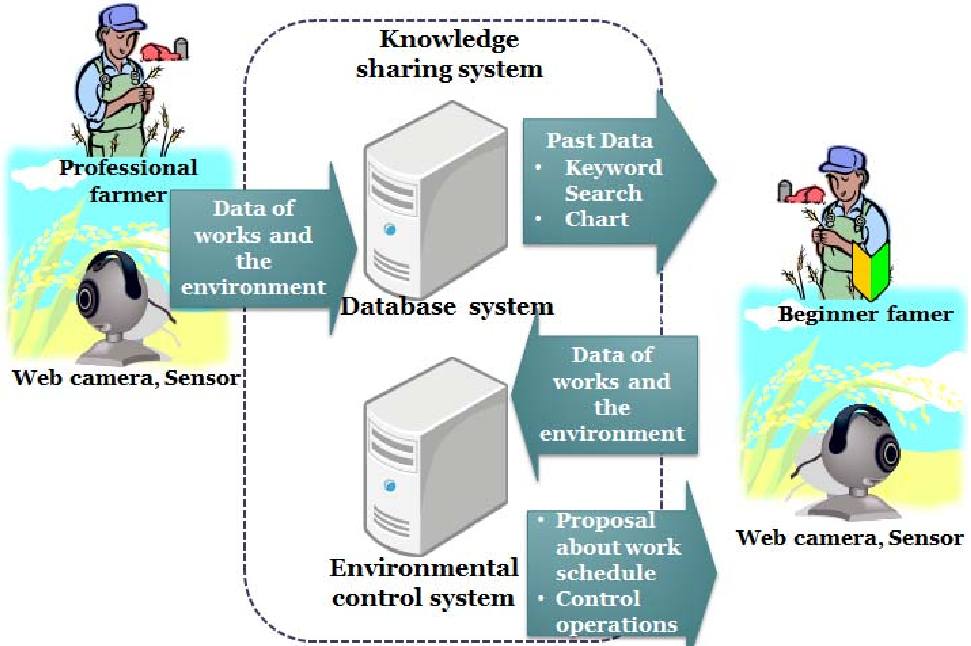
The system collects data every 10 minutes via sensors (measuring temperature at various heights, ultraviolet rays, and humidity). Rather than relying solely on subjective interviews, the system combines objective sensor data with farmer work diaries to build a comprehensive "Knowledge Sharing System."
2. The ID3 Algorithm
The core insight is using the ID3 algorithm to handle agricultural uncertainty. By calculating Average Entropy, the system determines which environmental factor has the most influence on a specific outcome (e.g., whether a certain condition is "Positive" or "Negative" for plant health).
The "Discriminating Power" is calculated as the difference between the entropy of the total set and the weighted average of the sub-entropies after splitting on a factor:
- Step 1: Calculate total entropy for a target outcome.
- Step 2: Split the data by factors like Weather, Temperature, or Watering.
- Step 3: Assign the factor with the highest information gain to the root of the decision tree.
Experiments and Results
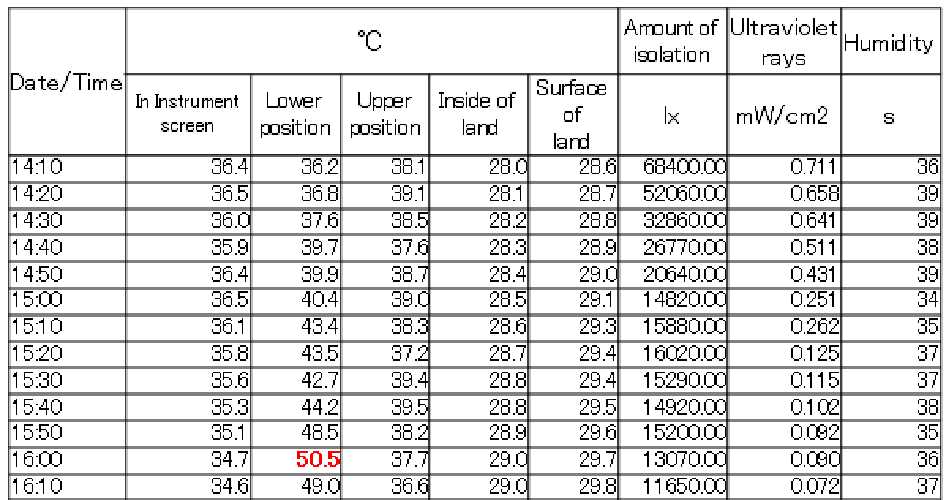
The researchers tested their model using real-world data from tomato cultivation experiments. A critical case was observed on August 28, 2013, when temperatures inside the greenhouse spiked to over 50°C—a lethal level for tomatoes.
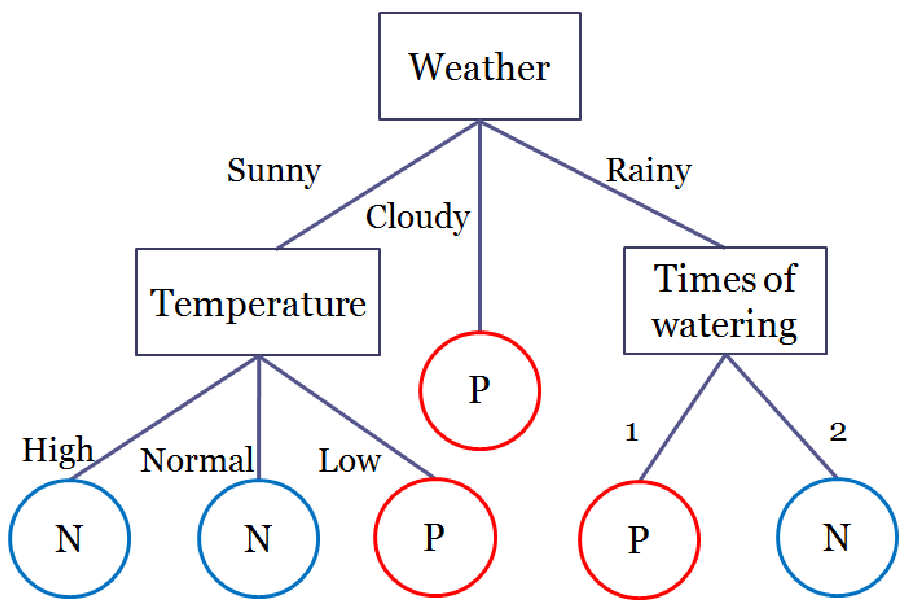
The ID3 algorithm successfully identified "Weather" as the primary branch of the decision tree (Power: 0.322), followed by "Temperature" and "Watering." This hierarchical structure allows the system to generate "rules"—for instance, "If Weather is Sunny and Temperature is High, then specific intervention is required."
Critical Analysis & Conclusion
This work provides a solid foundation for Digital Agriculture. The use of decision trees is particularly wise because they are "white-box" models—farmers can see the logic behind a prediction, which builds trust in the system.
Limitations & Future Work
While the ID3 algorithm works well on discrete, experimental data, the authors acknowledge a significant hurdle: Scalability. With nearly 300,000 records collected in a single year from just a few sensors, the system needs more robust preprocessing to handle the "Big Data" of real-world farming. Future iterations will need to address time-series synchronization and the nuances of varying crop cycles.
Ultimately, this research suggests that the future of farming isn't just about harder work, but smarter modeling of the environment we often take for granted.