
Beyond Permission: Quantifying the Probability of Privacy Leaks in Social Networks
Modeling Exposure in Online Social Networks
The paper introduces a formal probabilistic framework for measuring "Knowledge Exposure" in Online Social Networks (OSNs). By adapting the PageRank algorithm to a specialized navigation model, the authors quantify the likelihood that specific information about a user is actually seen by others, moving beyond binary access control to a nuanced privacy metric.
TL;DR
Access control tells you who can see your data; Exposure tells you who will see it. This paper proposes a formal mathematical model to calculate the probability of information being seen based on OSN design (layout, feeds) and user behavior, using a modified PageRank algorithm to surface hidden privacy risks.
The Visibility Gap: Why Access Control is Not Enough
In the world of Online Social Networks (OSNs), we have spent decades perfecting Access Control. We define policies: "Only friends can see my photos." However, if a photo is buried at the bottom of a profile page that no one visits, it is effectively private. Conversely, if that photo is boosted to the top of every friend's News Feed, its privacy risk skyrockets.
The authors argue that current privacy models suffer from a "visibility gap." They introduce Exposure—a probabilistic measure of the chance that a piece of knowledge is actually accessed. This shifts the focus from "Who is authorized?" to "How likely is this to be seen?"
Methodology: Mapping the OSN as a Navigation Graph
The core innovation lies in treating an OSN not just as a social graph, but as a Navigation Model. The framework consists of three layers:
- The Knowledge Model: A graph of users and "statements" (e.g., Alice posted on Bob's wall).
- The Navigation Model: A directed graph where nodes are Web pages (News Feed, Profile, Wall) and edges are hyperlinks.
- The Exposure Algorithm:
- Page Exposure (): Uses PageRank with a "teleportation" factor to simulate users returning to their home feed.
- Knowledge Exposure (): Calculates the probability of a user viewing a specific item on a specific page, based on its "Priority" (prominence in the UI).
- User Exposure (): The sum of exposure for all knowledge items where a user is a stakeholder.
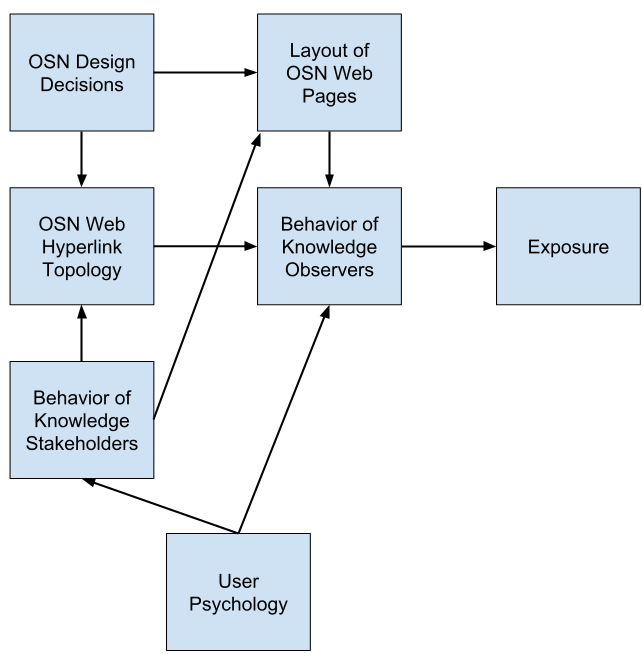 Figure 1: The interplay between OSN design, user psychology, and information exposure.
Experimental Insights: Time and Topology
To validate the model, the authors ran experiments on a legacy Facebook dataset (approx. 64k users).
1. The Recency Effect
The study found a Spearman correlation of 0.71 between a knowledge statement's timestamp and its exposure. In OSNs, "Newer is Louder." The way feeds are designed (inverse chronological order) creates a massive spike in exposure for recent actions, which quickly decays.
2. Design as a Privacy Lever
One of the most compelling findings is the impact of UI Topology. The authors compared two designs:
- OSN-1: Classic modular design (separate tabs for Wall, Friends, Profile).
- OSN-2: Consolidated design (all info on one long Profile page).
Results showed that in OSN-2, knowledge items on the profile had significantly higher exposure because "empty" landing pages were eliminated. This proves that designers can "hide" or "expose" data simply by changing the number of clicks required to reach it.
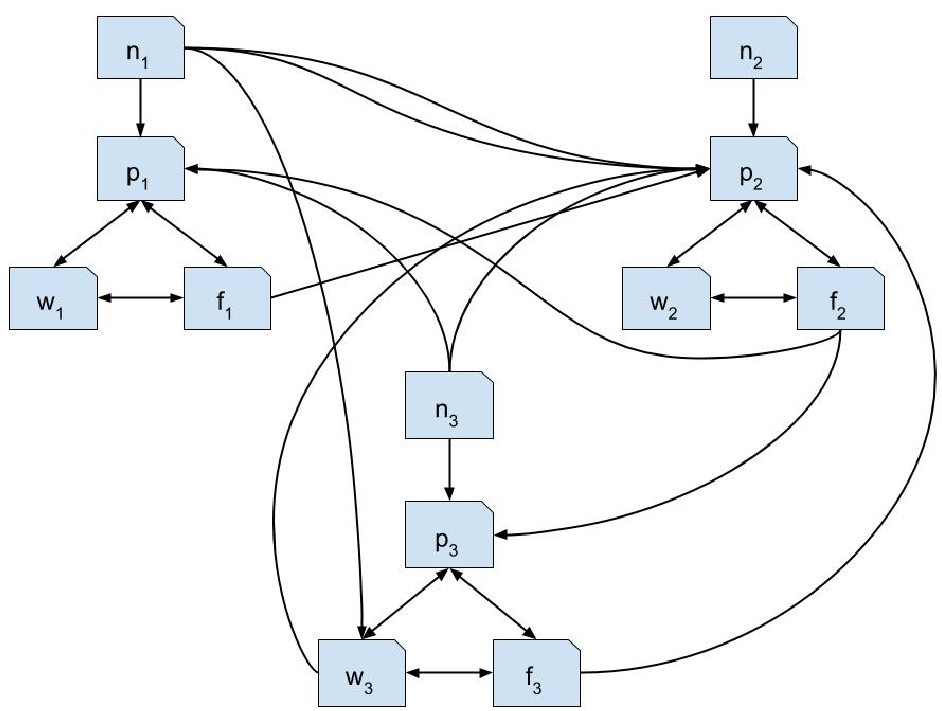 Figure 2: Statistical correlation showing how information exposure decays over time in a News Feed-centric system.
Critical Analysis & Conclusion
This work provides a vital tool for a priori privacy auditing. Instead of waiting for a privacy scandal to erupt, OSN developers can run this model on UI prototypes to see how a new "Feature" (like a "Top Fans" badge or a sidebar feed) moves the needle on User Exposure.
Limitations:
- The model assumes a "Random Surfer" behavior. In reality, users have specific interests (e.g., checking an ex's profile), which might require a more "Personalized" PageRank approach.
- The priority function is currently high-level; eye-tracking data could make these weights much more accurate.
Final Takeaway: Exposure is the "missing metric" in social media engineering. By quantifying visibility, we can finally treat privacy as a dynamic user experience rather than a static list of permissions.