
From Tweets to Action: An Integrative Framework for Modeling Crisis Behavior
Modeling Human Behavior on Social Media in Response to Significant Events
The paper proposes an integrative theoretical framework to model human behavior on social media during significant events, such as natural disasters. By combining the Theory of Planned Behavior (TPB) with Natural Language Processing (NLP) and Social Network Analysis (SNA), the authors quantify psychological drivers—attitude, social norms, and perceived control—to predict behavioral intent and actions like evacuation.
TL;DR
This research bridges the gap between social science theory and big data analytics. The authors develop a methodology to quantify the "internal" drivers of human behavior—Attitude, Social Norms, and Perceived Control—directly from social media text and networks. Using Hurricane Sandy as a test case, they demonstrate that what we see others doing (Descriptive Norms) is the single most powerful factor in whether we follow emergency orders.
Background: Moving Beyond Simple Sentiment
Why do some people evacuate during a hurricane while others stay? Traditionally, answering this required post-event surveys. While social media offers a goldmine of real-time data, most "Sentiment Analysis" tools only scratch the surface. They tell us what people feel, but not if they will act.
The authors argue that to predict behavior, we must return to the Theory of Planned Behavior (TPB). TPB suggests that Behavioral Intent is the immediate precursor to action, fueled by how we feel (Attitude), what we think others expect (Social Norms), and how capable we feel (Perceived Behavioral Control).
Methodology: Coding Human Psychology via NLP and SNA
The core innovation of this paper is the mapping of computational metrics to psychological constructs:
- Attitude: Measured by combining Sentiment (positive/negative), Modality (is it an actual intent?), and Arousal (intensity).
- Social Norms:
- Injunctive Norms: What you think others want you to do (calculated using non-assertive messages from your network).
- Descriptive Norms: What you see others actually doing (calculated from assertive messages).
- Perceived Control: Measured through the lens of Proximity to the event and Emotional Arousal.
The Community Network Logic
The authors use a "Connected Iterative Scan" algorithm to detect communities. The pressure to comply with a norm is weighted by the density of your social community and your co-affiliation (how often you talk about the same topics as others).
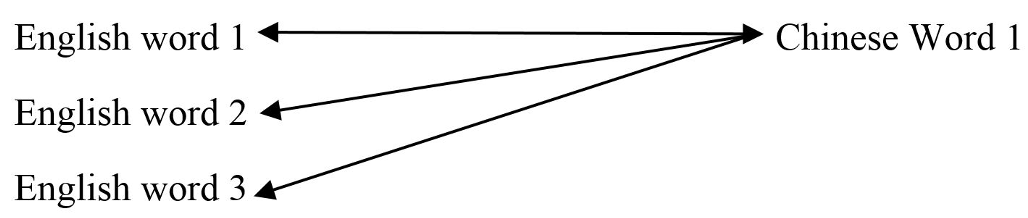 Fig 1: The cross-lingual trigger clustering approach used to expand behavior-related keywords across languages to ensure robust data extraction.
Case Study: Hurricane Sandy (2012)
The methodology was applied to 94,821 relevant tweets during Hurricane Sandy. The researchers modeled three distinct behaviors:
- Obtain/Propagate the Warning (Information sharing)
- Seek Confirmation (Information seeking)
- Take Prescribed Action (Evacuation intent)
Key Findings & Visual Evidence
The results from the Logistic Regression models were striking:
- Descriptive Norms are King: For "Taking Prescribed Action," Descriptive Social Norms had an Odds Ratio of 30.88. This means as users see more people on Twitter intending to evacuate, their own intent skyrockets.
- The Power of Proximity: Being closer to the hurricane path significantly increased the likelihood of propagating warnings.
- Arousal is a Double-Edged Sword: High emotional arousal actually decreased the odds of taking prescribed action (Odds Ratio 0.59), suggesting that extreme fear might lead to "freezing" or irrationality rather than compliance.
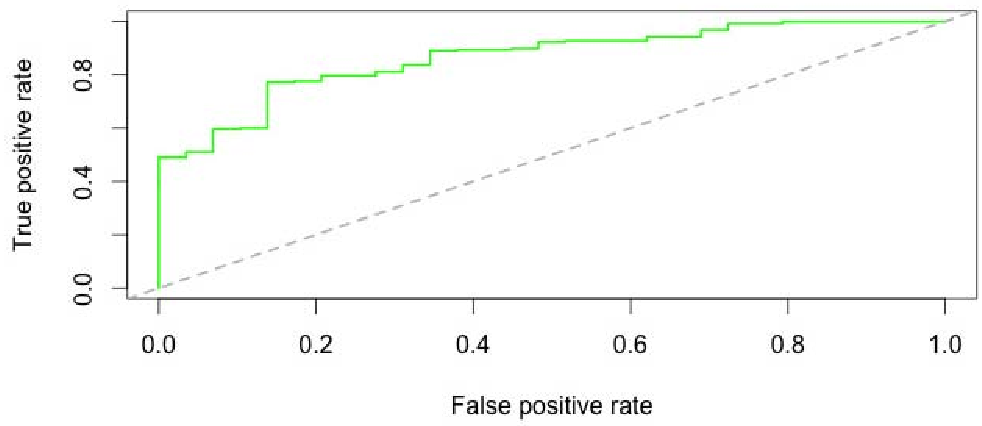 Fig 2: The ROC curve demonstrates high model accuracy for predicting warning propagation, significantly outperforming random chance.
Critical Insight: Interventions for Emergency Managers
The paper doesn't just provide a model; it provides a playbook for intervention:
- Leverage Imagery: To shift attitudes, managers should use compelling imagery (like the 2011 Japan Tsunami waves) to prime the "Attitude" component.
- Social Proof as Strategy: Emergency managers should stop just "issuing orders" and start "broadcasting compliance." Sharing data on how many people have already reached shelters can trigger the Descriptive Norm effect, encouraging others to follow.
- Emotional Support: Since high arousal inhibits action, social media feeds should provide calming, instructional support alongside warnings.
Conclusion & Future Outlook
This work transforms social media from a mere "chatterbox" into a sophisticated laboratory for behavioral science. While the researchers note that social media users are not perfectly representative of the general population, the proliferation of these platforms makes this model vital for future National Security and Emergency Management.
The next frontier? Using deep learning (LSTMs or Transformers) to refine the sentiment/modality extraction even further, potentially allowing for "Pre-event" interventions that can predict and prevent non-compliance before the storm even hits.