
Beyond Silos: Modeling "People" Instead of "Users" via Multi-Source Social Networks
Modeling Individuals and Making Recommendations Using Multiple Social Networks
The paper introduces a novel recommendation framework that consolidates user data across multiple platforms (BlogCatalog, Twitter, and Flickr) to build a multi-source individual model. By integrating heterogeneous features like Flickr common contacts and Twitter followees, the authors demonstrate that a "global" view of a person significantly outperforms single-platform "user" models.
TL;DR
Most recommendation engines are "blind" to your life outside their specific platform. This paper breaks those silos by integrating data from BlogCatalog, Twitter, and Flickr. By modeling the "individual" across multiple domains rather than just the "user" on one site, researchers achieved significantly more accurate and holistic recommendations.
Context: The Fragmentation of Digital Identity
In the current academic landscape of Recommender Systems (RS), we often talk about Cross-Domain Recommendation. However, most prior work focuses on matching items (e.g., if you like this book, you might like this movie). This paper takes a more radical, user-centric approach.
The authors argue that a person’s behavior on Twitter (who they follow) or BlogCatalog (their city and interests) provides vital context for what they might join on Flickr. People exhibit different facets of their personality across platforms; neglecting these facets leads to the "Local Vision" trap.
Methodology: Building the Global Individual Model
The core innovation lies in the Multi-Source Dataset and the feature integration framework.
1. Identity Resolution & Data Collection
The researchers identified 241 "power users" who maintained public profiles across three distinct ecosystems. They extracted:
- BlogCatalog: Professional interests and geographic regions.
- Twitter: Social influence and "Followee" relationships.
- Flickr: Visual interests (Photos) and community engagement (Groups).
2. The Recommendation Architecture
The paper evaluates four heavy-hitters in recommendation logic:
- Collaborative Filtering (CF): User-based similarity.
- Multi-Objective Optimization (MO): Using Pareto dominance to balance different similarity metrics.
- Hybrid (HI): Combining multiple CF modules via a voting mechanism.
- Social-Historical (SH): Modeling preferences through a language-model lens.
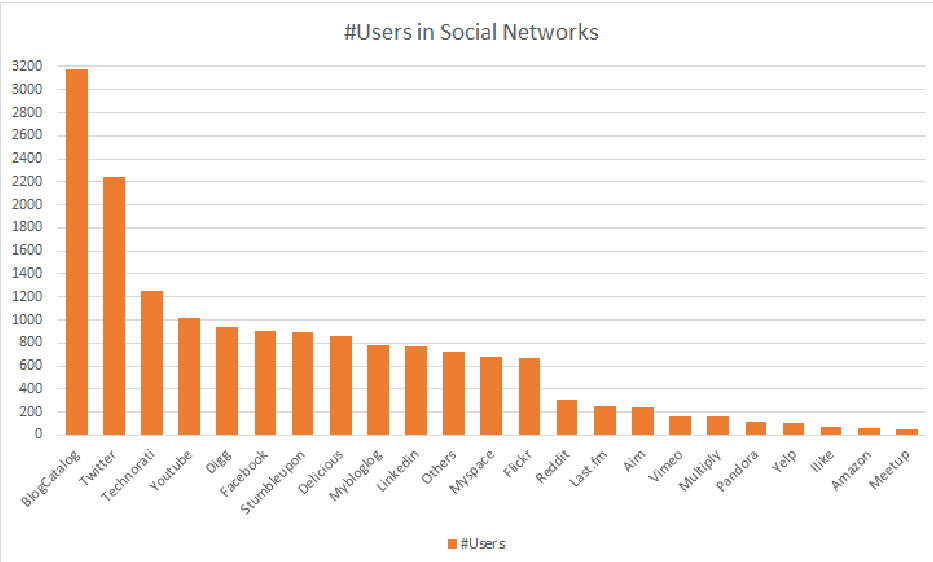 Fig 1: The distribution of users across different platforms highlights the challenge of data overlap.
Experimental Insights: Why Multi-Source Wins
The primary task was predicting which Flickr Groups a user would join.
Key Findings:
- The Synergy Effect: The best performing configuration was the Hybrid Method using a combination of Flickr Groups (FG), Flickr Common Contacts (FCC), and BlogCatalog Followees (BCF).
- External Validation: Interestingly, using only Twitter or BlogCatalog data to predict Flickr behavior (CF-TF or CF-BCF) was less effective than the platform's own data. However, when used as an enrichment layer for Flickr's data, the performance spiked.
- Hyperparameter Sensitivity: The study found that 16 neighbors (N) was the "sweet spot." Too few neighbors missed trends, while too many introduced noise.
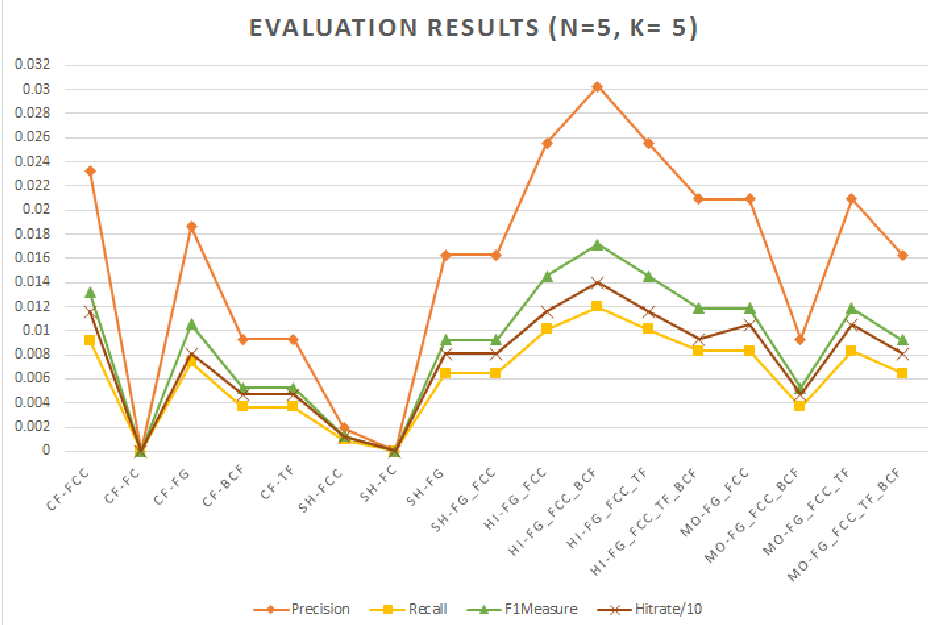 Fig 2: Evaluation showing that Hybrid models incorporating multiple sources achieve higher Precision and Hit-Rate.
Critical Analysis & Professional Takeaway
From a Senior Editor's perspective, this work serves as a foundational proof-of-concept for Federated User Modeling. While modern Privacy Laws (like GDPR) make this type of data scraping more difficult today, the mathematical intuition remains valid: Latent user preferences are invariant across platforms.
Limitations:
- Scale: The dataset of 241 common users is small by today's "Big Data" standards.
- Anonymization: While the authors anonymized data, the technical difficulty of "Identity Resolution" remains a bottleneck for productionizing such a system.
Future Outlook:
The next logical step for this research is the integration of Graph Embeddings. By representing a person as a node in a multi-layered graph (where edges represent different social networks), we could use Deep Learning to automatically learn these cross-platform influences without manual feature engineering.
Conclusion: If you want to know what a user wants next, don't just look at what they are doing now—look at who they are everywhere.