
Beyond the Million Follower Fallacy: Reconstructing Social Influence through Semantics
10874_Modeling Influence with Semantics in Social Networks A Survey.
This paper provides a comprehensive survey on modeling influence in Online Social Networks (OSNs) by integrating social metrics with semantic analysis. It proposes a hierarchical classification scheme covering influence metrics, information flow (propagation vs. diffusion), network properties, and the role of Semantic Web technologies in qualitative content assessment.
TL;DR
In the "ocean" of Online Social Networks (OSNs), a massive follower count is often just digital noise. This survey by Razis et al. dissects the anatomy of social influence, arguing that true "influencers" are defined by the semantic quality of their content and their position in information flows, rather than mere popularity. By merging network theory with Semantic Web technologies, the authors provide a roadmap for identifying domain experts and predicting how viral content truly spreads.
The Core Conflict: Popularity vs. Impact
The fundamental pain point in modern social media analytics is the obsession with "naive metrics." We often equate a high "In-degree" (follower count) with influence. However, research proves that these users are often "passive" nodes.
The authors identify a critical gap: prior work fails to distinguish between:
- Diffusion: The outward spread from a source node.
- Propagation: The active processing and re-transmission by intermediate nodes who act as gatekeepers.
The "Why" behind this paper: Without semantics, we cannot understand why a piece of information goes viral. Is it because of the author's authority, the topic's relevance, or the sentiment of the community?
Methodology: The Hierarchical Influence Model
The authors propose a multi-layered classification to map the OSN ecosystem.
1. The Influence Trinity
Influence isn't a single number; it is a composite of:
- Direct Metrics: Activity, sociability, and acknowledgment (replies/mentions).
- Topological Metrics: Variations of PageRank (e.g., TwitterRank, InfRank) that value who follows you over how many follow you.
- Semantic Metrics: Using Knowledge Bases to determine "homophily"—the tendency of users to connect based on shared, specific interests.
2. Semantifying Social Data
One of the survey's standout contributions is the focus on Social Modeling. The authors explain how unstructured tweets are transformed into "Five-Star Linked Data" using the InfluenceTracker Ontology.
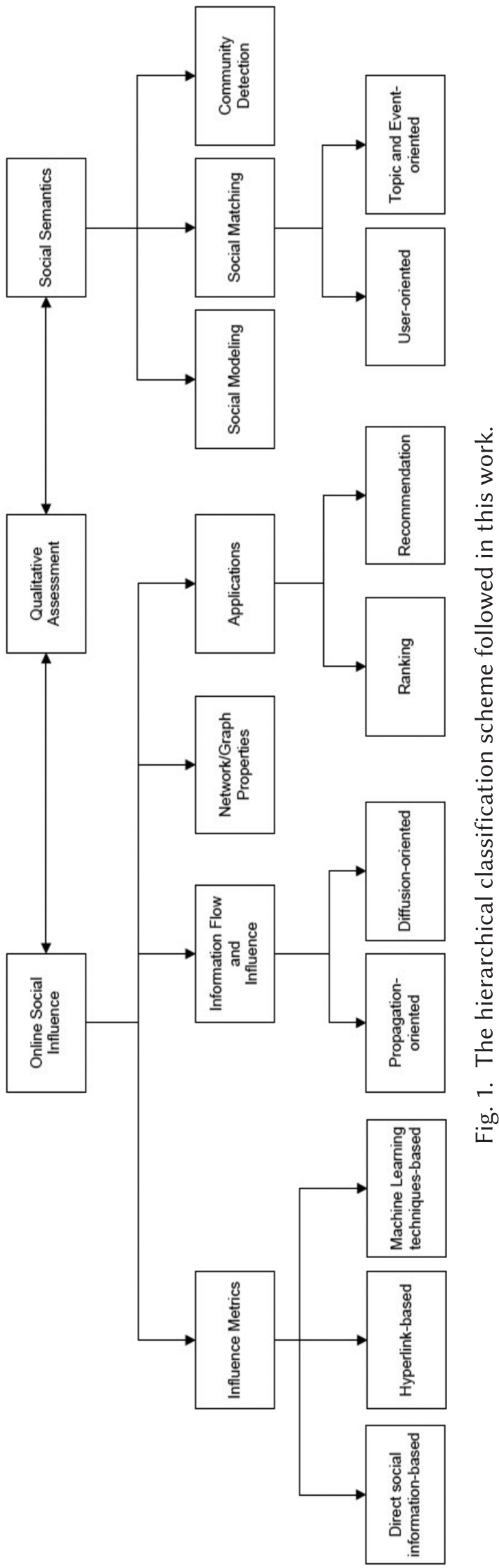 Figure 1: The proposed hierarchical classification scheme for influence and semantics.
By mapping entities (hashtags, mentions) to DBpedia URIs, researchers can identify if a user talking about "Apple" refers to the fruit or the tech giant, drastically improving topic-specific ranking.
Experimental Insights: What Makes Content Viral?
The survey compiles results from various experimental frameworks (Table 2 & 3 in the paper) to highlight several counter-intuitive findings:
- The Reach Limit: Most information cascades die out after 2-3 frequency peaks.
- The Power of Mentions: Frequency of mentioning a user is a stronger predictor of propagation than the follower count.
- Sentiment as a Catalyst: High-quality, well-written posts with clear sentiment (positive/negative) are more likely to be rebroadcast.
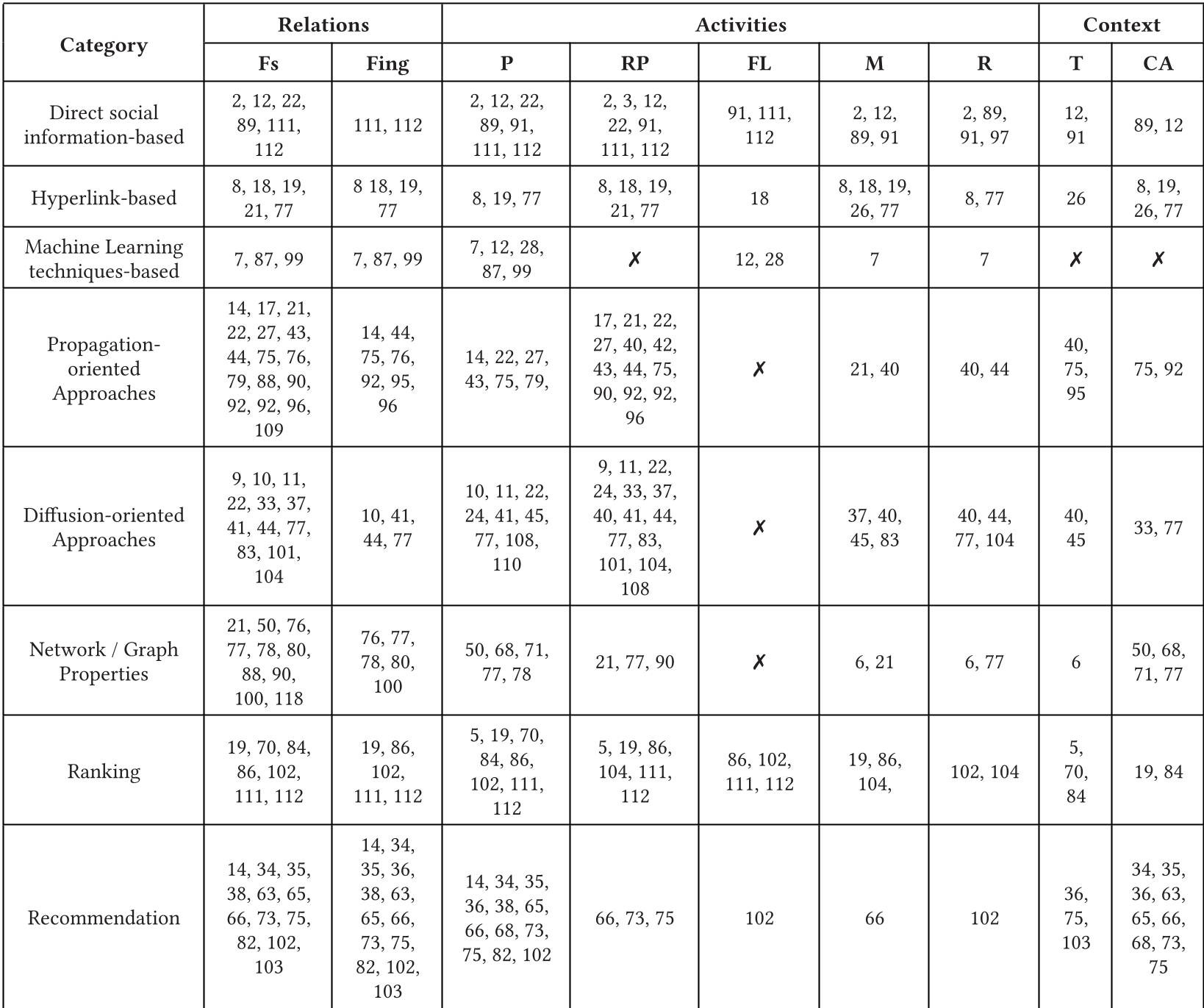 Table 2: Comparative analysis of influence metrics across relationships and behavioral activities.
Critical Insights & Future Outlook
The marriage of Social Influence and Semantics is moving us toward "Qualitative Assessment."
Key Takeaways for the Industry:
- Recommendation Engines: Systems should weight "influential friends" more heavily than global popularity for better personalization.
- Expert Discovery: Finding domain experts requires "Topic-Sensitive PageRank," which uses semantic similarity to filter noise.
- The Rise of Linked Data: Integrating OSN data with the global Linked Open Data (LOD) cloud is essential for cross-platform entity tracking.
Limitations
While the survey is exhaustive, it acknowledges that dynamic networks (networks that change in real-time) remain a challenge. Most current models are static snapshots; tracking influence as a fluid, evolving property requires higher computational complexity and more efficient indexing methods.
Conclusion
Razis et al. successfully argue that semantics is the "missing link" in understanding social networks. As we move into an era of AI-driven content, the ability to model the meaning behind the message will be the only way to distinguish true opinion leaders from the noise of the crowd.