
The Contextual Filter: Why Your Robot's "Happy" Walk Might Look "Sad" in the Dark
Modeling the Interactions of Context and Style on Affect in Motion Perception: Stylized Gaits Across Multiple Environmental Contexts
This paper presents a predictive model of human affect perception in motion, focusing on how environmental context and stylized gaits interact to influence valence and arousal. Utilizing stylized walking sequences and diverse background environments, the authors demonstrate that environmental context predominantly dictates valence while walking style primarily influences arousal, achieving a 74% accuracy in predicting combined affective responses.
TL;DR
Researchers Madison Heimerdinger and Amy LaViers have demonstrated that robot motion perception is not a vacuum. By testing stylized gaits (e.g., "energetic," "sad") across various environments (e.g., a beach vs. a war zone), their study reveals a critical "division of labor" in our brains: environmental context defines whether a motion feels good or bad (valence), while the movement style defines how intense it feels (arousal).
Background Positioning
In the landscape of Social Robotics, this work acts as a bridge between Animation/Dance Theory (qualitative style) and Psychology (quantitative affect). It challenges the SOTA assumption that emotion can be "baked" into a gait profile and recognized universally regardless of where the robot is operating.
Problem & Motivation: The "Bedside" Paradox
Imagine a care-giving robot moving with a steady, gentle pattern. In a quiet hospital room, this is perceived as "competent" and "comforting." Place that same slow robot in a chaotic Emergency Room, and it suddenly appears "incompetent" or "sluggish."
The authors argue that prior work in robotics has been too focused on the form of the motion (the "What") while neglecting the environment (the "Where"). They hypothesized that humans subconsciously project an environment onto white-background animations to make sense of emotional labels—a bias that disappears when an explicit, conflicting context is introduced.
Methodology: Mapping Affective Space
The researchers utilized a set of 54-Degree-of-Freedom (DOF) stick-figure animations previously generated by expert animators. They then superimposed these "impoverished" (simplistic) forms onto dynamic video backgrounds from validated affective databases (OASIS and GAPED).
Architecture of Perception
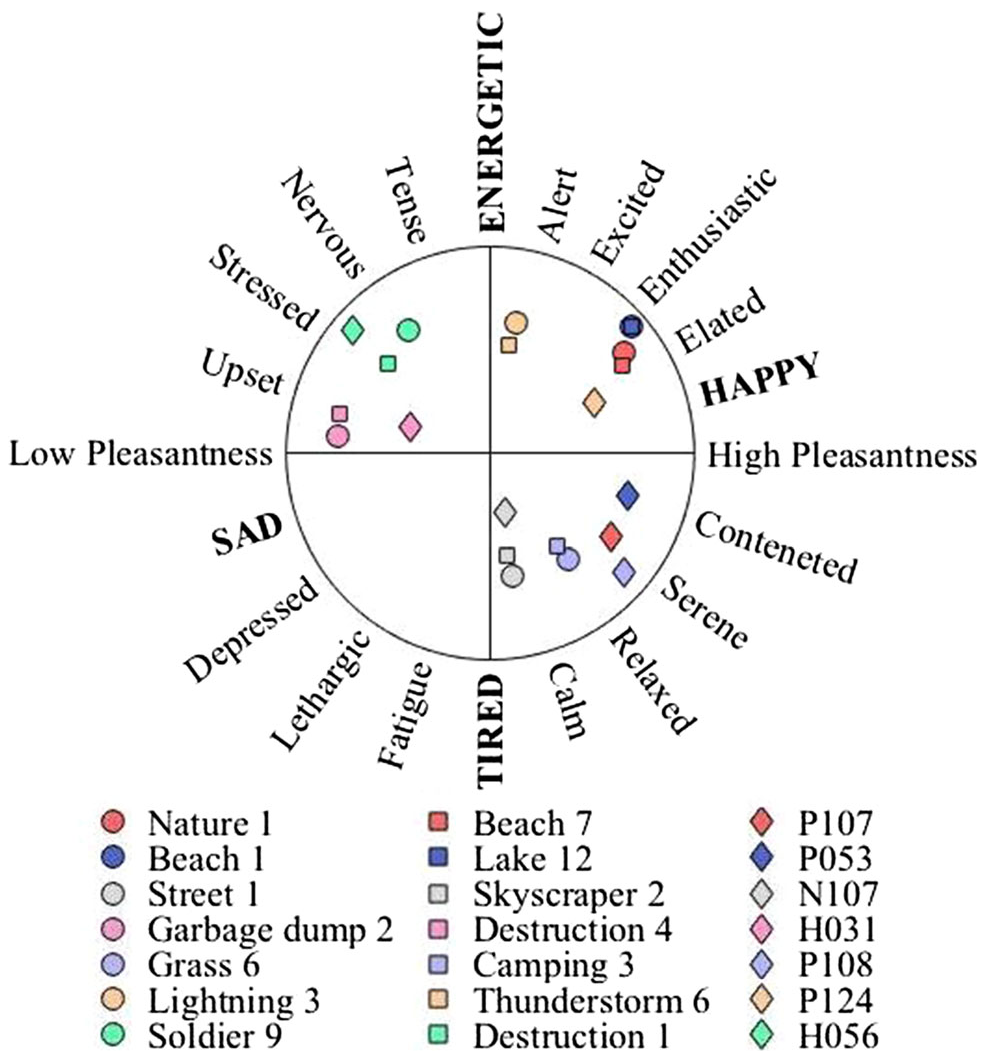
The core of the study lies in Study 3, where they used Semantic Differential Scales to map responses onto the Circumplex Model of Affect. This model separates emotion into two orthogonal axes:
- Valence: (Pleasant vs. Unpleasant)
- Arousal: (Activated vs. Deactivated)
The authors constructed a linear least-squares model to predict the final affective rating () based on the walking sequence () and the context ():
Experiments & Results: The Environmental Veto
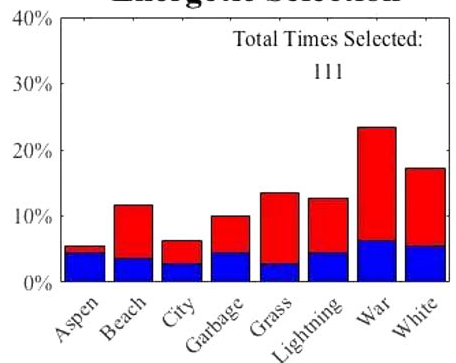
The results were striking. When a "Happy" walk was placed on a "Beach" background, recognition was high. However, when placed in a "War" or "Garbage Dump" context, the "Happy" label was almost never selected.
Key Findings:
- Valence is Context-Driven: The environment has a significantly larger coefficient (0.489) for valence. If the background is depressing, the robot will likely be perceived negatively, regardless of its "happy" gait.
- Arousal is Motion-Driven: The gait style has the primary influence on arousal (0.224). A fast, jittery walk will feel high-energy even in a calm forest.
- Trait Stability: Interestingly, "Masculine" and "Feminine" gait traits were more resistant to environmental changes than emotional states like "Happy" or "Sad."
Deep Insight & Conclusion
Takeaway
The major contribution here is the quantifiable evidence that style and context are non-orthogonal in the human eye. For roboticists, this means "one-size-fits-all" expressive motion is a myth. A robot’s control system should ideally adapt its gait parameters (velocity, posture, cadence) based on its current GPS location or visual scene classification to maintain a consistent affective message.
Limitations & Future Work
The study used "impoverished" stick figures to represent robots. While this mimics the mechanical simplicity of many current platforms, future research should explore whether complex, humanoid skins (which introduce the "Uncanny Valley") alter these contextual weights. Furthermore, adding narrative context (why is the robot there?) would likely provide even deeper insights into social movement perception.
Final Thought: If you want your robot to appear friendly, don't just fix its walk—fix the room.