
Bridging the AI Gap: How Conceptual Modeling Decodes Machine Learning Requirements
Modeling machine learning requirements from three perspectives: a case report from the healthcare domain
This paper presents a validation of GR4ML, a conceptual modeling framework designed to bridge the gap between business stakeholders and data scientists. The study employs a healthcare case report to evaluate how the framework structures machine learning requirements across three interconnected views: Business, Analytics Design, and Data Preparation.
TL;DR
Building enterprise Machine Learning (ML) solutions often fails not because the math is wrong, but because the requirements are lost in translation. This paper evaluates GR4ML, a framework that organizes ML projects into three perspectives: Business Goals, Analytics Design, and Data Preparation. Tested in a healthcare setting, it proved that structured modeling can uncover "hidden" business needs and align data scientists with company strategy.
The Problem: The "Conceptual Gap" in AI
In most organizations, a wall exists between the boardroom and the data lab. Business leaders often treat ML as a "black box" of magic, while data scientists may optimize for accuracy metrics that have little impact on actual clinical or business decisions. Traditional methodologies like CRISP-DM guide the process but lack a formal language to model the why and how of the solution simultaneously.
Methodology: The Three Views of GR4ML
The researchers argue that an ML solution must be modeled from three distinct but linked perspectives. The "glue" holding them together is the Insight element—the specific knowledge or prediction the model produces.
1. The Business View (The Why)
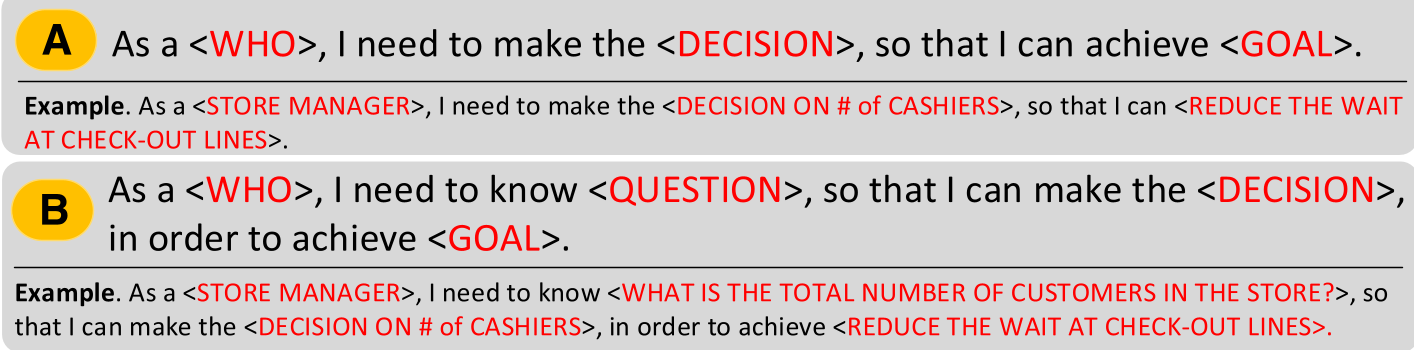
Instead of starting with "What data do we have?", the framework starts with "What is the goal?". It refines Business Goals into Decision Goals (actions to take) and Question Goals (information needed to act).
2. The Analytics Design View (The What)
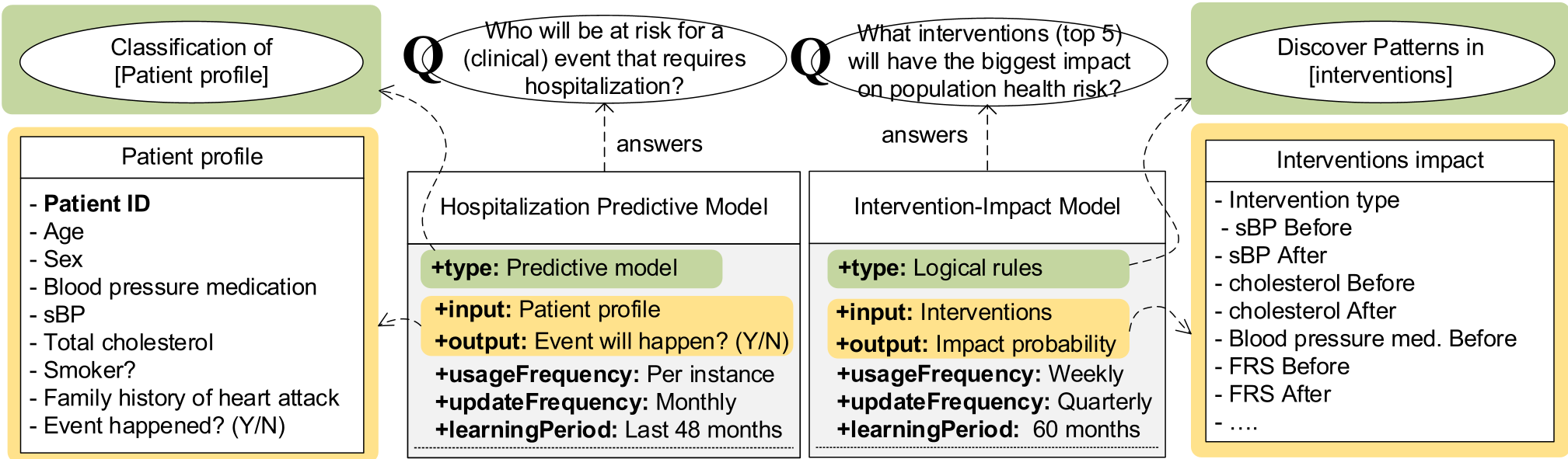
This view maps the business questions to specific ML tasks (Classification, Clustering, etc.). It helps developers choose between algorithms (e.g., Random Forest vs. Logistic Regression) based on Softgoals like robustness, interpretability, or storage limits.
3. The Data Preparation View (The How)
This bottom layer links the algorithms back to the raw reality: where is the data? How must it be filtered, merged, and cleaned to create the features needed for the Insight?
Case Study: Healthcare Innovation
The framework was tested at a healthcare startup developing analytics for primary care physicians. By applying the GR4ML process, the team made several breakthroughs:
- Uncovering New Requirements: The modeling process revealed that physicians didn't just need to know who was at risk, but which interventions would have the biggest impact—a new feature the team hadn't previously considered.
- Alignment through User Stories: Using specialized templates (e.g., "As a [Physician], I want to [Decide on Treatment]..."), they translated vague medical needs into concrete data science tasks.

Experimental Insights & Results
The study answered three critical Research Questions (RQs):
- Expressiveness (RQ-1): The framework successfully reconstructed the startup's proprietary product design without the researchers having prior access to it.
- Usefulness (RQ-2): Participants noted that the framework shifted their mindset from "Bottom-Up" (Algorithm-first) to "Hybrid" (Goal-first).
- Communication: It served as a boundary object, allowing medical doctors to debate with database developers using a shared visual graph.
Critical Perspective: Limits and Future Work
While powerful, the authors acknowledge that GR4ML is labor-intensive. Creating deep goal hierarchies can be time-consuming, and there is a risk of "modeling bloat." A key takeaway for the industry is the need for design patterns: reusable templates for common problems (like fraud detection or patient churn) to speed up the elicitation process.
Conclusion
As AI moves from research labs to mission-critical infrastructure, the discipline of Requirements Engineering becomes paramount. The GR4ML framework provides a rigorous roadmap for ensuring that the models we build actually solve the problems that matter.
Takeaway for Practitioners: Don't let your data scientists start with a CSV file. Start with a Goal Graph.