
Modeling Prosodic Structures: Bridging the Gap Between Semantics and Speech
Modeling Prosodic Structures in Linguistically Enriched Environments
The paper introduces a method for Modeling Prosodic Structures in TtS synthesis by integrating high-level semantic and rhetorical information via a Natural Language Generator (NLG). By extending the SOLE-ML XML scheme, the authors transition from Concept-to-Speech (CtS) to generate highly realistic Greek prosody, achieving State-of-the-Art accuracy in break and accent prediction.
TL;DR
Predicting human-like prosody consists of more than just parsing grammar—it requires understanding intent. This paper presents a methodology to leverage Natural Language Generation (NLG) to feed "error-free" high-level linguistic data into TtS systems. By using an enriched XML scheme (SOLE-ML), the authors improved prosodic prediction accuracy by up to 23%, specifically targeting intonational focus and phrase breaks in the Greek language.
Context: Why "Plain Text" is Prosodically Poor
In standard speech synthesis, the model is often "blind" to the speaker's intent. If a TtS system only sees words, it struggles to distinguish between "new" information (which deserves a pitch accent) and "given" information (which is usually de-accented). This paper argues that the bottleneck is not just the synthesis algorithm, but the error-prone linguistic analysis of plain text.
Methodology: The Concept-to-Speech (CtS) Advantage
Instead of starting from raw string inputs, the authors use a Concept-to-Speech pipeline. The core insight is that since an NLG system knows what it is trying to say, it can provide meta-data that a text parser would miss.
1. The Enriched XML Schema
The team extended the SOLE markup to encode specific "Intonational Focus" indicators:
- Newness: Is the Noun Phrase (NP) new or already mentioned?
- Argument Structure: Is the NP the second argument to the verb?
- Deixis: Is there a pointing gesture or reference?
- Proper Groups: Presence of proper nouns.
2. Architecture & Modeling
The system maps these features onto GR-ToBI marks (Greek Tones and Break Indices) using CART (Classification and Regression Trees).
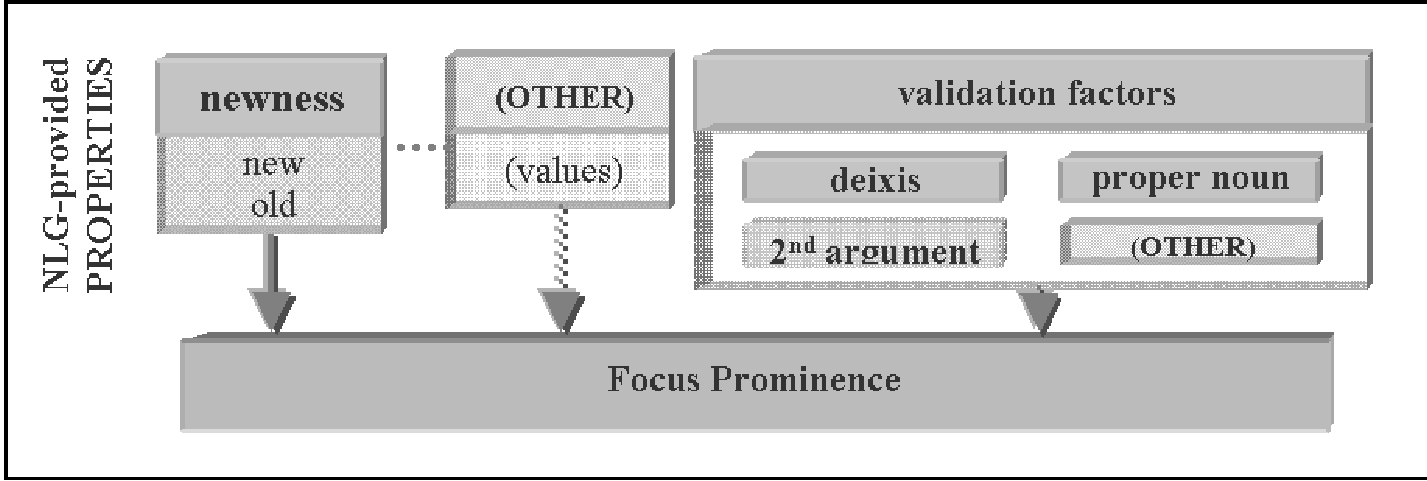 Figure 1: The logic for determining intonational focus levels based on NP properties.
Experiments: Measuring the "Enrichment" Effect
The authors conducted a comparative study across three datasets:
- CANNED: Untagged, plain text.
- FULL: A mix of tagged and untagged data.
- ENRICHED: Pure meta-information-rich text.
Key Breakthroughs
The gains were most visible in phrasing and accent placement. The prediction of Phrase Breaks (crucial for natural pauses) stayed relatively low in plain text but soared to nearly 90% with enrichment.
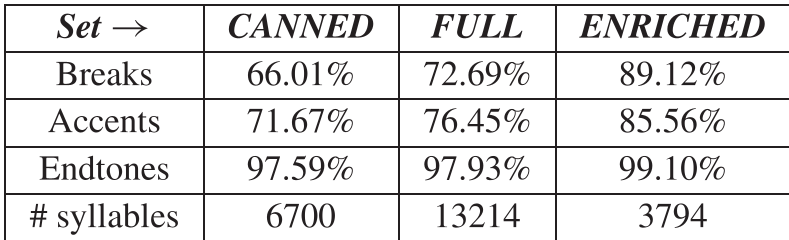 Figure 2: Significant accuracy gains in Enriched vs. Canned/Plain text subsets.
Critical Analysis & Insight
The most profound takeaway is the Accented/Unaccented classification success. While the model struggled slightly to distinguish between different types of pitch accents (e.g., L+H* vs L*+H), it was excellent at knowing where an accent should occur.
Limitations: The study was performed on a restricted domain (museum exhibit descriptions). In more open-domain scenarios, the complexity of rhetorical relations might require more than just CART trees—perhaps the modern equivalent would be a Graph Neural Network (GNN) processing the SOLE-ML structure.
Conclusion
This work highlights that the future of natural-sounding AI is not just larger models, but smarter data interfaces. By enriching the "handshake" between language generation and speech synthesis, we move away from robotic monotonous output toward truly communicative agents.
Takeaway for Practitioners: When building TtS pipelines, focus on passing semantic "hints" (like focus or emphasis tags) from your LLM/NLG to your acoustic model to bypass the limitations of raw text parsing.