
Simple is Better? Evaluating Buy and Hold vs. Machine Learning in Bull Markets
Modeling of the Return and Risks of Investments Using Different Trading Strategies
This paper evaluates the performance of different investment strategies by applying them to SPY and TQQQ ETFs during the bullish markets of 2016 and 2017. The study compares a traditional "Buy and Hold" approach against an SVM-based machine learning model and a random guess baseline, concluding that Buy and Hold generally yields superior returns in trending markets.
TL;DR
In the world of quantitative finance, the debate between active trading and passive holding is eternal. This study analyzes the performance of SPY (S&P 500 ETF) and TQQQ (3x Leveraged Nasdaq-100) across 2016-2017. The findings are clear: while Machine Learning (SVM) can predict trends with reasonable accuracy and significantly beat random guessing, it often fails to outperform the simple Buy and Hold strategy during steady market uptrends.
Problem & Motivation
Retail and institutional investors alike are constantly bombarded with "predictive" signals. Advisory firms promise high returns through complex algorithms, while icons like Warren Buffett advocate for the "Buy and Hold" philosophy. The primary challenge is determining if the added complexity (and associated transaction risk) of Machine Learning actually provides a "Alpha" (excess return) or if the inherent Inductive Bias of a bullish market makes simple exposure the more optimal path.
Methodology: The Core
The researchers tested four distinct strategies:
- Buy and Hold: Enter a position on Day 1 and exit on Day 100.
- Machine Learning (SVM): A Support Vector Machine trained on 30-day historical windows. It utilizes normalized features including daily variation and high-low spreads to decide whether to Buy/Hold or Sell for the following day.
- Random Guessing: A 50/50 coin flip to simulate an investor with zero predictive power.
- No Investment: A baseline of holding cash.
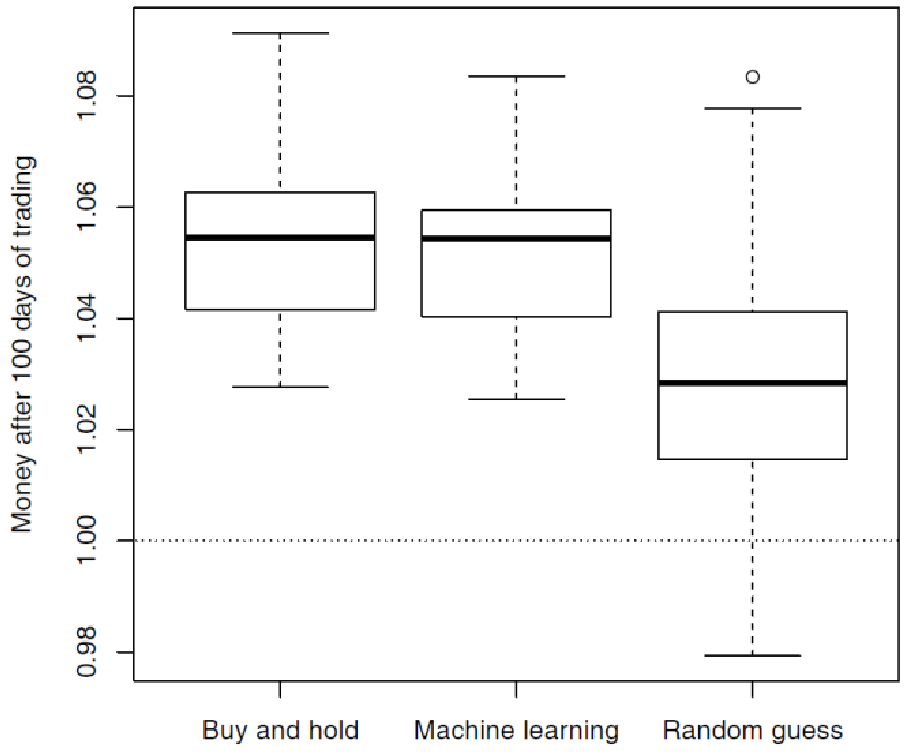 Figure 1: Comparison of final revenues across different simulated strategies for TQQQ and SPY.
The SVM model aims to maximize the "fraction of correct guesses" regarding the market's direction. By normalizing the data (subtracting the 30-day average), the authors attempted to isolate the trend from the absolute price level.
Experiments & Results
The study utilized 200 simulations for each scenario to ensure statistical significance. Key findings include:
- TQQQ Supremacy of Holding: In 2016, Buy and Hold returned **1 invested, outperforming the SVM's $1.15 (P < 2.2e-16). This suggests that in a high-growth, high-leverage environment, being "out of the market" even for a few correctly predicted down-days can lead to missing the compounding gains of the recovery.
- Risk Mitigation: The SVM strategy was not useless. It provided a significantly lower standard deviation (0.08) compared to Random Guessing (0.14), proving that machine learning can effectively act as a risk-management layer.
- SPY Consistency: For the less volatile SPY, the SVM and Buy and Hold strategies were neck-and-neck, with the SVM actually slightly leading in 2016 (1.05).
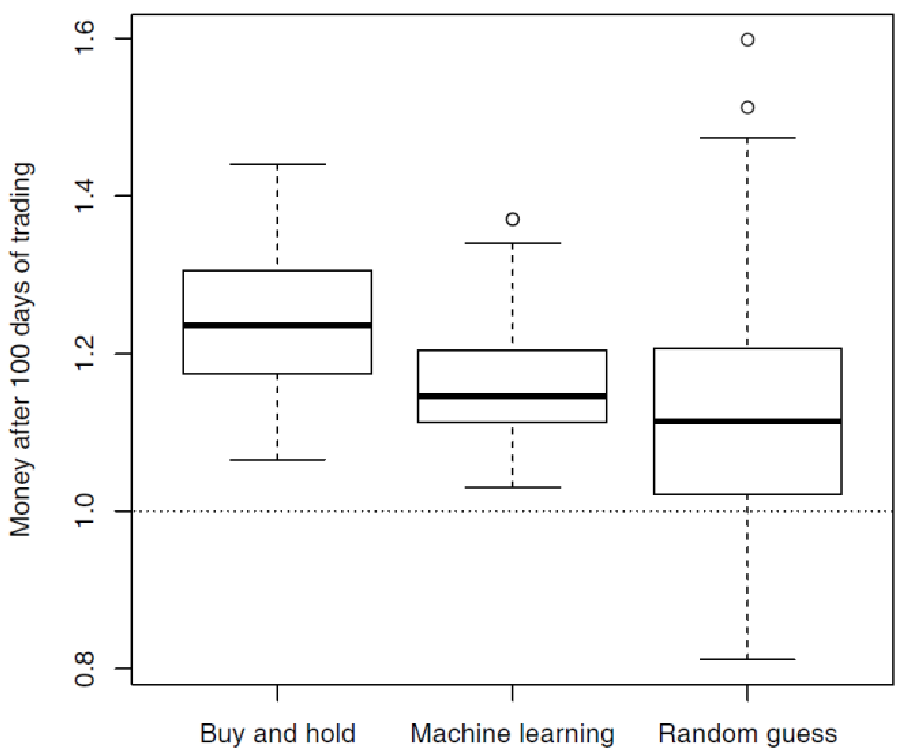 Figure 2: Distribution of returns showing the statistical edge of Buy and Hold and SVM over Random Guessing.
Critical Analysis & Conclusion
Takeaway
The paper reinforces the Efficient Market Hypothesis in its semi-strong form: in a trending market, the "time in the market" is more valuable than "timing the market." For individual investors, the energy spent on daily micro-decisions might be better allocated to long-term portfolio selection.
Limitations
- Bull Market Bias: The data covers 2016-2017, a period of notable market growth. The "Buy and Hold" strategy's dominance might vanish in a "sideways" (flat) or bearish market where predictive selling (Stop-loss) becomes critical.
- Transaction Costs: The study does not explicitly account for trading fees or slippage, which would further penalize the frequent trading inherent in the SVM and Random Guess strategies.
Future Work
The authors suggest that while a basic SVM might not beat the market, more advanced architectures (like Deep Reinforcement Learning) or combining Buy and Hold with dynamic Stop-Loss triggers could potentially unlock the best of both worlds: capturing the trend while capping the downside.