
Emotions as Catalysts: Engineering the Depth and Width of ReTweet Diffusion
Modeling ReTweet Diffusion Using Emotional Content
The paper proposes a predictive model for Twitter information diffusion, specifically forecasting the depth and width of retweets. By integrating Ekman's categorical emotion model (six basic emotions) with user-specific communication metrics, the researchers employ machine learning classifiers to categorize the reach of posts.
TL;DR
Why do some tweets vanish into the void while others spark global conversations? This paper deciphers the "viral code" by combining user behavioral analytics with Ekman’s six basic emotions. The findings are stark: if you want your content to spread deep and wide, Anger and Sadness are your most potent weapons, outperforming positive content by nearly 2.5x in retweet probability.
Background Positioning: This work bridges the gap between traditional Social Network Analysis (SNA) and Computational Linguistics, moving beyond simple sentiment polarity into discrete emotional forecasting.
Problem & Motivation: Beyond "Positive vs. Negative"
Most prior works in sentiment analysis treat the human emotional spectrum as a binary: is the user happy or sad? However, the mechanics of a ReTweet—the act of finding a post "worth sharing"—are more complex. Previous SOTA methods focused on network features (follower counts) or simple link presence but ignored the affective trigger that compels a user to click "Retweet."
The authors' insight is intuitive yet profound: The short, 140-character constraint of Twitter (at the time of the study) forces high emotional density. By mapping these to specific categories—Anger, Disgust, Fear, Happiness, Sadness, and Surprise—we can predict not just if a message spreads, but how many layers deep (Width) and how far through followers (Depth) it goes.
Methodology: The Hybrid Prediction Engine
The researchers developed a dual-stream feature extraction pipeline:
- User Communication Metrics: Identifying the "Social Authority" of the poster through 6 metrics: Followers, Direct Tweets, ReTweets, Conversational Tweets (replies), Posting Frequency, and Hashtag usage.
- Emotional Analysis Module: Using the Stanford parser and WordNet Affect, the system creates a dependency graph to determine the emotional strength of a tweet.
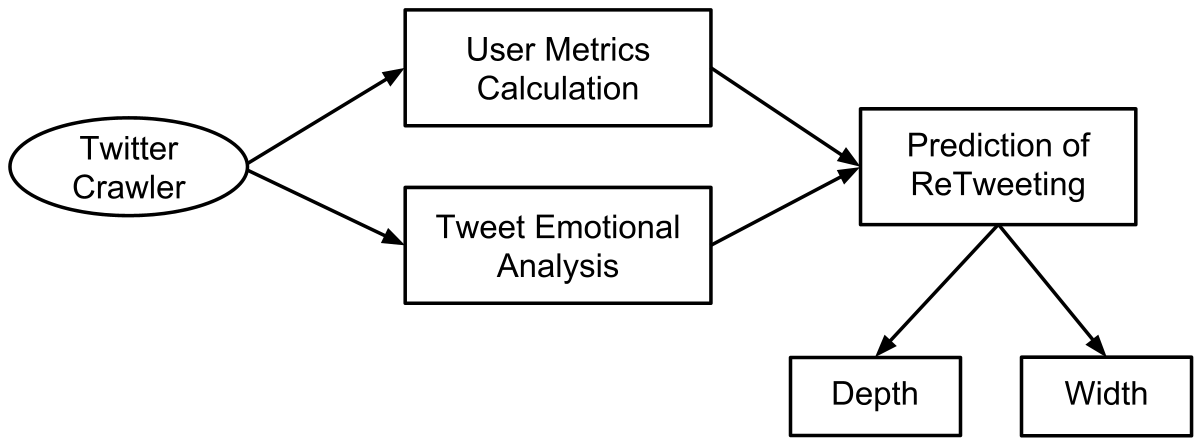 Figure 1: The overall workflow from crawling to classification.
The core of the "How" lies in the definition of Width and Depth:
- Width: The number of immediate retweets of the original post.
- Depth: The length of the retweet chain (retweets of retweets), indicating true viral propagation.
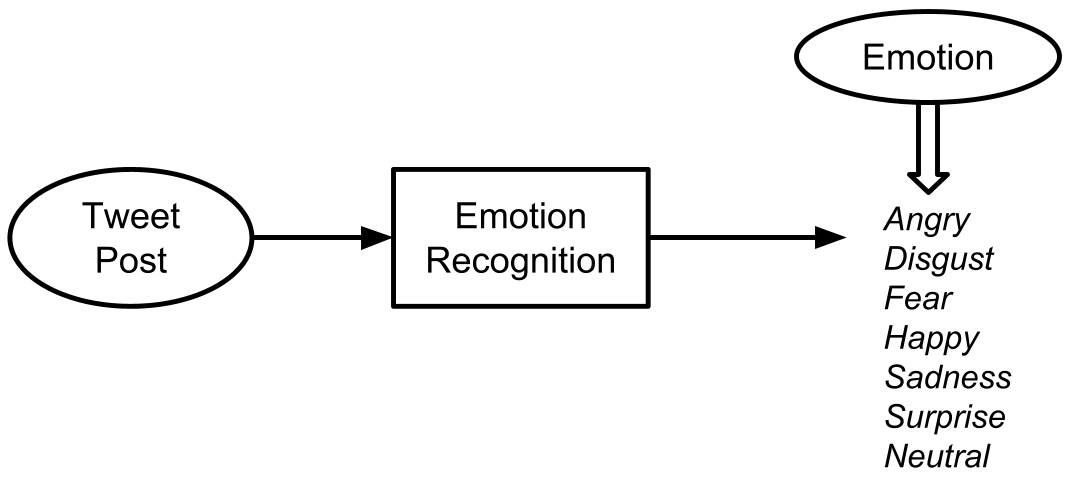 Figure 2: The NLP pipeline for extracting Ekman's emotional states.
Experiments: Why "Bad News" Travels Fast
Using a dataset of 13,000 tweets regarding the #MH370 incident, the authors tested various machine learning models (AdaBoost, Naive Bayes, J48). The J48 Decision Tree emerged as the winner, suggesting that the relationship between emotion and diffusion is governed by specific "if-then" thresholds rather than linear relationships.
The "Anger" Advantage
The most striking result from the ablation of emotional influence is the diffusion rate by emotion:
- Anger: 78% ReTweet rate.
- Sadness: 65% ReTweet rate.
- Happiness: Only 31% ReTweet rate.
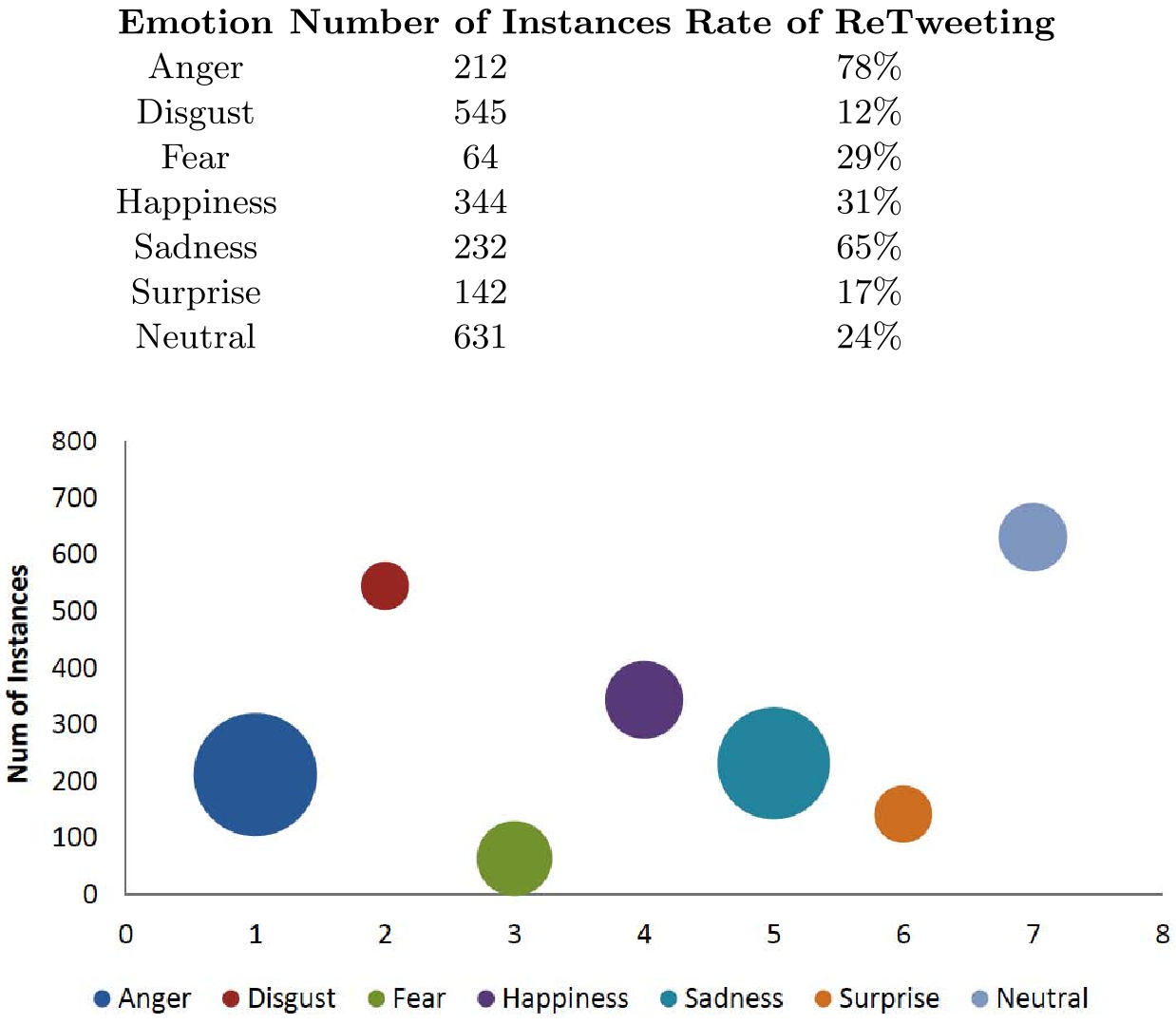 Figure 3: Visualization of diffusion intensity per emotional state. Larger circles indicate higher network penetration.
The data confirms the "Bad news travels fast" hypothesis. Negative emotional states, particularly those associated with high arousal (Anger) or deep empathy (Sadness), create a much stronger incentive for users to broadcast information to their own circles.
Critical Analysis & Conclusion
Takeaway
For marketing professionals and social scientists, the value is clear: Network topology is the skeleton, but emotion is the blood. A user with a small following can trigger massive diffusion if they hit the "Anger" or "Sadness" emotional high-notes.
Limitations & Future Work
While the model is robust, it relies on categorical labels. The authors acknowledge that future work should incorporate Valence (intensity). Furthermore, the dataset was keyword-specific (#MH370), which is inherently a tragedy; testing this model on neutral events like product launches or sporting events would validate the generalizability of the "Anger motive."
Ultimately, this study provides a foundational framework for "Affective Microblogging," proving that how a user feels is a quantifiable predictor of how a network behaves.