
Balancing the Scale: A Scalable Risk-Utility Framework for Social Media Sharing
Modeling the Risk & Utility of Information Sharing in Social Networks
Summary
Problem
Method
Results
Takeaways
Abstract
The paper introduces a risk-utility framework for information sharing in social networks, proposing the "Modified-Aggregate" algorithm to balance privacy and data sharing benefits. It models data generalization using Value Generalization Hierarchies (VGH) and proves that finding the optimal balance is NP-hard, yet solvable through supermodular optimization.
## TL;DR
Information sharing in social networks has historically been an "all-or-nothing" game: you either let a friend see your profile or you don't. This paper introduces a mathematical framework that allows for "partial disclosure" through data generalization. By proving that finding the perfect balance is NP-hard and then solving it using **Supermodular Optimization**, the authors provide a scalable way for systems to recommend exactly how much detail (e.g., zip code vs. city vs. state) a user should share to maximize benefit while minimizing leakage risk.
## The Core Tension: Privacy vs. Utility
In the era of Facebook and LinkedIn, the "Six Degrees of Separation" is no longer a theory; it is a privacy nightmare. Every piece of data shared with a "friend" can potentially leak to a "stranger."
The authors identify a critical gap:
1. **Diffusion Kernels** are mathematically elegant for modeling how info flows across a graph but require global network knowledge that no individual user (and few systems) can practically calculate.
2. **Binary Access Control** is too blunt. Users might want to share their exact location with family but only their general city with work colleagues.
The problem? When you have multiple attributes (age, location, interests) and multiple levels of detail for each, the number of possible profile combinations explodes. Finding the optimal set of generalizations is an **NP-hard** problem.
## Methodology: The Power of Supermodularity
To solve this, the authors model a user's profile as a **Value Generalization Hierarchy (VGH)**. Imagine a tree where the root is "Hidden" and the leaves are "Specific Data."
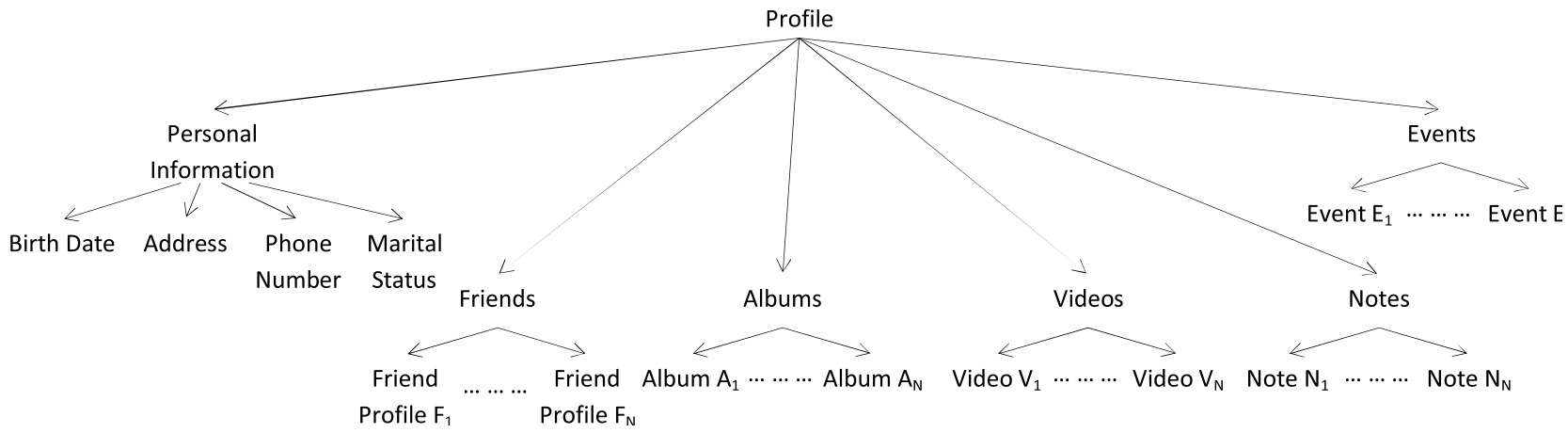
*Fig 1: A typical social profile structure and how generalized data maps to specific attributes.*
### The "Modified-Aggregate" Insight
The breakthrough lies in the **Supermodularity Property**. In simple terms, if a function is supermodular, it behaves in a way that allows us to find the maximum efficiently using convex optimization techniques.
The authors define:
- **Utility ($U$):** How much "value" is gained by sharing details (monotonically decreasing as you generalize).
- **Risk ($R$):** The sensitivity of the data divided by the "Trust" (based on common friends).
By constructing a Lagrangian relaxation of the problem, they transform the search for the optimal profile into a **Supermodular Maximization** task over a ring family. This allows the algorithm to run in **polynomial time**, making it feasible for networks with millions of users.
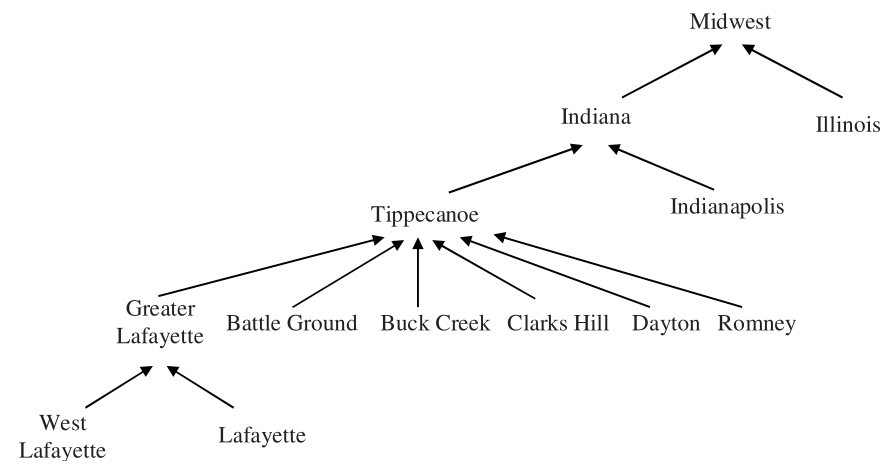
*Fig 2: A partial VGH for the 'city' attribute, illustrating the path from specific data to general categories.*
## Experimental Validation
The authors didn't just stay in the realm of theory. They conducted a user study with 300 participants across 4 continents to determine what actually drives "Trust."
**Key Findings from the User Study:**
- **Common Friends** are the #1 factor in accepting a stranger's request.
- **Specific vs. Diversified:** 64% of users prefer sharing very specific data about a few things rather than vague data about many things.
When testing their **Modified-Aggregate Algorithm** against an "Exact" (but slow) algorithm on 500,000 synthetic users:
- The **Risk** levels were nearly identical.
- The **Runtime** of the Modified-Aggregate algorithm remained flat and scalable, while the Exact algorithm's complexity skyrocketed as the number of attributes increased.
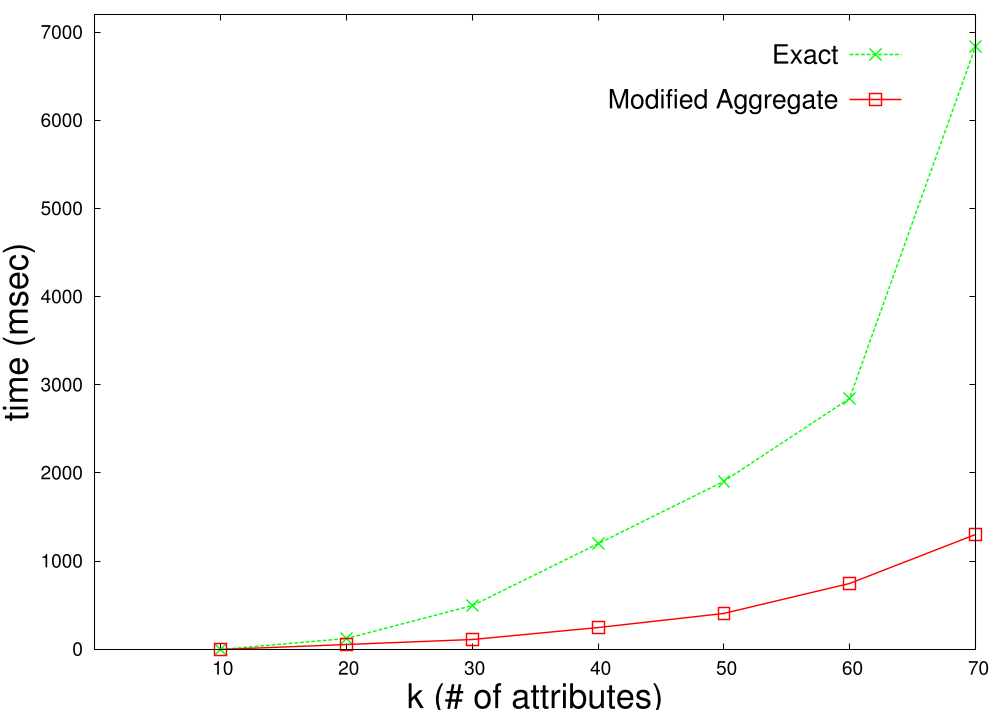
*Fig 3: Efficiency comparison showing the scalability gains of the proposed algorithm.*
## Critical Analysis & Future Outlook
This work is a significant bridge between **Access Control** and **Data Anonymization**. It treats a social media profile not just as a static record, but as a dynamic asset that can be "morphed" based on who is looking at it.
**Limitations:**
- The model assumes a **centralized system** (the network admin) calculates the risk. In a decentralized or end-to-end encrypted world, this becomes much harder.
- The **Trust** model is still relatively simple (common friends). Real-world trust involves sentiment analysis, past interaction frequency, and professional ties.
**Conclusion:**
As the industry moves away from "Terms of Service" that grant blanket access, the techniques in this paper—specifically the use of supermodular optimization for policy recommendation—provide a blueprint for a more nuanced, privacy-respecting social web.