
Elevating Math Education: How Data Mining and Gamification Build Self-Efficacy
Modeling Self-efficacy and Self-regulated Learning in Gamified Learning Environments Through Educational Data Mining
The paper proposes a data-driven Intelligent Tutoring System (ITS) for mathematics that integrates gamification to foster student self-efficacy and self-regulated learning. By leveraging Educational Data Mining (EDM) and Bayesian networks, the authors bridge the gap between gamified engagement and psychological learning constructs.
TL;DR
Researchers at Tecnológico Nacional de México are developing a next-generation Intelligent Tutoring System (ITS) that goes beyond teaching math facts. By using Educational Data Mining (EDM) and Bayesian Networks, the system models invisible student traits like self-efficacy (the belief in one's ability to succeed) and self-regulated learning (the ability to control one's study habits), using game mechanics to keep students engaged and persistent.
Context: Beyond the "Digital Textbook"
Most educational software fails because it treats students as passive recipients of information. Even "Intelligent" tutors often focus solely on whether a student got a problem right or wrong. This paper argues that the real bottleneck in subjects like mathematics isn't just a lack of "knowledge," but a lack of motivation and self-regulation.
The authors position their work at the intersection of three heavy-hitting fields:
- ITS: Adaptive software that simulates a human tutor.
- Gamification: Using game design elements (points, badges, levels) in non-game contexts.
- EDM: Discovering hidden patterns in the massive data traces students leave behind.
The "Why": The Psychological Engine of Learning
The authors highlight a critical insight: Self-efficacy and Self-regulated learning are the "Engine" of academic success.
- Self-efficacy: If a student believes they can solve a math problem, they are more likely to try.
- Self-regulated learning: If a student can manage their time and ignore distractions, they will improve.
Current systems struggle to "see" these traits. You can't directly measure a student's confidence through a mouse click—at least not without sophisticated modeling.
Methodology: The Data-Driven Student Model
The researchers' approach is dual-tracked. First, they analyze massive public datasets (like DataShop) to identify behavioral indicators of success. Second, they are running controlled experiments using custom online courses (Math For 6th Grade) to collect "ground truth" data through self-reports.
The Architecture
The brain of the system is the Student Model. Unlike a simple database, this model uses Bayesian Networks to handle uncertainty. Since the system cannot be 100% sure if a student is "frustrated" or "confident," the Bayesian approach calculates the probability of these states based on interaction patterns.
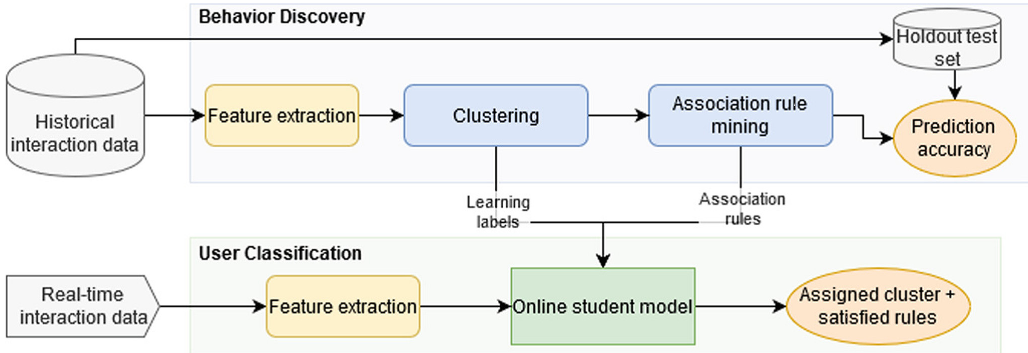 Figure 1: Standard ITS architecture which the authors are augmenting with gamification modules.
Gamification as a Feedback Loop
The paper doesn't just throw badges at a student. It integrates gamification into the Tutor Module. If the student model detects low self-efficacy, the tutor might offer a "Mission" that is slightly easier to build confidence, or a "Challenge" badge to encourage persistence.
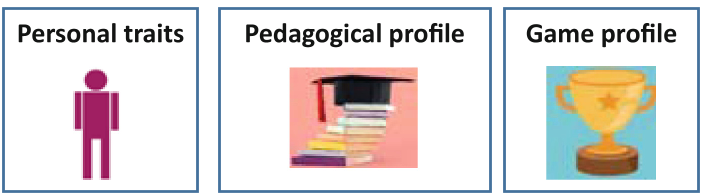 Figure 2: The augmented student model representing the relationship between motivation, self-efficacy, and self-regulation.
Key Insights from Related Work
The authors cite several "predecessor" successes that validate their direction:
- EasyLogic: Proved that students learn logic/programming significantly better when the system recognizes their emotions AND uses gamification.
- SQL-Tutor: Demonstrated that "badges" actually change behavior by increasing time-on-task, which is the primary predictor of learning.
Critical Analysis & Future Outlook
While the paper is in its early stages ("initial stage"), its framework is robust.
- The Strength: It moves away from "superficial gamification" (points for the sake of points) toward "functional gamification" designed to support psychological needs.
- The Limitation: Relying on self-reports for kids (self-efficacy scales) is notoriously difficult. Children often lack the meta-cognitive awareness to accurately report their own confidence levels.
- The Future: The shift toward Multimodal EDM (combining click-stream data with eye-tracking or facial expression analysis) will likely be the next step to make these Bayesian models even more accurate.
Conclusion
This research signals a shift in EdTech. We are moving from systems that simply evaluate students to systems that understand and empower them. By modeling self-efficacy, we can build tutors that don't just teach math, but teach students how to believe in their ability to learn.