
Modeling Social Media Collaborative Work: A Sociotechnical Leap in Digital Healthcare
Modeling social media collaborative work
This paper introduces a framework for modeling Social Media Collaborative Work (SMCW), specifically applied to diabetes self-help communities. The approach integrates Soft Systems Methodology (SSM), i* modeling, and social psychology to capture complex multi-stakeholder interactions.
TL;DR
Digital healthcare is moving beyond simple portals to complex ecosystems. This paper proposes a robust modeling framework for Social Media Collaborative Work (SMCW). By combining Soft Systems Methodology (SSM) with the goal-oriented i modeling*, the authors provide a blueprint for designing healthcare communities that prioritize human motivations, trust, and privacy over mere machine performance.
Background: The Social Shift in Healthcare
The management of chronic conditions like diabetes is no longer confined to the doctor's office. It happens in the daily "messiness" of social media—sharing glucose levels, discussing diets, and seeking emotional support. However, current systems often treat users as passive data points rather than active participants in a collaborative "work" environment.
The authors argue that we need a way to model this complexity. They position their work at the intersection of Computer-Supported Cooperative Work (CSCW) and Social Psychology, moving the needle from individual Human-Computer Interaction (HCI) to collective human social media interactions.
Problem & Motivation: The Complexity of "Soft" Issues
Why is modeling social media for health so difficult?
- Multi-Stakeholder Conflict: Patients want privacy; researchers want data; doctors want accuracy.
- Emergent Behavior: Large-scale human interactions produce unpredictable social dynamics (trust, commitment, power shifts).
- Rigid Frameworks: Traditional engineering focuses on "what" the system does, ignoring "why" people participate or "how" they relate to one another.
Methodology: The Core Framework
The researchers adopted Action Research, embedding themselves within a diabetes self-help community to iteratively refine their model. The core of their approach is the 7-Stage SSM process.
1. The SSM Loop
Instead of starting with software specs, the process begins with "Rich Pictures"—visual representations of the problem situation that include emotions, politics, and conflicting viewpoints.
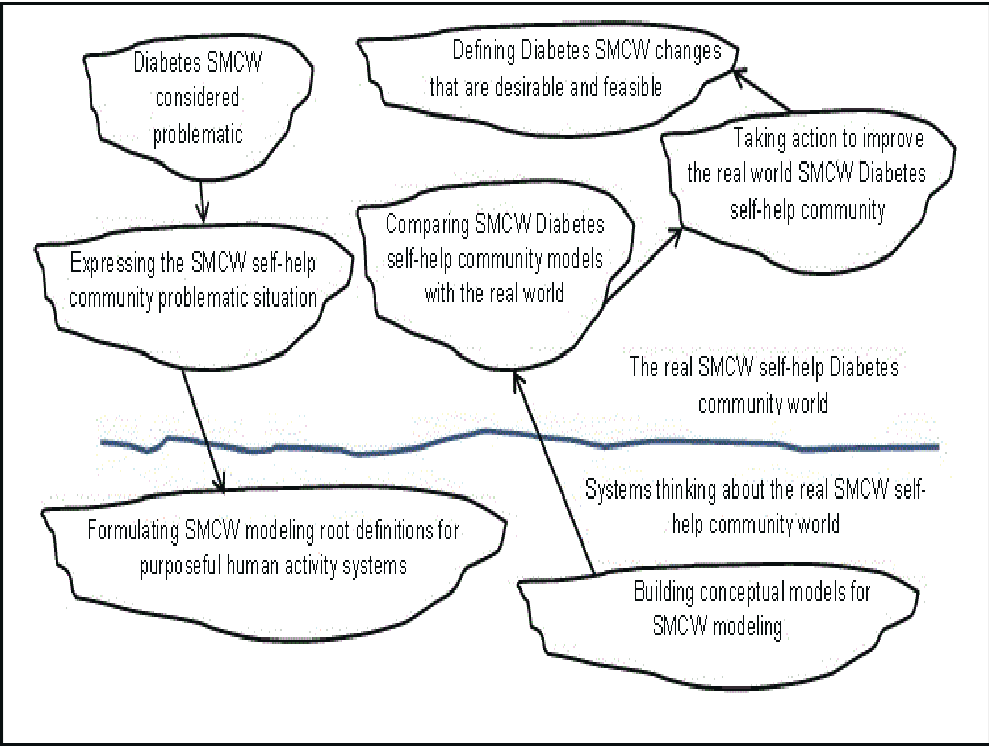 Figure 1: The iterative 7-stage approach of SSM applied to the SMCW diabetes self-help community.
2. Formalizing Intent with i*
While SSM captures the "messy" reality, i modeling* is used to formalize dependencies. It answers: Who depends on whom for what goal? This is crucial for modeling Trust—a patient trusts a nurse to provide accurate advice, while the nurse depends on the patient for honest data sharing.
Experiments & Results: Mapping the Diabetes Ecosystem
The study produced a detailed taxonomy of the diabetes SMCW domain, ranging from NHS specialists to ISPs.
Key Stakeholder Insights
The research identified that for a diabetes SMCW to succeed, the distribution of power must be flat and relational. If the power is too top-down (e.g., purely clinical), patient engagement drops.
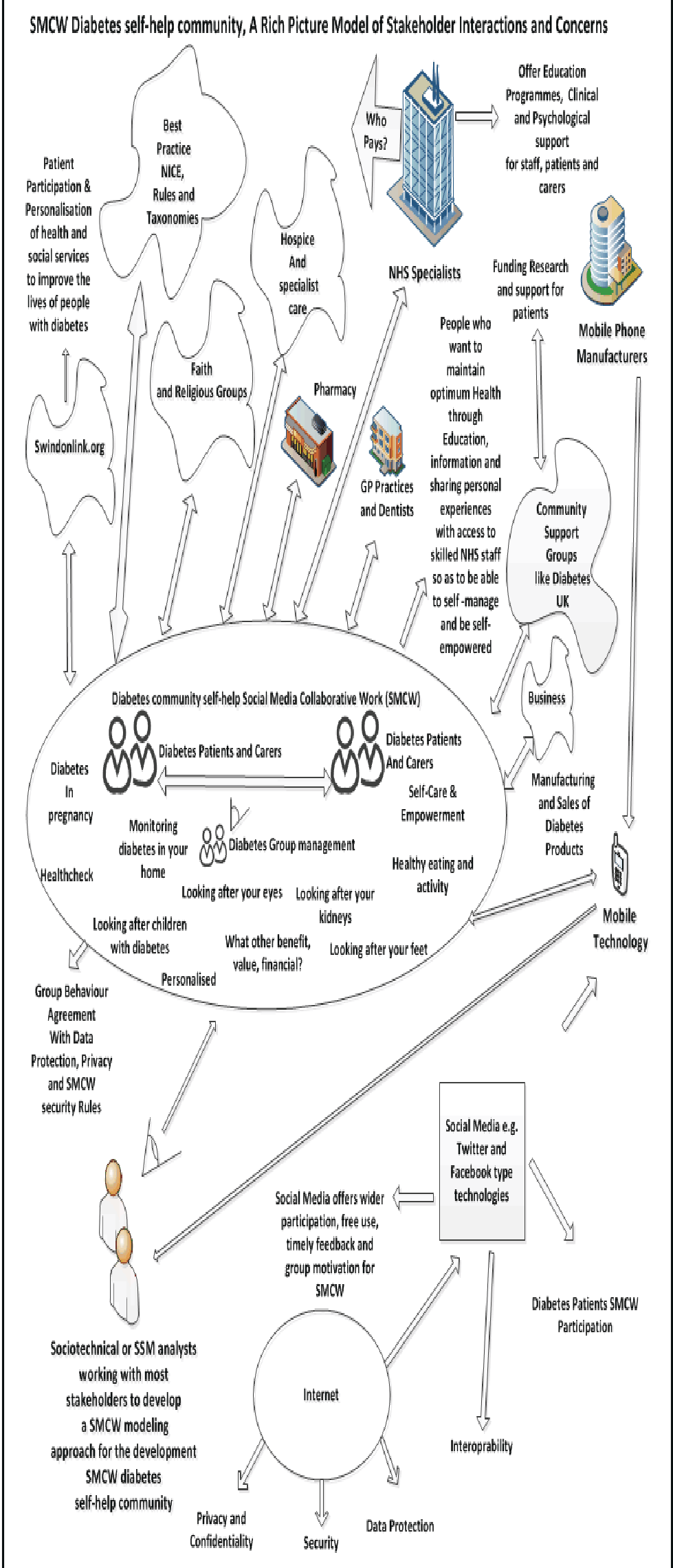 Figure 2: Mapping stakeholder interactions and concerns in the SMCW framework.
Performance Measures
The authors defined three pillars for measuring the "success" of the model:
- Efficacy: Does the model reflect the real-world domain requirements?
- Efficiency: Can the modeling be completed within clinical timelines?
- Effectiveness: Does the resulting self-help community actually improve patient health?
Critical Analysis & Conclusion
The "Social" in Social Media
The paper’s greatest strength is its insistence that social interfaces are as important as machine performance. By using "Root Definitions" (e.g., transforming a need for health into an engaged community through participation), the authors provide a roadmap for "Human Activity Systems" that actually stick.
Limitations
While the framework is theoretically dense, the paper omits the specific i* model diagrams due to space constraints, making it harder to evaluate the technical "translation" from soft SSM to formal code-ready requirements. Additionally, the challenge of data protection laws (GDPR-like constraints) remains a significant "Environmental Constraint" that requires even deeper modeling.
Future Outlook
This work paves the way for a more human-centric AI and social platform design. As we move toward AI-driven health coaches, using SSM and i* to model the trust relationship between the human, the community, and the agent will be the next frontier in sociotechnical systems engineering.
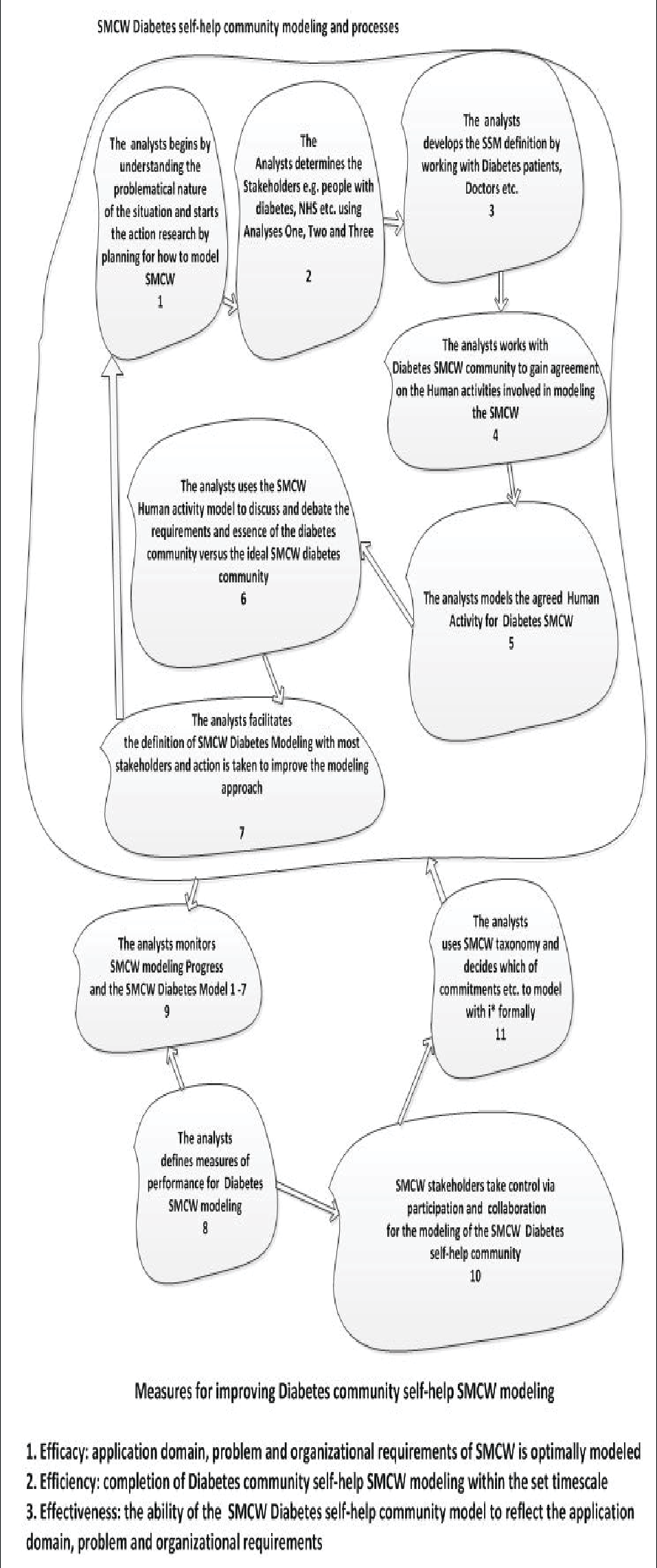 Figure 3: Final guidelines for the management and control of SMCW modeling.