
Socially Intelligent Healthcare: Tailoring Medical Updates to the Human Social Hierarchy
Modeling the Socially Intelligent Communication of Health Information to a Patient's Personal Social Network
This study presents a "socially intelligent" model for communicating health information to a patient's personal social network. By analyzing how emotional proximity and gender dictate information demand (ID), the authors propose an automated Natural Language Generation (NLG) framework to provide tailored medical updates.
TL;DR
When someone is seriously ill, their "inner circle" wants every detail, while distant acquaintances may only need the basics. This paper explores the "Social Intelligence" required to automate these updates. By measuring emotional proximity and gender, the authors provide a blueprint for a system that delivers the right message to the right person, ensuring patients get optimal social support without overwhelming or underserving their network.
Context & Motivation: The "Goldilocks" Problem of Social Support
Social support is a powerful clinical tool; it can reduce stress, improve treatment compliance, and even extend life. However, providing support requires information.
Existing systems often ignore the nuanced structure of human relationships. If a computer system sends a detailed diagnosis to a casual coworker (the "Clan"), it might be seen as a privacy breach. Conversely, if it sends a vague summary to a spouse or best friend (the "Support Clique"), it feels cold and insufficient. The authors argue that a socially intelligent system must model these relationships to facilitate "Information, Emotional, and Practical support" effectively.
Methodology: Mapping the Personal Social Network
The study is built upon the sociological concept of the hierarchical social network. Our relationships aren't a flat list; they are concentric circles:
- Support Clique (3-5 people): Deeply emotional, "go-to" people in a crisis.
- Sympathy Group (12-20 people): Close friends and relatives you see often.
- Clan (up to 150+ people): Acquaintances, colleagues, and distant relations.
The researchers asked 110 participants to imagine a member from each layer was hospitalized and then rate their desire for specific information items (ranging from "Which hospital?" to "Does the patient need help breathing?").
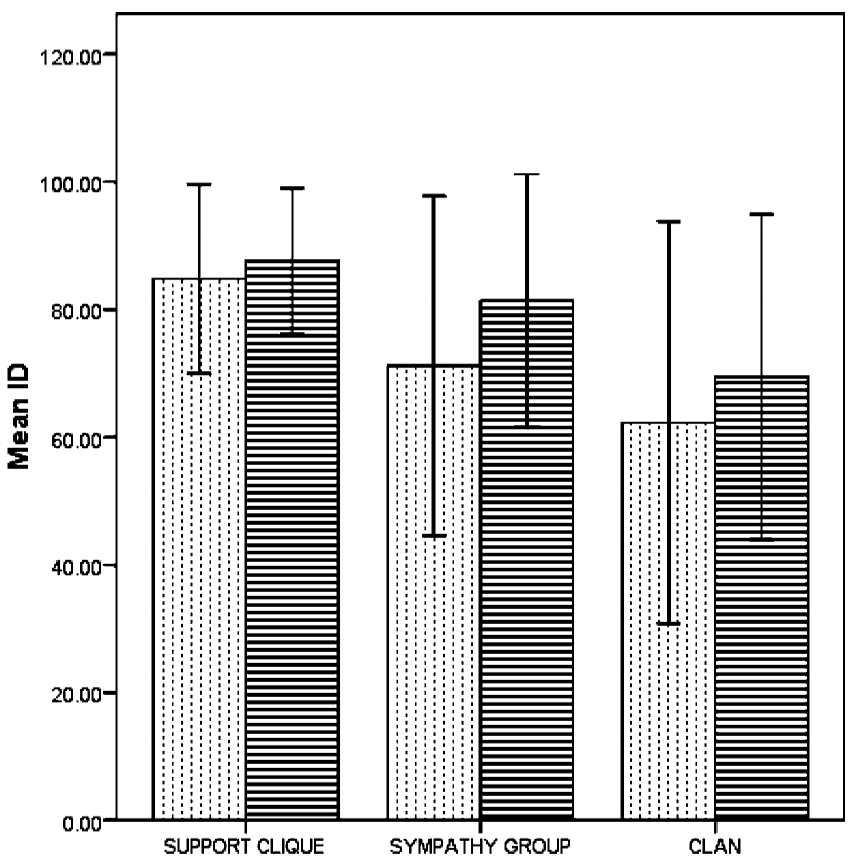 Fig 1: ID (Information Demand) decreases as we move from the Support Clique to the Clan, with women consistently showing higher demand.
Key Findings: Closeness and Gender Matter
The experiment validated three major hypotheses:
- The Proximity Effect: As expected, the "Support Clique" wanted significantly more information than the "Clan." Items like "long-term effects" and "emotional coping" were essential for the inner circle but merely "nice to know" for others.
- The Gender Gap: Women generally want more information than men. Interestingly, this gap was most pronounced in the "Sympathy Group" and "Clan" layers. While men were often indifferent to emotional details for distant friends, women still considered them important.
- Actionable Content: People don't just want medical facts; they want to know how to help. Demand for "What can I do for the patient?" was consistently higher than for generic "What practical help is needed?"
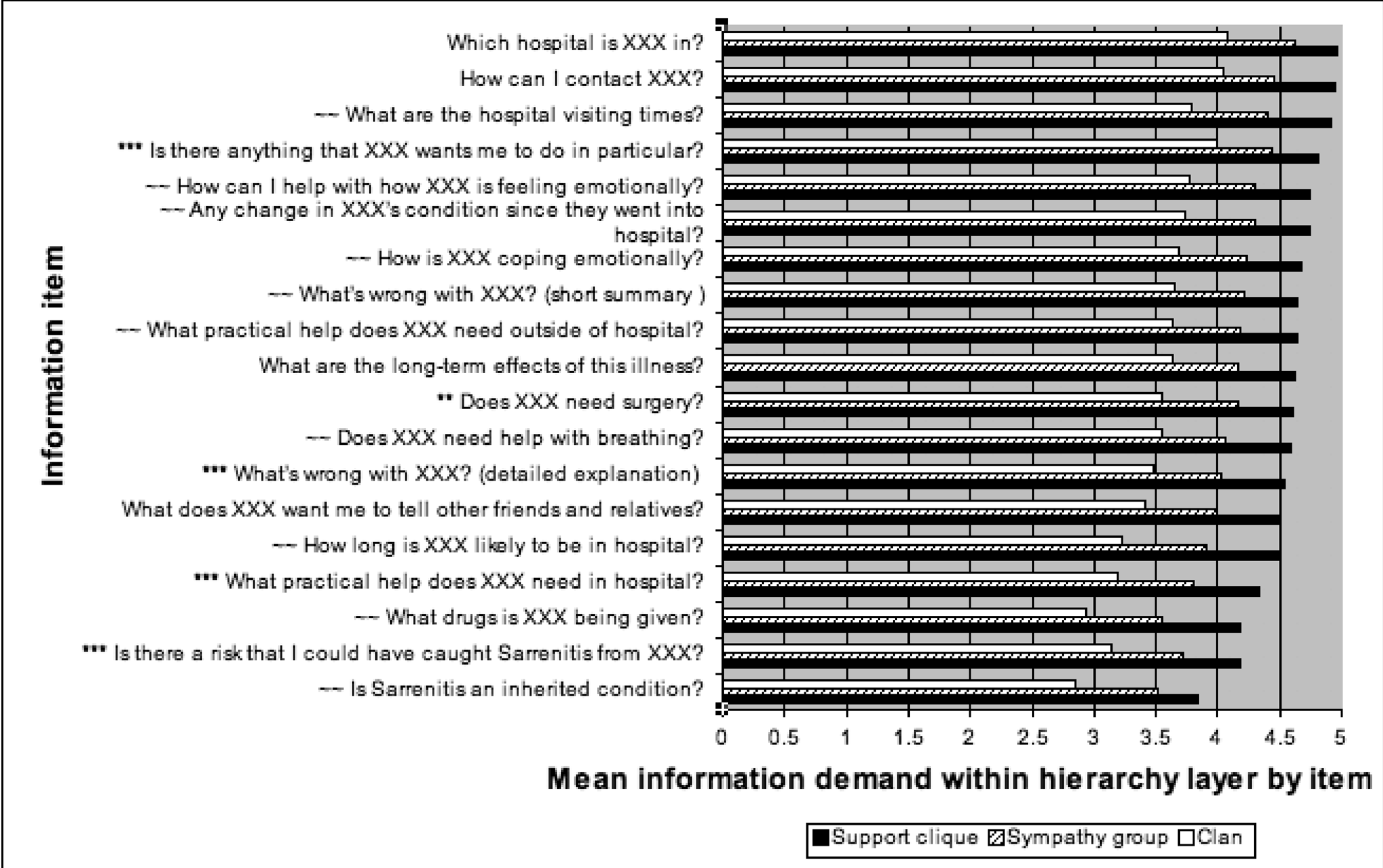 Fig 2: A breakdown of how specific questions (e.g., contact info, surgical needs) lose priority as emotional distance increases.
The Socially Intelligent Model
The authors synthesized these findings into a practical communication model. This model dictates what content should be included in an automated report based on the recipient's profile:
| Information Item | Support Clique | Sympathy Group | Clan |
|---|---|---|---|
| Hospital Location | Essential | Essential (F) / Nice (M) | Nice to Know |
| "How can I help?" | Essential | Essential (F) / Nice (M) | Nice to Know |
| Emotional State | Essential | Nice to Know | (Excluded) |
| Detailed Medical Explanation | Essential (F) / Nice (M) | Nice to Know | (Excluded) |
Critical Insight: Beyond the Hospital Bed
This research has profound implications for Natural Language Generation (NLG) and e-Health.
In high-stress environments like a Neonatal ICU, parents (the Support Clique) are often overwhelmed by the task of updating the rest of the family. A "Socially Intelligent" agent could take real-time medical data (e.g., "the baby is off the ventilator") and automatically draft a detailed letter for the grandparents while sending a simple "still recovering" text to the neighbors.
Limitations & Future Work
The study focuses on what the recipient wants. However, medical communication is a two-way street. The authors acknowledge that a patient's privacy preferences might conflict with a friend's desire for information. The next phase of this research must focus on "negotiating" these preferences to ensure total privacy and consent.
Conclusion
Social Support is not just a "nice-to-have"; it is a clinical necessity. By mathematically modeling human social hierarchies, we can build computer systems that don't just transmit data, but foster meaningful connection and support in moments of crisis.