
Beyond Socializing: Why "Task Fit" is the Holy Grail of Mobile Learning Adoption
2576_The moderating effect of experience on the intention to adopt mobile social network sites for pedagogical purposes An extension of the technology acce
This study investigates the adoption of mobile Social Network Sites (SNSs) for pedagogical purposes using an extended Technology Acceptance Model (TAM). By integrating Task-Technology Fit (TTF) and Perceived Enjoyment (PENJ), the researchers identified Perceived Task-Technology Fit (PTTF) as the strongest predictor of students' intention to use mobile SNSs for learning within Malaysian public universities.
TL;DR
While we often assume that "easy-to-use" apps are more likely to be adopted, this research proves that in the classroom, utility and task-alignment reign supreme. By extending the Technology Acceptance Model (TAM) with Task-Technology Fit (TTF), this study reveals that students prioritize how well a mobile social network site (SNS) fits their coursework over how easy or even how fun the app is.
Contextualizing the Study
Mobile SNSs (like WhatsApp, YouTube, and Facebook) have revolutionized social interaction, but their "pedagogical pivot" is still in its infancy. This study positions itself at the intersection of Extrinsic Motivation (Utility), Intrinsic Motivation (Enjoyment), and Functional Alignment (Task Fit). It moves beyond the "what" of technology usage to explore the "why" of academic adoption in the Malaysian higher education sector.
The "Ease of Use" Paradox
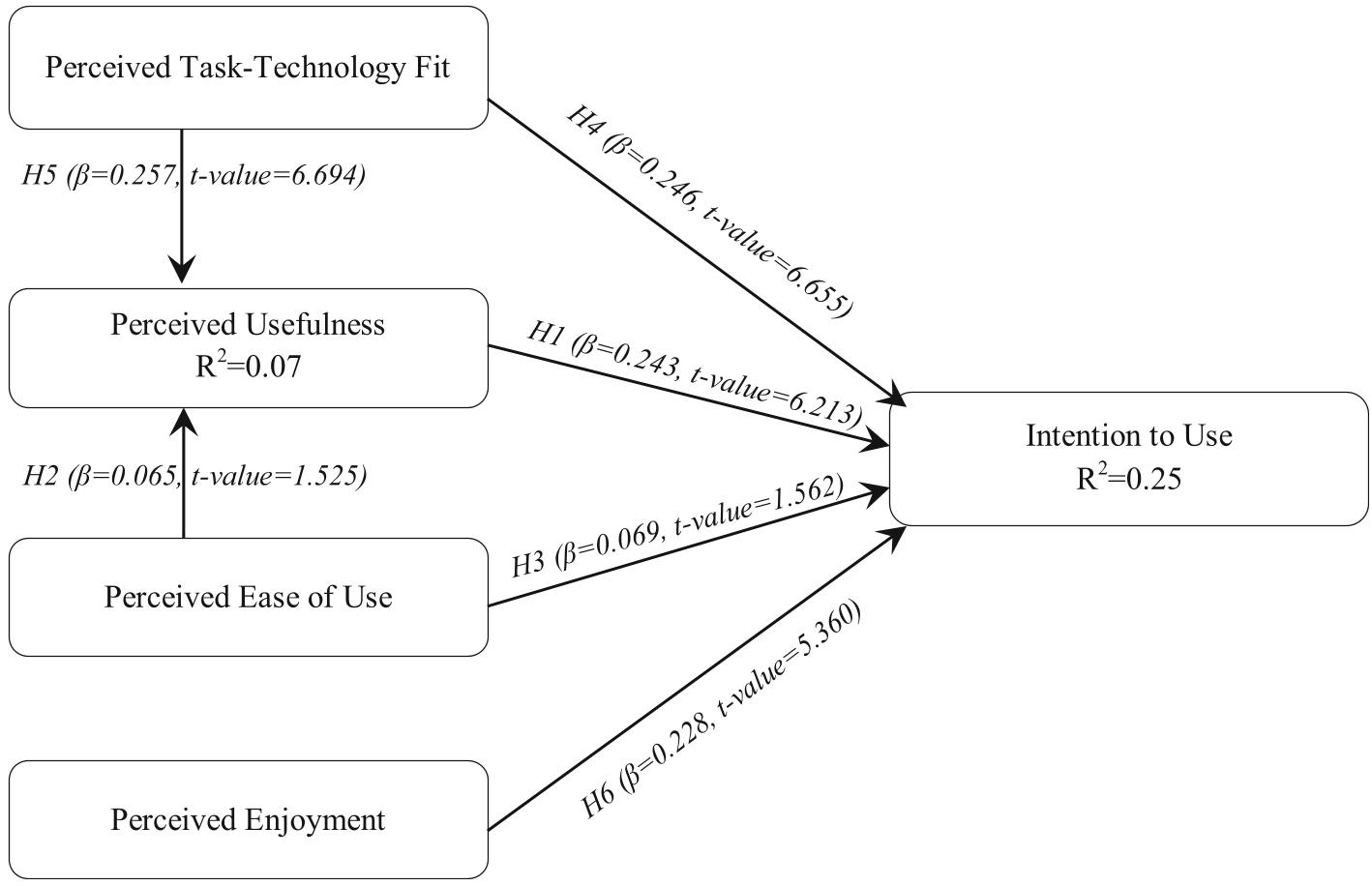
For years, the Technology Acceptance Model (TAM) has relied on Perceived Ease of Use (PEOU) as a cornerstone of technology adoption. However, this study found that for mobile SNSs in pedagogy, PEOU was not significant.
Why? The researchers suggest that today's "digital natives" find these apps inherently easy to use; therefore, ease of use is no longer a differentiator or a hurdle. Instead, the focus has shifted entirely to whether the tool actually helps finish an assignment or enhance a grade.
Methodology: The Extended TAM Framework
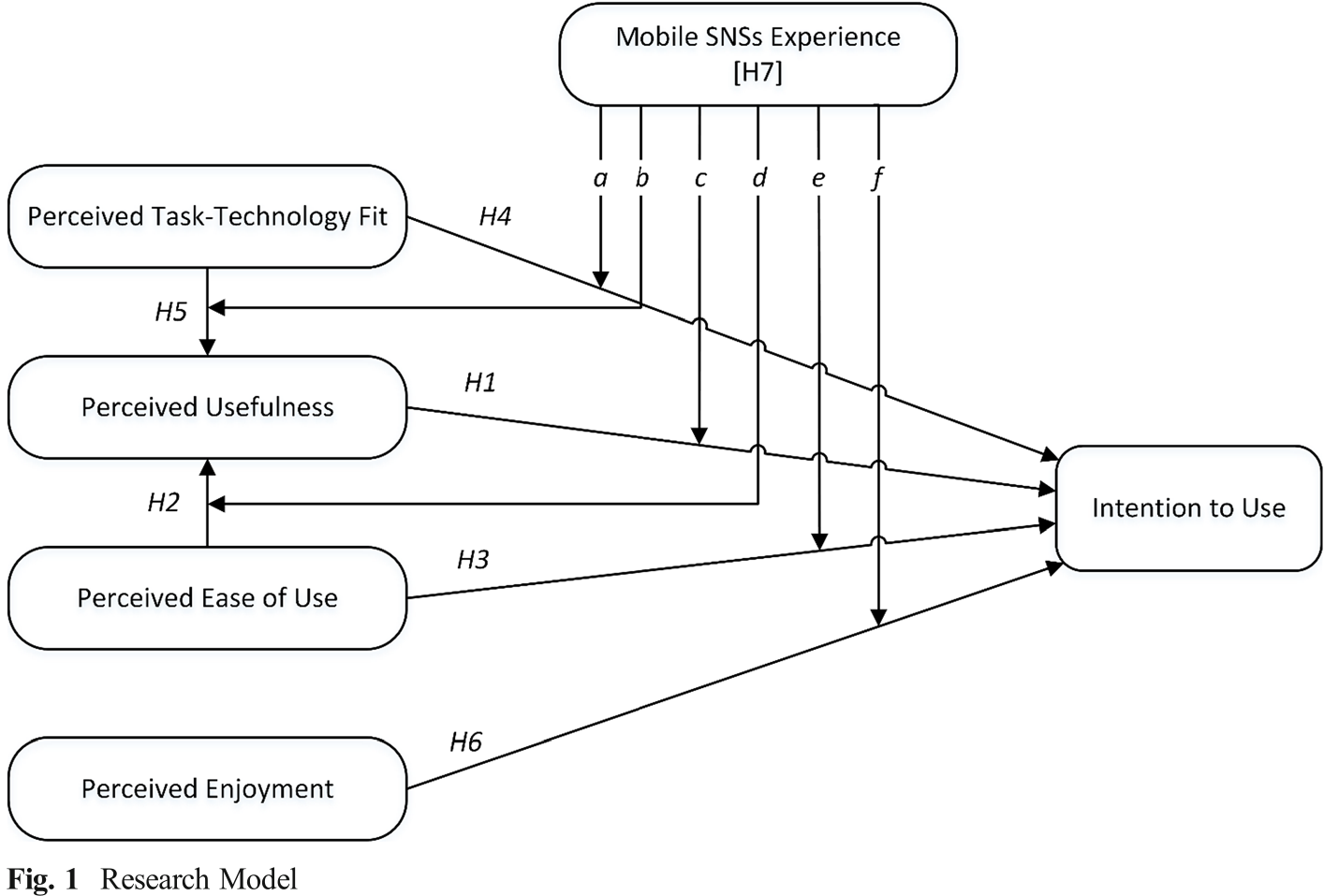
The authors didn't just look at the tool; they looked at the task. They integrated the Task-Technology Fit (TTF) model, arguing that if the technology’s functions don't facilitate the specific requirements of learning, the user will ignore it, regardless of its social popularity.
Key Findings & Visual Evidence
Through a rigorous PLS-SEM analysis of 600 students, the study yielded several high-impact insights:
- Task-Technology Fit (PTTF) is King: With a path coefficient of 0.246, it was the strongest driver of intention. If an app doesn't fit the "task" of learning, it fails.
- Usefulness vs. Enjoyment: While Perceived Enjoyment (PENJ) mattered (β = 0.228), Perceived Usefulness (PULS) was a tighter predictor of behavior (β = 0.243).
- The Experience Factor: The study hypothesized that more experienced users would show stronger adoption links, but the data showed that experience did not significantly moderate these relationships.
Deep Insight: Why "Experience" Didn't Moderate Results
One of the most intriguing findings was the rejection of Hypothesis 7 (the moderating effect of experience). The authors posit that students who are highly experienced in using mobile SNSs for pleasure might actually find it harder to pivot those same tools toward academic labor. This suggests a cognitive barrier between "leisure apps" and "work apps" that experience alone cannot bridge.
Future Outlook and Limitations
The study provides a roadmap for EdTech developers: Focus on features that map directly to learning outcomes. However, the study is limited by its cross-sectional nature. Future research should look at longitudinal data—how does a student's perception change after a full semester of using WhatsApp for a specific course?
Conclusion
This research underscores a critical shift in EdTech: students are pragmatic. For mobile social networks to become legitimate pedagogical tools, they must move beyond being "easy" or "fun" and start being "functional." The "Fit" is what ultimately determines if a social tool survives the transition to the classroom.