
M-ANFIS: Harnessing Neuro-Fuzzy Logic for Multi-Disease Analysis in Big Data
Modified adaptive neuro-fuzzy inference system (M-ANFIS) based multi-disease analysis of healthcare Big Data
The paper introduces a Modified Adaptive Neuro-Fuzzy Inference System (M-ANFIS) for multi-disease analysis in healthcare Big Data. It integrates K-medoid clustering and entropy-based feature extraction to achieve a high-accuracy classification (95.9%) across diverse conditions like respiratory and chronic diseases.
TL;DR
In the era of Zettabyte healthcare data, traditional diagnostic models often struggle with the "Variety" and "Volume" of medical records. This paper presents M-ANFIS (Modified Adaptive Neuro-Fuzzy Inference System), a hybrid model that combines K-medoid clustering and entropy measures to identify multiple diseases (respiratory, bacterial, chronic) with a superior accuracy of 95.91%.
Background: The Healthcare Big Data Crisis
Healthcare data is no longer just a collection of patient charts; it is a chaotic stream of IoT sensor data, genomic sequences, and insurance records. The primary challenge lies in the heterogeneous complexity of this data. Conventional machine learning models like SVM or standard Neural Networks often face a trade-off between interpretability (why a diagnosis was made) and adaptability (how well the model handles new, noisy data).
The Intuition: Why M-ANFIS?
The authors identify a critical bottleneck in standard fuzzy systems: as the number of inputs grows, the rule-base expands exponentially, leading to computational paralysis.
The "M" in M-ANFIS represents two key innovations:
- Closed Frequent Itemset (CFI) & Entropy: Instead of raw data, the model extracts patterns (itemsets) and uses entropy to measure the information content, filtering out noise.
- K-Medoid Pre-clustering: By clustering features before they hit the fuzzy layers, the model creates more precise "membership functions." Unlike K-means, K-medoids is more robust to the outliers common in medical anomalies.
Methodology: The Core Architecture
The workflow follows a rigorous pipeline: Pre-processing → Feature Extraction → Entropy Calculation → M-ANFIS Classification.
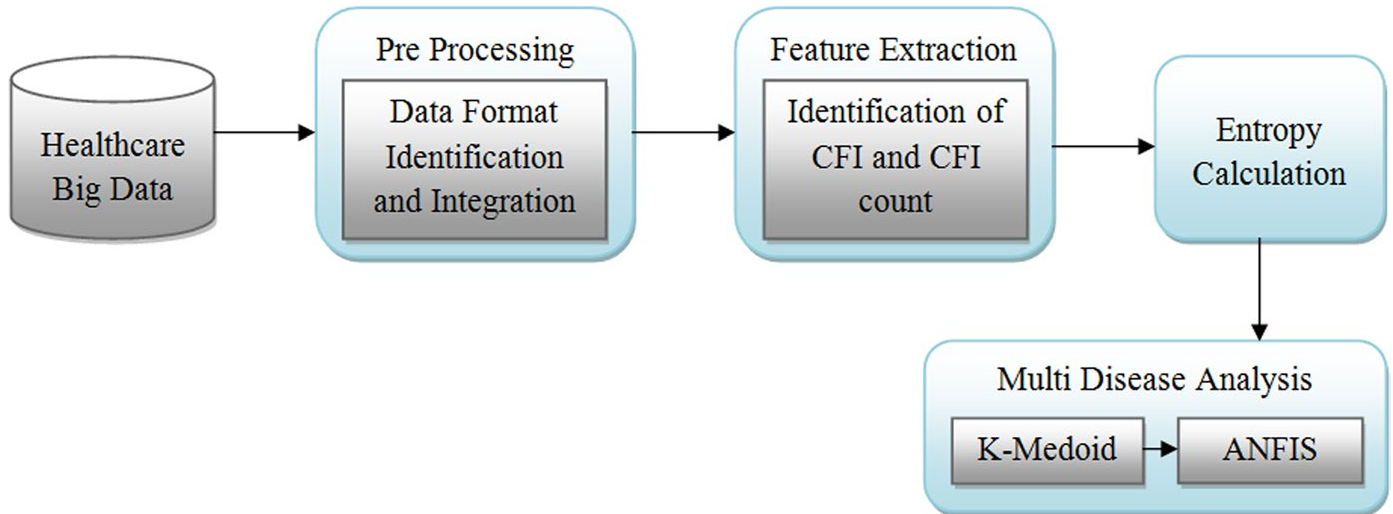 Figure 1: The proposed multi-disease analysis framework using M-ANFIS.
The Five Layers of M-ANFIS
The model processes inputs through five specialized layers:
- Layer 1 (Fuzzification): Uses "Bell" membership functions to convert crisp inputs into fuzzy degrees.
- Layer 2 & 3 (Rule & Normalization): Calculates the "firing strength" of rules determined by the K-medoid clusters.
- Layer 4 & 5 (Defuzzification & Output): Translates fuzzy results back into clear diagnostic categories (e.g., Healthy vs. Unhealthy).
Experimental Results & Performance
The researchers tested the model against high-standard benchmarks including Support Vector Machines (SVM), Neural Networks (NN), and Deep Neural Networks (DNN).
Key Findings:
- Accuracy Lead: M-ANFIS reached 95.91%, which is roughly 5.5% higher than Deep-NN.
- Precision/Recall: The model maintained a balanced score of 97.82%, indicating it is highly reliable for avoiding both false positives and false negatives in medical contexts.
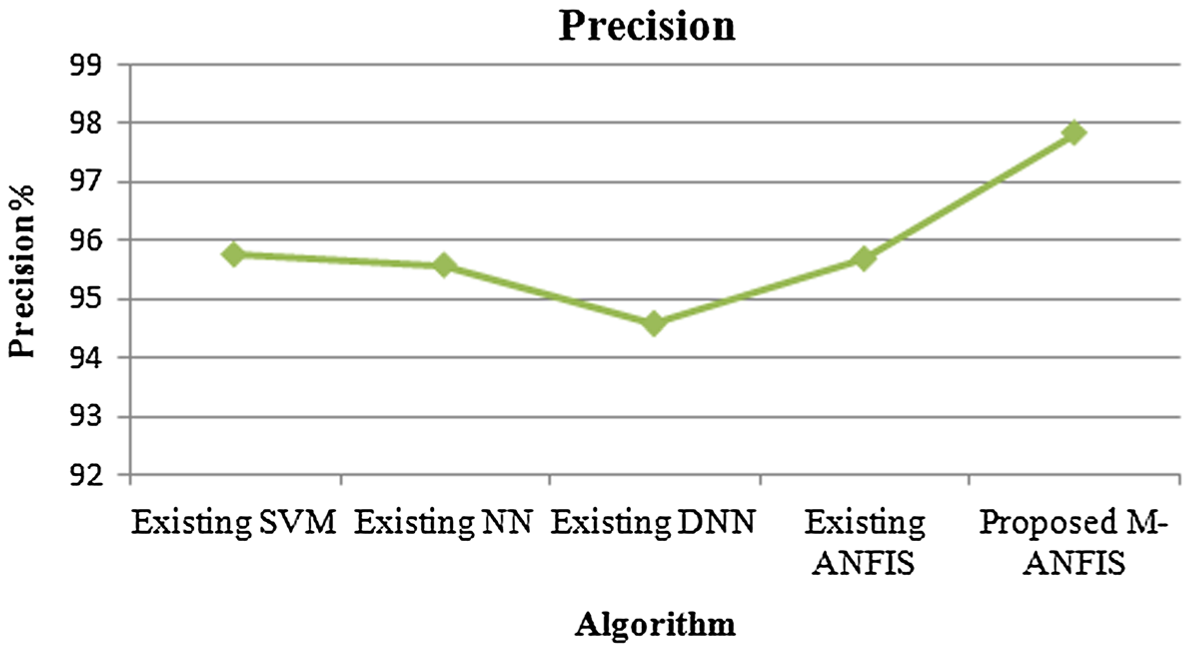 Figure 2: Precision comparison showing M-ANFIS (97.8%) vastly outperforming the competition.
Critical Insights & Future Outlook
While M-ANFIS shows remarkable gains, it is essential to note that its performance is heavily dependent on the quality of the initial K-medoid clustering. If the initial data integration step fails to handle multi-dimensional formats (like CSV vs. JSON records) correctly, the entropy calculation may lose its predictive power.
Takeaway for Practitioners: This work demonstrates that "Deepest isn't always best." By using a "Shallower" neuro-fuzzy architecture optimized with smart clustering, we can achieve better accuracy than deep learning on structured healthcare big data, with the added benefit of rule-based logic that clinicians can potentially audit.
Future Research: The authors suggest incorporating multimedia sources (audio/video/GPS) to move toward real-time emergency prioritization.