
EmBP: Bridging Logic and Emotion in Artificial Neural Networks
17886_A Modified Backpropagation Learning Algorithm With Added Emotional Coefficients.
The paper introduces the Emotional Backpropagation (EmBP) learning algorithm, a modified version of the standard Backpropagation (BP) neural network. By incorporating simulated human emotional factors—anxiety and confidence—into the weight update process, the author achieves significant improvements in face recognition accuracy (90%) and a 28% reduction in inference time.
Executive Summary
TL;DR: Adnan Khashman’s work challenges the "pure logic" paradigm of AI by introducing Emotional Backpropagation (EmBP). By simulating the psychological transition from Anxiety to Confidence during the learning process, the proposed model improves facial recognition accuracy to 90% and optimizes inference speed by 28% compared to standard BP networks.
Background: Within the academic landscape, this paper represents a pioneering attempt to turn abstract psychological states into concrete mathematical parameters for optimization. It shifts the role of emotion from a "clinical outcome" to a "functional mechanism" in machine learning.
Problem & Motivation: The Missing Affective Factor
Traditional Neural Networks (NNs) are built on the premise of mimicking the brain's structural connections (neurons and synapses). However, they frequently ignore the regulatory signals that govern human cognition: Emotions.
In human learning, we aren't static optimizers. A child learning a new task experiences high anxiety and low confidence. As familiarity increases, anxiety drops, and confidence rises, streamlining the decision-making process. Standard Backpropagation (BP) treats every iteration with the same "emotional" flatness, often leading to slower convergence or getting stuck in local minima when dealing with complex datasets like human faces.
Methodology: Simulating the Learning "Vibe"
The core innovation of EmBP lies in the addition of Emotional Weights and Emotional Neurons.
1. The Emotional Parameters
- Anxiety (): Modeled as a function of input pattern complexity and the current error (). It is highest at the first iteration ().
- Confidence (): Defined as the negative rate of change of anxiety (). It represents the system's "belief" in its current weight state.
2. The Weight Update Rule
Instead of the standard update rule, EmBP utilizes a double-layer modulation: where is driven by the anxiety and confidence coefficients.
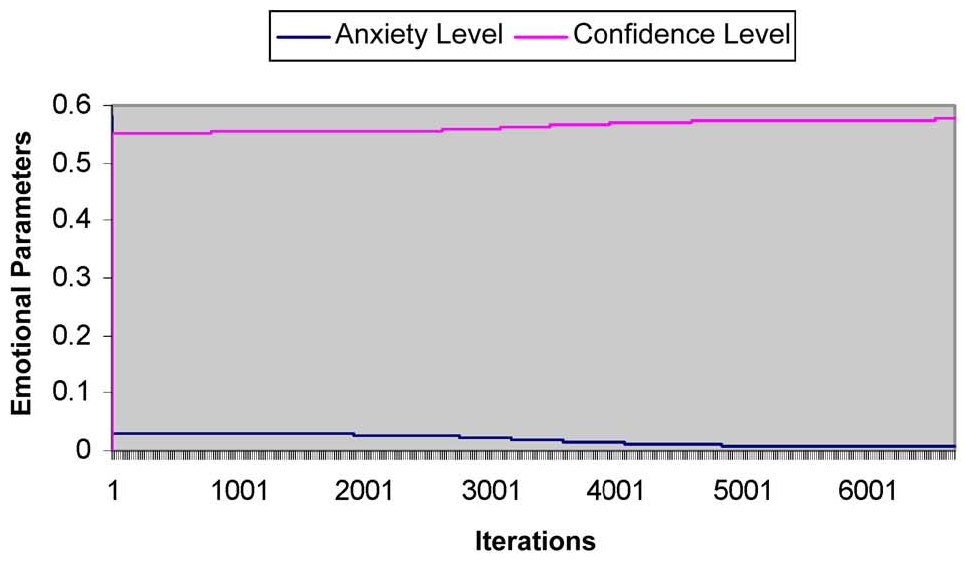 Figure 1: The EmBP-based neural network topology showing the integration of emotional coefficients.
3. The "Glance" vs. The "Detail"
The model uses Global Pattern Averaging to simulate a human "glance"—a fuzzy, holistic perception of a face rather than a pixel-by-pixel scan. This average is fed into an "Emotional Neuron" that influences the total potential of cells in both hidden and output layers.
Experiments & Results: Is Emotion More Accurate?
The author tested the model on 400 images from the Olivetti Research Laboratory (ORL) database. The results were compared against a standard BP network with identical hyperparameters (Learning rate , Momentum ).
| Metric | Conventional BP | Emotional BP (EmBP) |
|---|---|---|
| Recognition Accuracy | 87% | 90% |
| Inference Time (s) | 0.0013 | 0.00094 |
| Training Stability | Standard | Smoother Convergence |
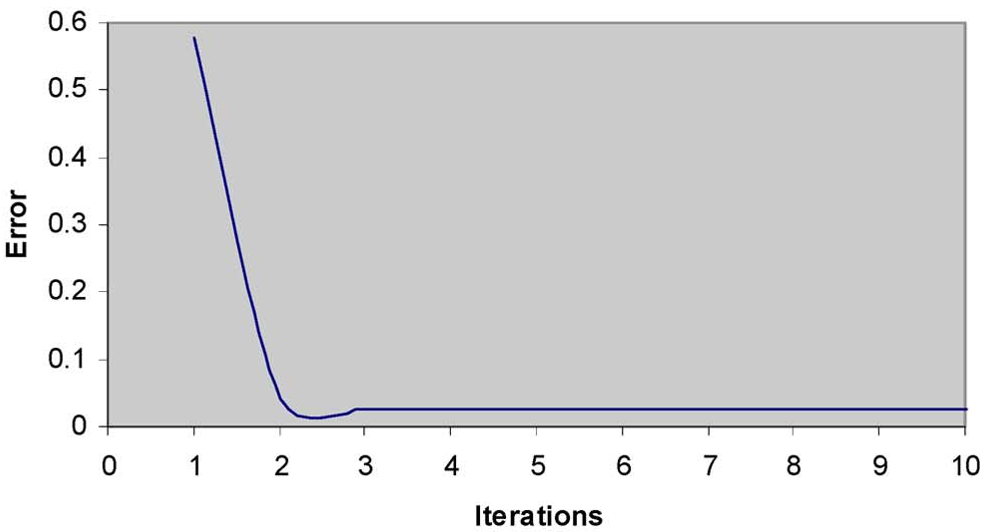 Figure 2: The evolution of Anxiety (decreasing) and Confidence (increasing) coefficients over 6000+ iterations.
The data suggests that while the training phase takes longer (741s vs 491s) due to the extra computational overhead of emotional weight updates, the resulting model is "smarter" and "faster" at making decisions (28% faster generalization).
Critical Insight & Conclusion
Why does it work?
From a technical perspective, the emotional coefficients act as a dynamic, data-dependent learning rate. Anxiety ensures the network is "cautious" and makes larger adjustments when errors are high or data is new, while Confidence acts as a high-level momentum factor that stabilizes weights once the "pattern" is understood.
Takeaways
- Efficiency over Logic: Machines don't need to "feel" to benefit from emotional logic. Simulation is enough.
- Performance Boost: Adaptive emotional logic can outperform standard fixed-parameter BP in image recognition tasks.
- Limitations: The research is focused on supervised learning and relatively small datasets (ORL). Scaling this to Large Language Models (LLMs) or complex Vision Transformers remains an open challenge.
In conclusion, Khashman’s EmBP proves that the "vicious circle" of combinatorial complexity in AI can be broken by borrowing a page from the human psyche.