
SOPA: Scaling Cloud Service Intelligence through Modular Ontologies
Towards a Modular Ontology for Cloud Consumer Review Mining
The paper introduces SOPA (Service OPinion Analysis), a modular ontology designed for mining and analyzing cloud consumer reviews. It integrates four specialized modules (Cloud Service, User Context, Social Media, and Opinion) aligned with the Basic Formal Ontology (BFO) to provide context-aware insights into cloud service quality and performance.
TL;DR
The paper proposes SOPA (Service OPinion Analysis), a modular ontology framework that transforms messy social media reviews into structured, context-aware insights. By bridging the gap between "what" users say and the "context" in which they say it, SOPA allows for a granular understanding of cloud service performance across different regions, industries, and use cases.
Context is Everything: The Motivation
In the cloud computing world, a "slow connection" review from a user in Tokyo might mean something entirely different than the same complaint from a user in New York. Traditional opinion mining often treats these reviews as flat data points.
The authors argue that context-aware analysis is missing. A cloud service's quality (QoS) is not absolute; it is perceived through the lens of the user's industry, location, and specific requirements. To solve this, a machine-readable model is needed that can link a user's profile and social media activity directly to the technical specifications of a cloud service.
Methodology: The Modular Architecture
Instead of building one massive, rigid ontology, the team adopted a modular approach. This ensures that if the "Social Media" landscape changes (e.g., a new platform emerges), only that specific module needs updating.
The Four Pillars of SOPA:
- Cloud Service Module: Maps functional and non-functional properties (derived from CSO).
- Social Media Module: Focuses on the structure of online reviews and metadata (ratings, dates).
- User Context Module: Captures the "who, where, and why" using FOAF and CONON.
- Opinion Module: Extracts sentiments and links them to specific service attributes.
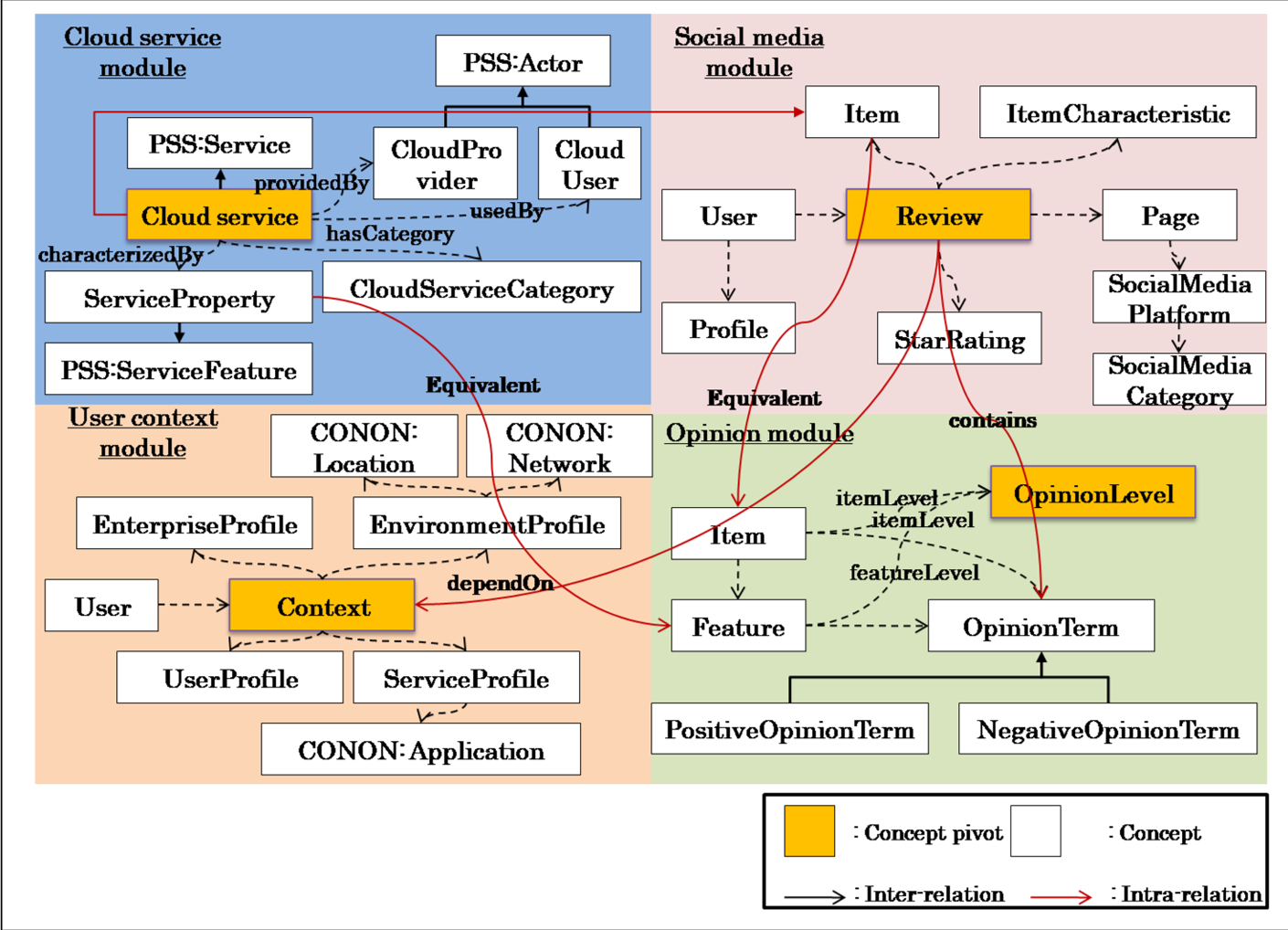 Figure 1: The architecture of the SOPA population process, showcasing the flow from raw data collection to semantic instantiation.
The integration is handled via the CIMOn method, allowing modules to remain independent yet interlinked through "pivotal classes." For example, a CloudUser in the Service module is linked to the User in the Context module.
Proving the Value: Results & Evaluation
The researchers tested SOPA against 10,000 reviews from platforms like Trustradius, G2Crowd, and Facebook.
Key Quantitative findings:
- High Cohesion: Semantic links within modules are strong, ensuring logical consistency.
- Low Coupling: Modules are independent enough to be reused in other projects.
- Coverage: The Axiom/Class Ratio (ACR) for the Social Media module reached 143.44, indicating a very rich formalization of the domain.
 Table 1: Structural and relational metrics proving the robustness of the SOPA framework.
Deep Insights:
The analysis revealed that Agility is the most criticized property for Azure, while Price and Performance dominate discussions for Google Cloud. Interestingly, review activity drops significantly during summer months (June-August), suggesting that cloud reviews are tied closely to professional work cycles rather than leisure time.
Critical Analysis & Future Work
The beauty of SOPA lies in its interoperability. By aligning with the Basic Formal Ontology (BFO), the authors ensure that their work isn't a "data silo"—it can talk to other scientific and industrial ontologies.
Limitations: Currently, the ontology relies heavily on manual/semi-automated dictionary-based sentiment analysis (SentiWordNet). Future iterations could integrate Deep Learning (LLMs) to better capture nuances in natural language before feeding them into the semantic model.
The Takeaway: For cloud providers, SOPA is a roadmap for improving service. For researchers, it’s a masterclass in how modularity can solve the "complexity bloat" thường seen in semantic web projects.