
The Microbiology of Virality: Modeling Information Spread via the Monod Equation
Conceptual model the speed of information dissemination in social networks on the basis of the Monod equation
The paper proposes a conceptual mathematical model for information dissemination speed in social networks by adapting the Monod and Jorgensen equations from microbiology and ecology. It treats "information hunger" as a substrate that drives the elective "biomass growth" of information spread, identifying key limiting factors like audience concentration and attention resources.
TL;DR
Why do some social media posts explode and then suddenly vanish, while others fail to launch despite massive promotion? This paper argues that information spreads exactly like bacteria in a petri dish. By applying the Monod Equation—a staple of microbiology—the authors move beyond simple diffusion models to explain how "Information Hunger" and "Attention Resources" act as limiting substrates that govern the velocity of viral content.
Problem & Motivation: The Saturation Paradox
In the era of information warfare and viral marketing, practitioners often assume that more "push" equals more speed. However, social networks are governed by the Inductive Bias of human psychology. Previous models, like the logistic model or basic diffusion, often fail to account for the saturation effect.
The authors’ core insight is that information needs a "breeding ground." Just as microorganisms stop growing when they run out of phosphorus or nitrogen, a viral message stops accelerating when the audience's Information Hunger is satisfied or their Attention Resource is depleted.
Methodology: From Phytoplankton to Facebook
The heart of this research is the adaptation of the Monod Equation, originally used to describe the growth of microorganisms relative to the concentration of a limiting substrate.
The Core Model
The authors redefine the velocity of information () using the following logic:
- (Substrate): The concentration of the audience with a high degree of Information Hunger.
- : The current density or amount of information disseminated.
- : The half-saturation constant.
Multi-Factor Expansion (The Jorgensen Approach)
Recognizing that "hunger" isn't the only constraint, the paper utilizes the Jorgensen Equation (typically used for phytoplankton) to incorporate multiple limiting factors like Audience Volume () and Attention Resource ().
 Figure: The generalized Jorgensen-based formula accounting for audience size and attention capacity.
Experiments & Results: Identifying the "Bottleneck"
While this is a conceptual model, it provides a rigorous framework for Viral Marketing and Information Warfare:
- Saturation Dynamics: The model explains why the same piece of news spreads slower in an environment already flooded with similar data. The "Attention Resource" () becomes the bottleneck, mirroring how carbon limits phytoplankton growth.
- Information Hunger (): The paper identifies "Sensory Deprivation" as a driver. In a crisis (e.g., war or natural disaster), is extremely high, causing the "Max" velocity to be reached almost instantaneously.
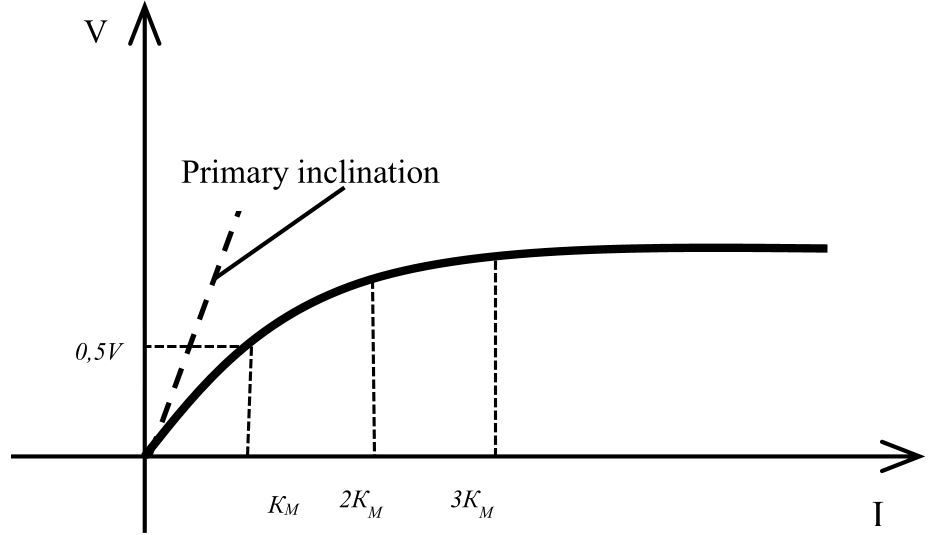 Visual Intuition: Dissemination speed () increases linearly at low substrate levels but plateaus as the audience reaches cognitive saturation.
Critical Analysis & Conclusion
Takeaway
This work shifts the focus from the content of the message to the environment of the audience. It suggests that the Speed of SOTA (State-of-the-Art) information dissemination is not just about the "viral coefficient" of the data, but the "starvation level" of the network nodes.
Limitations & Future Work
The model is currently conceptual. To be truly predictive, empirical researchers need to define how to quantify "Information Hunger" () in real-time using metadata (e.g., click-through rates vs. dwell time). Furthermore, the model assumes a relatively homogeneous audience; future iterations should incorporate Graph Theory to account for network topology (nodes and edges) which complicates the "substrate" distribution.
Final Thought
If you want something to go viral, don't just look for a "loud" message—look for a "hungry" audience.