
iFriends: Decoding the Hidden Structure of Network "Islands"
MOOP . SCIENCE CHINA Information Sciences
This paper investigates the structural properties of Non-Giant Connected Components (DCs) in real-world social networks like Renren, Facebook, and Twitter. Using Significance Profiles (SP), the authors reveal a striking structural similarity between the Giant Connected Component (GCC) and these smaller, disconnected components. They further propose the "iFriends" generative model, which incorporates social-distance and mutual friend mechanisms to replicate these observed structural patterns.
TL;DR
While most researchers obsess over the "Giant Connected Component" (the main continent of a social network), this paper proves that the "islands" (Disconnected Components) are not just noise—they are structural clones of the main body. By analyzing Significance Profiles (SP), the authors show that these islands share the same DNA as the giant component. They introduce iFriends, a generative model that replicates this phenomenon, and demonstrate how monitoring these structural similarities can expose deliberate network attacks.
The "Island" Problem: Why Disconnected Components Matter
In graph theory, the Giant Connected Component (GCC) usually hogs the spotlight because it contains the majority of users and data. Previous works focused on power-law distributions and shrinking diameters within this GCC. But what about the thousands of small, isolated clusters (DCs) drifting at the edges?
The authors argue that these DCs are vital. They pose a fundamental question: Are these components isolated because they are fundamentally different, or are they just "mini-mes" of the main network? Understanding this is crucial for:
- Security: Detecting "unnatural" groups like botnets.
- Evolution: Predicting how a network grows and merges.
- Robustness: Identifying the difference between random system failures and targeted attacks.
Methodology: The Significance Profile (SP)
To compare the "DNA" of different components, the authors use Significance Profiles. This involves:
- Counting specific sub-graph patterns (triads for directed, quadruples for undirected graphs).
- Comparing these counts against a randomized version of the same graph.
- Calculating a Z-score to see which patterns are "over-represented."
Finding the Pattern
The research analyzed Renren, Facebook, and Twitter datasets. The discovery was clear: in general-purpose social networks, the SP of the DCs matches the SP of the GCC almost perfectly.
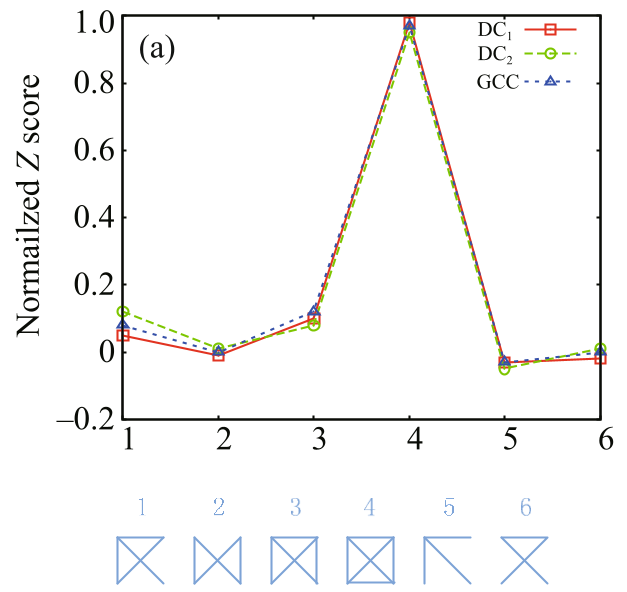 Figure 1: Comparison of SP between GCC and DCs across different datasets. Note the high correlation in the peaks and valleys.
Detecting Attacks via Structural Divergence
One of the most profound applications of this discovery is in Network Security.
- Random Failure: When nodes fail randomly, the GCC and DCs maintain their structural similarity.
- Deliberate Attack: When an attacker targets high-degree "hub" nodes, the local structures of the GCC and DCs diverge sharply.
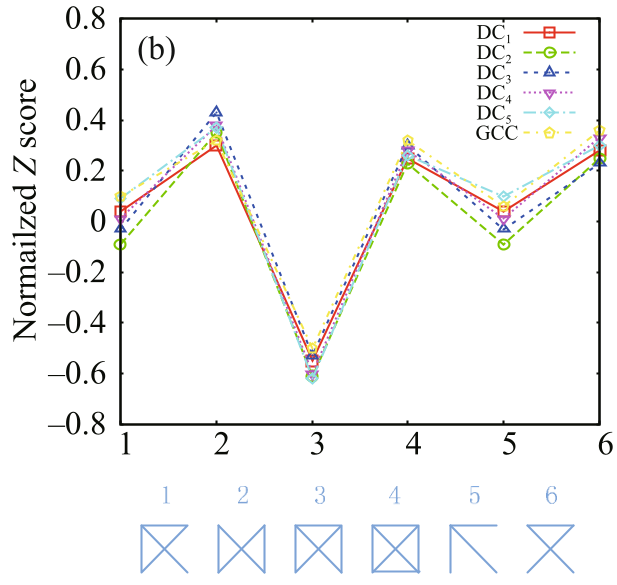 Figure 2: The SP signatures before and after attacks. Notice the significant deviation in (c) during a deliberate attack.
The iFriends Generative Model
To prove they understood the underlying mechanics, the authors built iFriends. The model operates on two intuitive social principles:
- Social-Distance: Nodes are assigned property vectors (hobbies, location). Newcomers connect to those with similar "social-distances."
- Mutual Friends (Triadic Closure): If you share many friends with someone, you are likely to connect with them directly.
This formula ensures that as the network grows, it creates small "pre-islands" that eventually merge into the GCC, while always maintaining the characteristic local motifs found in real social data.
Experimental Results
The iFriends model was tested with up to 50,000 nodes. It successfully mimicked the longevity and size distributions of real-world social DCs. Most importantly, it reproduced the same Structural Similarity (QSP) between its generated GCC and DCs that was observed in the Renren and Facebook datasets.
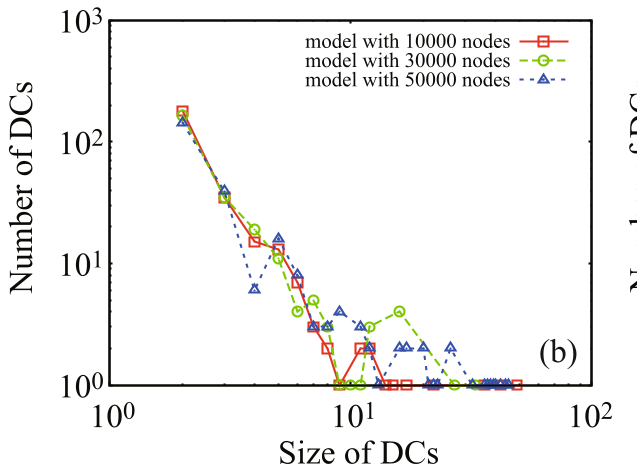 Figure 3: Distribution and SP results for the iFriends model.
Critical Insight & Conclusion
This paper shifts our perspective from "Global Topology" to "Local Consistency." It suggests that social networks are fractal-like in their organization; the set of rules governing a small group of friends is fundamentally the same as that governing the entire network.
Future Work: While this model works for "unorganized" individuals, it may struggle with "specialized" networks (like corporate or email networks) where DCs are often intentionally isolated for privacy or functional reasons. The next step is bridging the gap between random social behavior and organized hierarchy.