
Bridging ESN and E-Learning: How Social Serious Games Revolutionize Corporate Training
Motivation for corporate training through feedback in Social Serious Games An approach to bridge the gap between Enterprise Social Networks and e-learning
The paper introduces a novel approach to corporate training by integrating Social Serious Games within Enterprise Social Networks (ESNs). It proposes a conceptual framework for motivation-driven feedback using three distinct dashboard types to bridge the gap between social interaction and formal e-learning.
TL;DR
The "workplace of the future" demands continuous learning, yet traditional e-learning is often viewed as a chore. This paper explores Social Serious Games—a hybrid of Enterprise Social Networks (ESN) and gamified learning. By utilizing a framework of three specialized dashboards, the authors demonstrate how feedback mechanisms can satisfy intrinsic human needs for competence and social belonging, turning training from a "must-do" into an engaging social experience.
The Motivation Gap: Why Corporate Training Fails
Most companies struggle with employee engagement in training. The paper identifies a historical shift from instructor-led sessions to Learning Management Systems (LMS), and now towards Learning 4.0 (Social Learning). Despite this evolution, the "passive learner" problem remains.
The authors argue that the mismatch occurs because:
- Separation from Workflow: Learning is treated as an isolated task rather than an integrated business process.
- Extrinsic Pressure: Traditional LMS focus on top-down tracking, which creates pressure rather than the desire to improve.
- Underused Social Capital: ESNs like Yammer or Slack are used for chat but rarely for systematic skill development.
Methodology: The Social Serious Game Framework
The researchers designed a Knowledge Quiz as the primary artifact. This isn't just a simple test; it incorporates time pressure, random jackpots, and strategic rounds to maintain interest.
The Three Pillars of Feedback
The core contribution of this work is the classification of feedback into three dashboard types, each targeting a specific psychological need:
- Learning Analytics Dashboard: Focuses on Competence. It tracks "experience points," right/wrong ratios, and mastery of specific topics.
- Social Network Dashboard: Focuses on Relatedness. Instead of raw rankings that might breed rivalry, it emphasizes team achievements and social interactions (e.g., inviting colleagues, social credits).
- Game Performance Dashboard: Focuses on Enjoyment and Autonomy. It provides immediate feedback on specific game sessions, allowing users to "compete against themselves" by beating personal bests in response time or score.
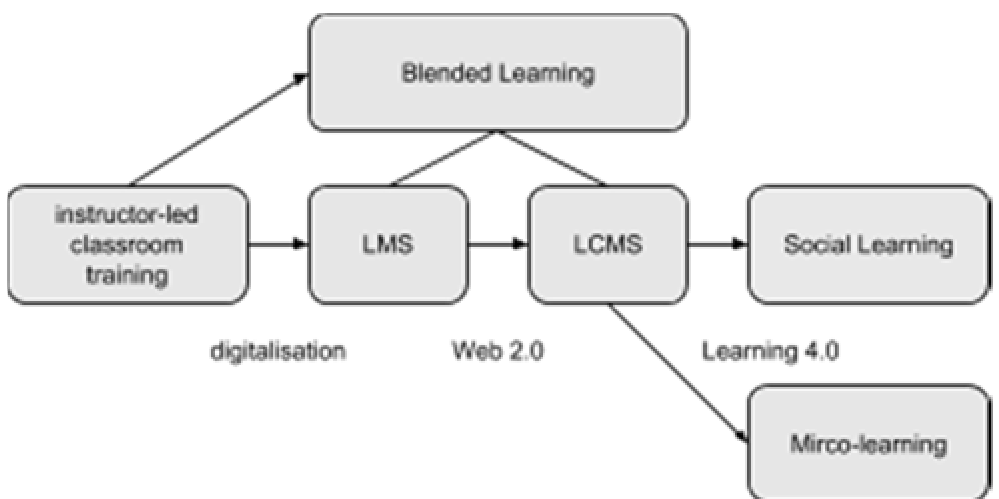 Figure 1: The transition from classroom settings to integrated Social Learning in ESNs.
Insights: The Psychology of "Winning" at Work
The paper leans heavily on Self-Determination Theory (SDT). A fascinating insight is the "double-edged sword" of social comparison.
- The Negative: Public leaderboards (status-based) can actually decrease motivation for lower-performing employees and turn knowledge into a tool for power.
- The Positive: Group challenges and "team badges" foster collaboration and satisfy the need for relatedness without the harmful side effects of individual rivalry.
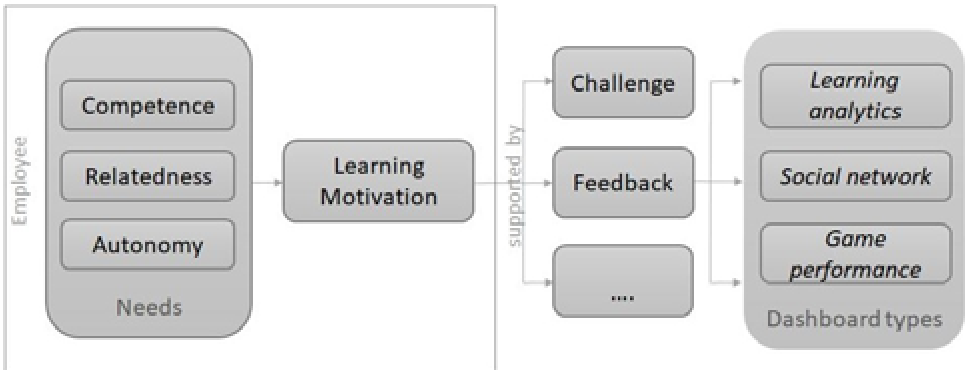 Figure 2: A conceptual model of how different dashboard elements address the psychological needs for Autonomy, Competence, and Relatedness.
Analysis & Critical Takeaway
This work moves the needle from "Gamification as a Gimmick" to "Gamification as a Pedagogical Strategy." By grounding the design of dashboards in psychological needs, the authors provide a blueprint for HR tech developers.
Key Experimental Observations:
- Response Time is a unique metric that bridges the gap between game performance and true professional skill (fluency).
- Social Interaction Analysis (who you learn with) is just as important as Learning Outcome Analysis (what you learned).
Limitations and Future Work
The authors admit the current framework is largely theoretical and requires larger-scale empirical validation to quantify the exact "motivation boost." Furthermore, they point toward Individualized Game Experiences—adapting the game difficulty and content based on the learner's specific profile—as the next frontier.
Conclusion
The future of corporate training isn't just digital; it's social and fun. By integrating serious games directly into the communication tools employees already use, companies can foster a culture where learning is no longer a disruption, but a reward.
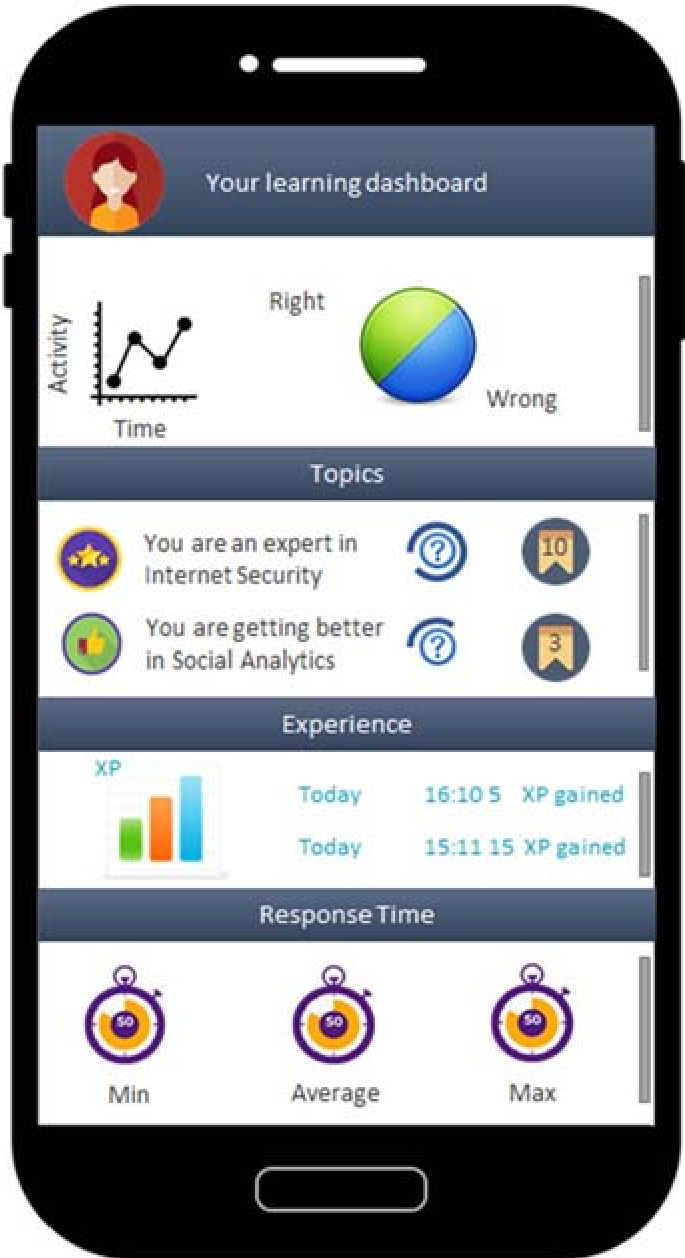 Figure 3: Proposed interface for the Learning Analytics dashboard, focusing on progression and skill mastery.