
Ed-Wonderland: Decoding the Four Pillars of Motivation in Educational MMORPGs
Motivational Factors in Educational MMORPGs: Some Implications for Education
The paper investigates motivational drivers in educational Massively Multiplayer Online Role-Playing Games (MMORPGs) through a study on the "Ed-Wonderland" platform. It identifies four key factors—Achievement, Social, Immersion, and Instructional Mechanism—that significantly influence student engagement and learning outcomes in English vocabulary acquisition.
TL;DR
Why do students spend hundreds of hours in commercial games but find educational software stagnant? This research identifies that motivation in educational MMORPGs isn't a "one-size-fits-all" magic wand. By studying 5th graders using the Ed-Wonderland platform, researchers found that success depends on four distinct pillars: Achievement, Social Interaction, Immersion, and a surprisingly critical fourth factor: the Instructional Mechanism.
Problem: The "Edutainment" Paradox
For two decades, educators have treated digital games as a universal "sugar-coating" for bitter learning pills. However, most educational games suffer from being "not-very-entertaining learning activities" or "not-very-educational games." The core problem is a failure to understand the specific components within a game that actually trigger and sustain motivation.
Methodology: Building Ed-Wonderland
The researchers developed Ed-Wonderland, a persistent virtual world designed for English vocabulary learning. Unlike a simple quiz game, Ed-Wonderland utilized three heavy-hitting educational theories:
- Socio-cultural Theory: Learning through chat, guilds, and collaboration.
- Metacognitive Theory: Tools for students to monitor their own progress (intelligence and experience values).
- Multiple Context Theory: Teaching vocabulary across diverse virtual islands (Welcome, Forest, Carnival) to ensure knowledge transfer.
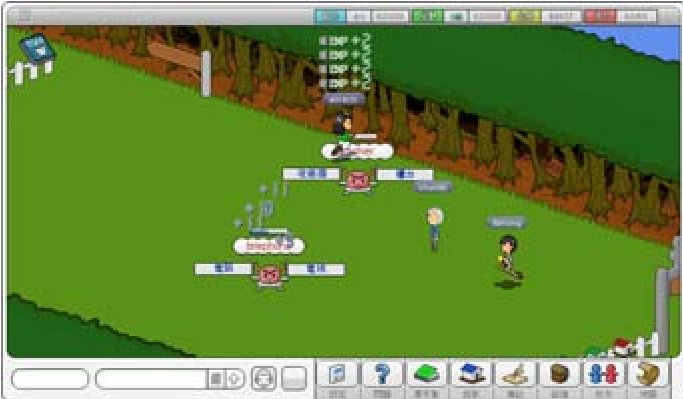 Fig 1: The multi-island architecture of Ed-Wonderland provides varied learning contexts.
The Four Motivational Factors
The study expanded Nick Yee’s famous player motivation framework to fit the classroom.
1. Achievement (M=4.53)
Students are driven by "standards of excellence." In Ed-Wonderland, this translates to gaining Intelligence (academic achievement) and Experience values. Interestingly, high-score boards and powerful avatars were equally motivating for both boys and girls.
2. Social (M=4.37)
MMORPGs thrive on social bonding. Students didn't just want to play; they wanted to chat with real-life friends, meet new ones, and form "Guilds"—collaborative groups where more capable peers could scaffold the learning for others.
3. Immersion (M=4.44)
The sense of "being there" is vital. This includes customization (buying virtual houses and clothes) and the ability to adopt a different personality, which reduces the anxiety of making mistakes in a second language.
4. The Instructional Mechanism (M=4.47)
The "New" Factor: Students significantly valued the completeness and logic of the educational content. This includes:
- Systematic progression (from easy to hard).
- Automatic recording of learning histories (Metacognition).
- Access to online experts to answer questions.
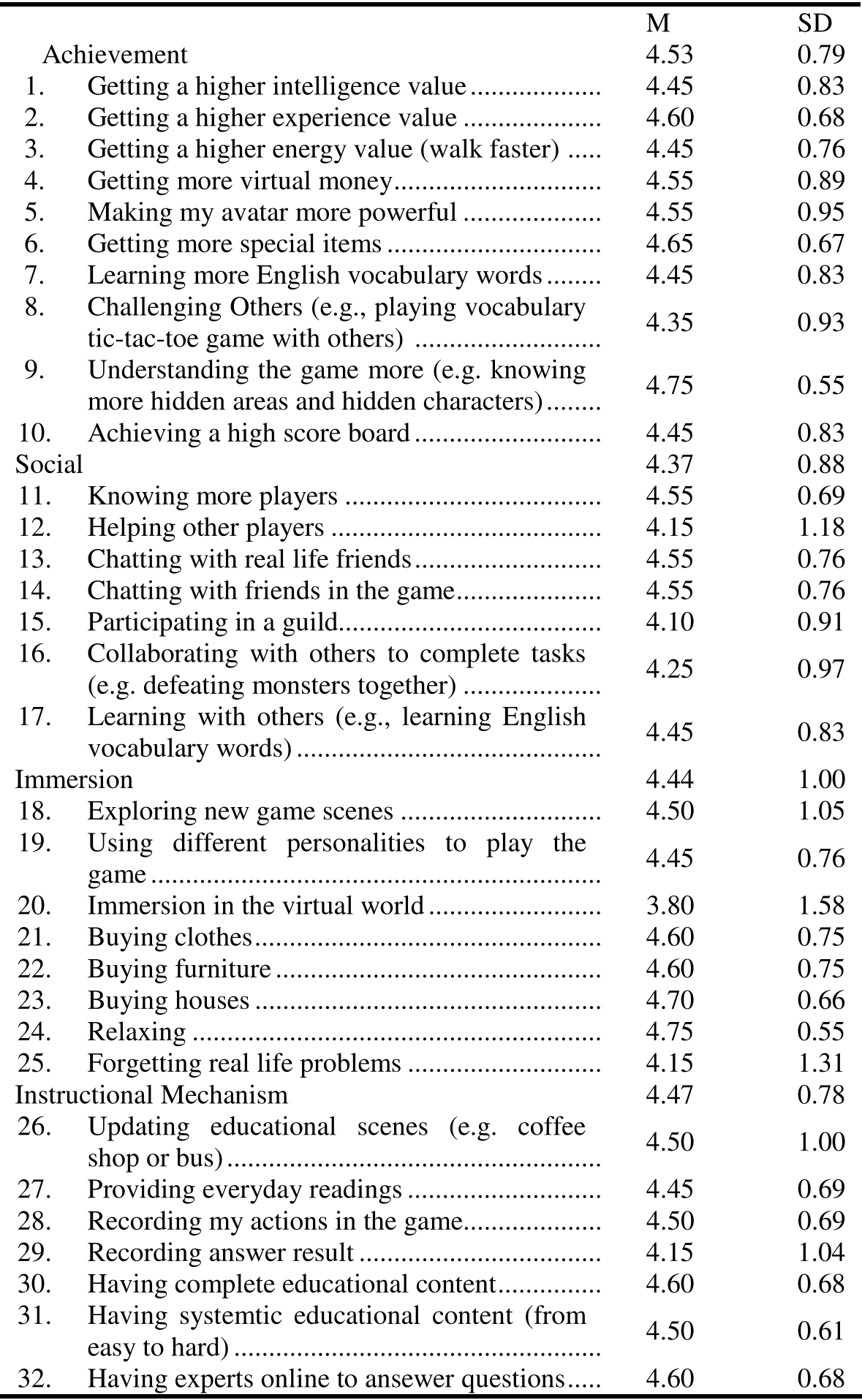 Table 1: Detailed breakdown of factors. Note the high scores for "Getting more special items" and "Relaxing".
Critical Insight: The "Commercial" Hurdle
Despite the high motivation scores, the study revealed a sobering reality: when given free time, students were "neutral" about choosing Ed-Wonderland over commercial giants like World of Warcraft. This suggests a persistent "educational bias"—students often perceive anything labeled "learning" as inherently less fun.
To overcome this, designers must ensure that Instructional Mechanisms are not just bolted-on features but are woven into the game's core loop, making the "leveling up" of knowledge feel just as rewarding as "leveling up" a character's strength.
Final Takeaway
For educators, the message is clear: MMORPGs are not just games; they are social learning platforms. By utilizing the four factors—specifically by structuring study groups like guilds and using cumulative score systems—teachers can transform the classroom into a high-engagement environment that mirrors the persistence and thrill of a virtual world.