
Decoding the Box Office: A Factor Analysis Approach to Movie Marketing Indices
The construction of movie marketing index based on factor analysis
This paper develops a quantitative Movie Marketing Index system using Factor Analysis (FA) to evaluate marketing effectiveness across "before-releasing" and "on-showing" stages. By analyzing data from 60 films, it establishes a weighted indicator system that integrates traditional online media with social media interactions.
TL;DR
In the hyper-competitive film industry, marketing is no longer just about "how much" you spend, but "where" and "when" you engage. This paper introduces a robust, data-driven framework for constructing a Movie Marketing Index. By applying Factor Analysis to 60 real-world film datasets, the researchers identify that while trailers and posters build the foundation, social media interaction and user reviews are the ultimate engines of box office performance.
Problem & Motivation: Beyond Qualitative Guesswork
The Chinese film market has exploded, yet marketing strategies often remain anchored in intuition or isolated case studies. Existing "indices" frequently overlook the dynamic nature of a film's lifecycle. The authors argue that a static evaluation doesn't work; instead, we need a phased approach—Before-Releasing and On-Showing—to capture how audience interest evolves from curiosity to consumption.
Methodology: The Logic of Factor Analysis
The researchers didn't just pick important-looking metrics. They utilized Factor Analysis (FA) to "distill" 24 indicators for pre-release and 19 for on-showing stages.
The physical intuition here is dimension reduction: instead of treating "number of likes," "number of forwards," and "number of comments" as separate entities, FA identifies the underlying "Social Engagement Factor" that links them. This allows for an objective weighting system that moves beyond human subjective bias.
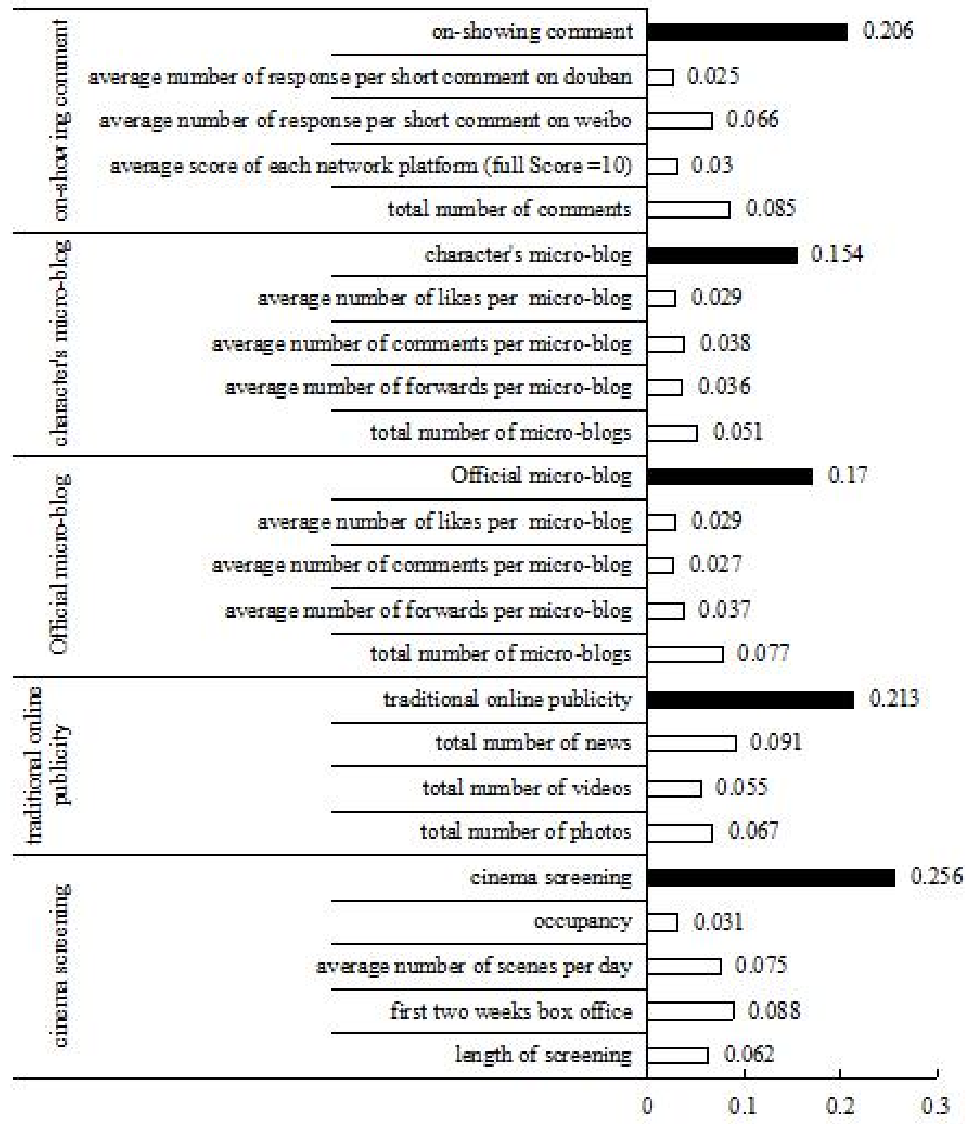
Key Insights: The Shift from Traditional to Social
The study’s findings provide a strategic roadmap for film distributors:
1. The Pre-Release Power Players
Before a movie hits screens, Trailers, Posters, and News Photos remain the "holy trinity" of traditional marketing, with weights exceeding 0.65. However, in the social realm, Weibo Topics (0.167) are the strongest predictors of success. The insight? It’s not just about the studio's posts, but how much the audience talks about those posts.
2. The On-Showing Pivot
Once the film is in theaters, the strategy must change. "Cinema Screening" (occupancy and screen share) becomes the dominant indicator (weight 0.256). Interestingly, the importance of traditional online publicity drops significantly, replaced by the weight of User Comments and Official Micro-blog frequency.
Critical Analysis & Conclusion
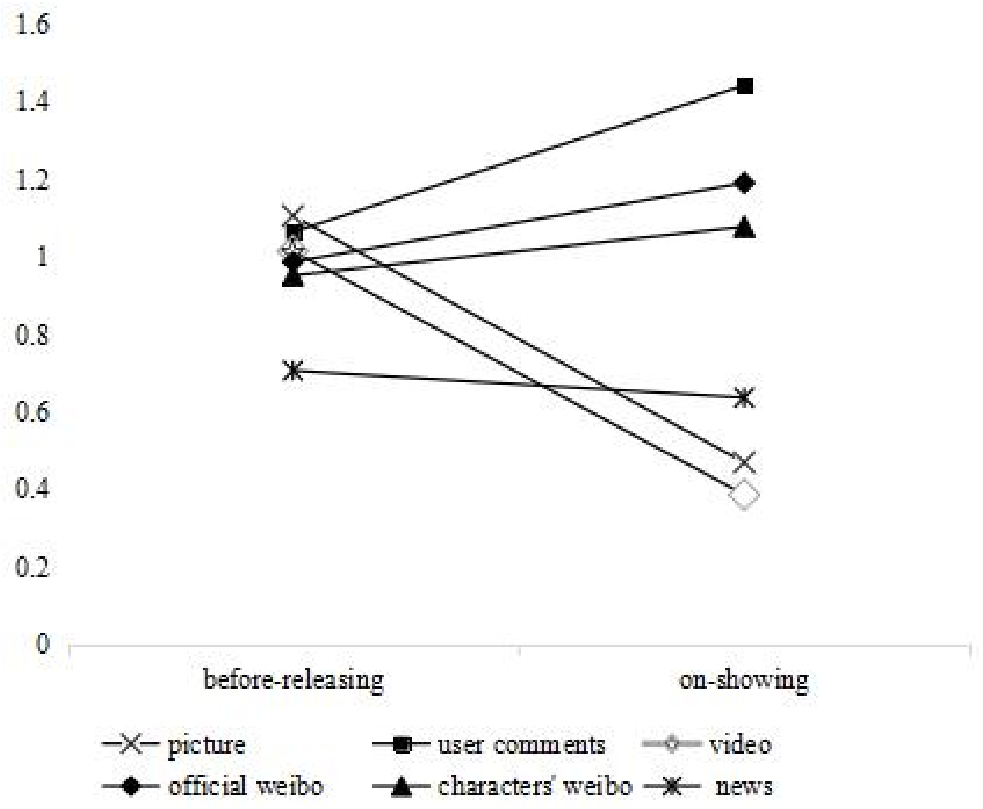
The core value of this research lies in its comparative weight analysis across time. As shown in the study, "User Comments" on platforms like Weibo become increasingly critical as the movie progresses, whereas the score on "Douban" might actually see its relative influence fluctuate depending on the stage.
Takeaways for the Industry:
- Phase 1 (Pre-release): Blast the trailers and posters, but focus heavily on seeding "Topics" to trigger organic fan discussions.
- Phase 2 (On-showing): Shift focus to maintaining high frequency on official channels and managing user sentiment. News articles are at their least effective here.
Limitations: The study relies heavily on 2018-2019 data. In the current era of Short Video (TikTok/Douyin), the "Video" weight likely commands an even higher presence than traditional trailers. Future research should integrate "Short Video Virality" as a primary indicator in the Factor Analysis model.
Conclusion
This paper provides a scientific "ruler" for movie marketing. By quantifying the intangible buzz of social media, it allows film teams to move from "spending and hoping" to "measuring and optimizing."