
moviQuest-MAS: Engineering Intelligence into Ubiquitous Social Business
moviQuest-MAS: An Intelligent Platform for Ubiquitous Social Networking Business
The paper introduces moviQuest-MAS, an intelligent Multi-Agent System (MAS) platform designed for "serious" ubiquitous social networking. It integrates a software ecosystem consisting of desktop, web, and mobile interfaces, leveraging Ubiquitous Artificial Intelligence to facilitate affinity-based group interactions and business automation.
TL;DR
moviQuest-MAS is a specialized Multi-Agent System (MAS) platform designed to transform social networking into a "serious" business and academic tool. By combining a web/desktop architecture with "Trainedphones"—feature phones equipped with lightweight expert systems—it enables secure, intelligent interaction even in low-bandwidth environments using encrypted SMS and fuzzy logic.
Context: Beyond the "Gossip" of Social Media
While social media has revolutionized communication, the authors argue that mainstream platforms (like Facebook) are often unsuited for professional or academic environments. The noise-to-signal ratio is too high, and "serious" conversations often get lost in casual gossip. Furthermore, there is a technical divide: sophisticated AI features usually require high-end smartphones and constant data connectivity.
The moviQuest-MAS project seeks to bridge this gap by introducing Ubiquitous Artificial Intelligence, focusing on affinity groups where interaction is strictly governed by shared professional or community interests.
Methodology: The Multi-Agent Ecosystem
The core of the system is governed by the Agent-Group-Role (AGR) model, which defines how human and software agents interact within specific contexts.
1. The Software Ecosystem
The platform is not just an app but a three-tier ecosystem:
- Control Center: A desktop application for system managers to handle sensitive data away from web-based risks.
- Social Network Engine: The web portal for standard microblogging and group management.
- Mobile Client: A unique application that uses an specialized ontology to communicate via encrypted SMS.
2. The Multi-Agent Architecture
The system logic is expressed through the tuple . This architecture allows for seamless scaling—new functionalities (like "Spontaneous Evaluation" or "Market Monitoring") are simply added as new software agent roles.
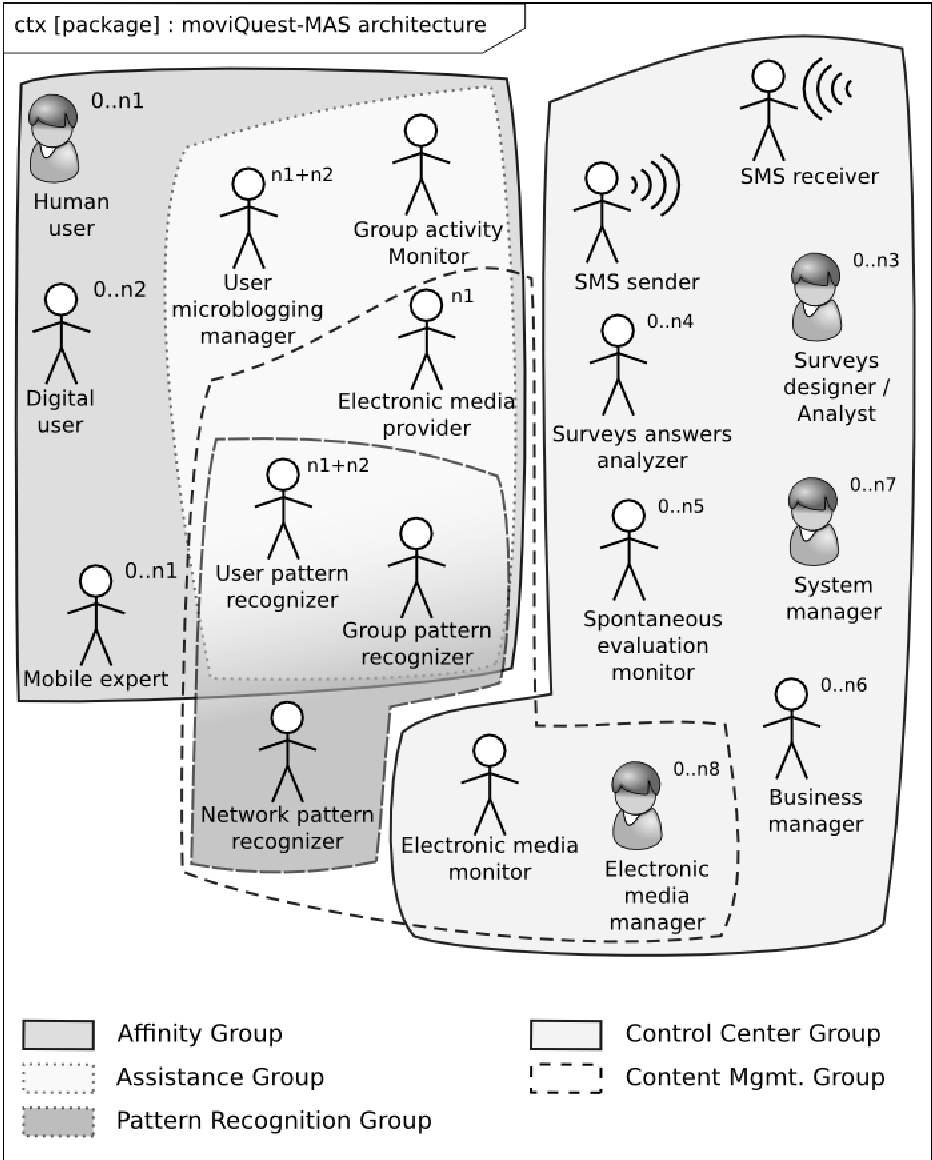 Figure 1: The Multi-Agent model showing the interaction between human agents, software robots, and the knowledge base.
Technical Innovation: Trainedphones and MQDM
A standout feature of this research is the concept of the Trainedphone. Unlike "smartphones" that rely on superior hardware, a Trainedphone is a standard device "taught" to be smart via a Mobile Smart Agent. This is a light expert system that uses a tree-grammar ontology to:
- Compress complex surveys into 1-3 SMS messages.
- Manage intelligent interview sequences locally on the device to minimize user effort.
Furthermore, the paper introduces MQDM (moviQuest Decision Making). This is a fuzzy aggregation algorithm that allows organizations to conduct sentiment analysis and group decision-making. It doesn't just count votes; it weighs them based on:
- The user's record of accuracy in past decisions.
- The user's self-declared expertise on a specific topic.
- The "intention" embedded in the response.
Practical Implementation: QuoSity
The authors validated their framework through QuoSity, a social network for academic environments. Unlike Facebook, which struggles to separate a student's private life from their academic responsibilities, QuoSity uses the MAS affinity groups to naturally silo conversations.
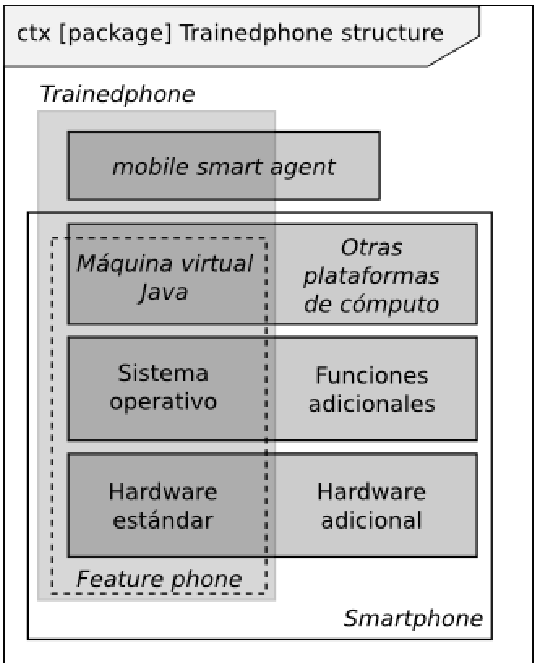 Figure 2: The QuoSity platform implementing the moviQuest-MAS features in a pedagogical setting.
Critical Insight & Conclusion
The significance of moviQuest-MAS lies in its inclusive approach to AI. By optimized encoding through a specific ontology, the authors prove that sophisticated multi-agent coordination does not require 5G or the latest iPhone. It can be built on the "ubiquitous" infrastructure of SMS and basic mobile computing.
Takeaways:
- Context is King: Social networks are more valuable when restricted by affinity and professional roles.
- Software-Defined Intelligence: Expert systems can make "dumb" phones smart enough for enterprise-grade data collection.
- Fuzzy Governance: Group decision-making in the digital age requires more than just majority rule—it requires weight-based, intelligent aggregation.
While the reliance on SMS might seem dated in an era of ubiquitous 4G/5G, the underlying logic of bandwidth-efficient MAS communication remains highly relevant for satellite IoT and secure, air-gapped enterprise environments.