
The Silent Spread: Why Mpox Elimination is Harder Than We Thought
Extensive cryptic circulation sustains mpox among men who have sex with men
2026-01-01
Summary
Problem
Method
Results
Takeaways
Abstract
This prospective cohort study, "Extensive cryptic circulation sustains mpox among men who have sex with men," identifies massive under-reporting of clade IIb monkeypox virus (MPXV) infections. By testing remnant anorectal swabs from MSM in Los Angeles, researchers estimated that true infections exceed reported cases by a 33-fold margin, achieving SOTA accuracy in transmission modeling through integrated clinical and phylogenetic data.
## TL;DR
A groundbreaking study published in *Nature Communications* reveals that the mpox virus (MPXV) is circulating at levels **33 times higher** than official case reports suggest. By screening asymptomatic individuals in Los Angeles, researchers proved that "cryptic transmission"—spread by people who don't even know they are sick—is the primary engine driving the epidemic, accounting for up to 94% of new infections.
## The Illusion of Containment
Global health organizations like the WHO and ECDC have set ambitious goals to eliminate human-to-human mpox transmission by 2027. This optimism is based on a critical assumption: if you don't see lesions, there is no virus. However, this study exposes a massive surveillance gap. Most current cases lack clear transmission links, hinting at a hidden reservoir of infection that continues to bubble beneath the surface of clinical detection.
## Methodology: Peering into the "Latent Space" of Epidemics
To solve this, the researchers didn't wait for patients to show up at clinics with rashes. Instead, they took a "symptoms-agnostic" approach.
1. **Prospective Screening**: They tested remnant anorectal swabs (originally collected for routine STI screening) from a cohort of nearly 8,000 Men who have Sex with Men (MSM).
2. **Reporting Multiplier**: They developed a mathematical framework to compare the PCR-positivity rate in these routine swabs against the expected prevalence if only clinical cases were shedding virus.
3. **Phylogenetic Validation**: To ensure their findings weren't a local fluke, they reconstructed the viral family tree using 497 local genomes, using the "sampling proportion" to estimate how many branches were missing from the official records.
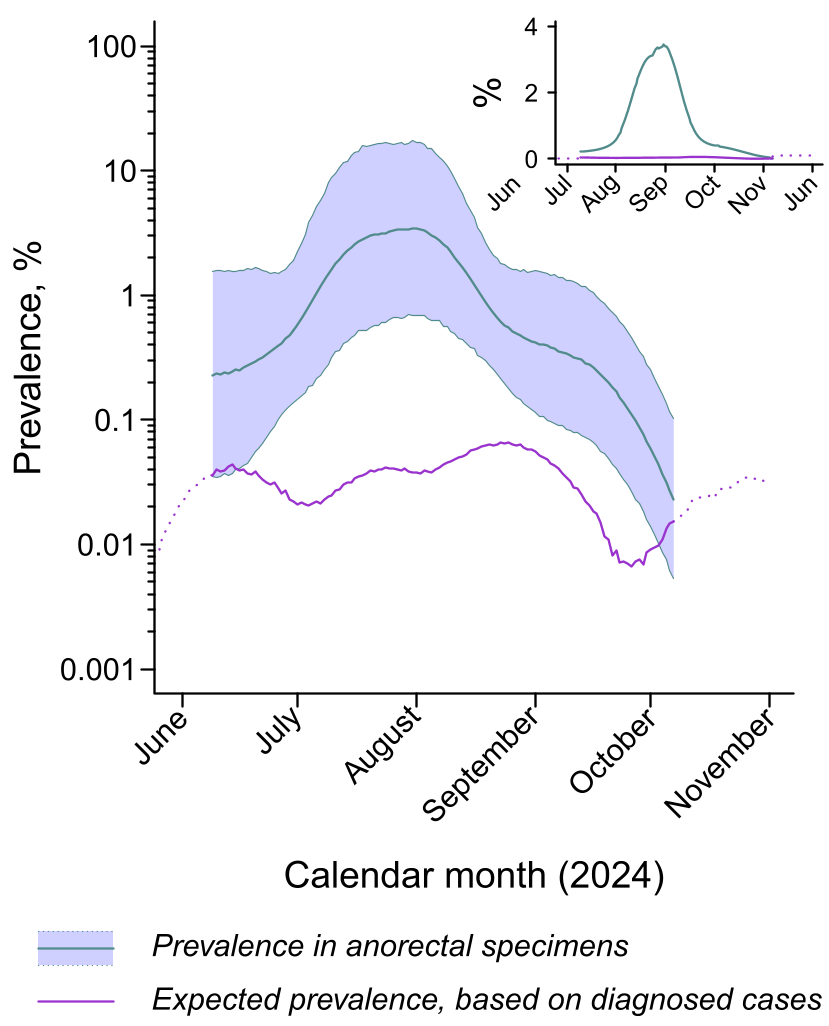
*Fig 1: The discrepancy between observed prevalence (blue) and expected reports (purple) suggests a massive under-reporting multiplier.*
## Key Findings: The 33-Fold Gap
The results were staggering. The estimated incidence of MPXV infection was **20 per 100 person-years**, comparable to common bacterial STIs like Gonorrhea and Chlamydia.
* **The Diagnosis Gap**: Only 3% of infections were captured by standard clinical care. The rest were subclinical—meaning the patients had few to no symptoms or symptoms that were easily mistaken for other conditions.
* **Vaccine Insight**: Interestingly, 83% of the subclinical infections occurred in individuals who had been vaccinated. This suggests that while vaccines (JYNNEOS) may not perfectly prevent infection, they are highly effective at reducing the severity, turning potentially painful illnesses into invisible, subclinical ones.
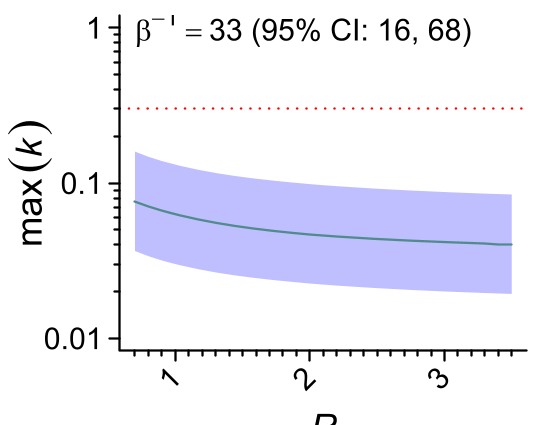
*Fig 2: Modeling the proportion of transmission attributable to undetected infections (U) versus diagnosed cases (D).*
## Why This Changes Everything
The study’s most chilling conclusion involves the "Elimination Threshold." Currently, 3 months without a reported case is considered a sign of success. But the authors show that with a 1-in-33 reporting rate, there is a **50% probability** of seeing zero cases even when 23 active infections are still circulating.
If the reproduction number (R) remains above 1.5, the probability of having actually contained an outbreak after 90 days of silence is **virtually zero**.
## Critical Analysis & Future Outlook
**The Takeaway**: Mpox has likely become an endemic STI. We can no longer rely on "wait and see" surveillance. If we only test people with lesions, the virus will always be two steps ahead.
**Limitations**: The study focuses on MSM in a specific urban setting. While phylogenetic data suggests this is a global trend, the exact reporting multipliers might differ in regions with lower vaccine uptake or different exposure routes (e.g., Clade Ib).
**Future Work**: Public health must pivot. We need:
* Routine asymptomatic screening in high-risk sexual health clinics.
* Renewed vaccination pushes, particularly for younger cohorts who missed the 2022 emergency rollout.
* A total re-evaluation of what "elimination" actually means in the age of cryptic transmission.