
BPeMRF: Revolutionizing Cross-Layer Resource Allocation via MRF and Back-Pressure
An MRF cross-layer resource allocation approach with back-pressure features for QoS in dynamic social and cognitive communications
The paper introduces BPeMRF, a novel cross-layer resource allocation framework that integrates Markov Random Fields (MRF) for lower-layer decisions with Back-pressure (BP) algorithms for higher-layer routing/scheduling. It achieves SOTA-level throughput optimality in dynamic Cognitive Radio Networks (CRNs) while significantly reducing computational complexity compared to traditional Maximum Weight Matching (MWM) approaches.
TL;DR
BPeMRF is a hybrid optimization framework that marries the statistical physics of Markov Random Fields (MRF) with the network stability of Back-pressure (BP) algorithms. It solves the joint problem of channel allocation, power control, and routing in Cognitive Radio Networks (CRNs), achieving throughput optimality without the NP-hard overhead of traditional Maximum Weight Matching (MWM).
The "NP-Hard" Bottleneck in Dynamic Networks
As online social networks and mobile data traffic explode, spectrum under-utilization and traffic bottlenecks have become critical pain points. The Cognitive Radio (CR) paradigm was designed to solve this, but there is a catch: Back-pressure (BP), the gold standard for throughput-optimal scheduling, relies on solving a Maximum Weight Matching (MWM) problem at every time slot.
In a dynamic environment with hundreds of users, MWM is computationally "expensive" (NP-hard). This makes real-time, distributed implementation virtually impossible. Most prior works settle for sub-optimal greedy heuristics that sacrifice the "Capacity Region"—the maximum throughput a network can theoretically handle.
The Insight: Energy Minimization as Scheduling
The authors propose a brilliant shift in perspective: Treat network scheduling as an image restoration problem. By formulating the network states (power, channels) as an MRF, the goal of maximizing throughput becomes equivalent to minimizing a system's "Energy."
Methodology: BPeMRF Components
- MRF Formulation: Each communication link is an "MRF site." The state of each site is a 2-tuple:
<Channel, Power Level>. - Back-pressure Integration: Instead of using constant weights, the "Potential Functions" of the MRF are weighted by Queue Backlogs. A longer queue creates a stronger "pressure" (lower energy for that state), forcing the system to prioritize that link during sampling.
- Gibbs Sampling: Instead of a global search, each node updates its state based on a local conditional probability. This allows the network to "cool down" (via simulated annealing) into a globally optimal configuration.
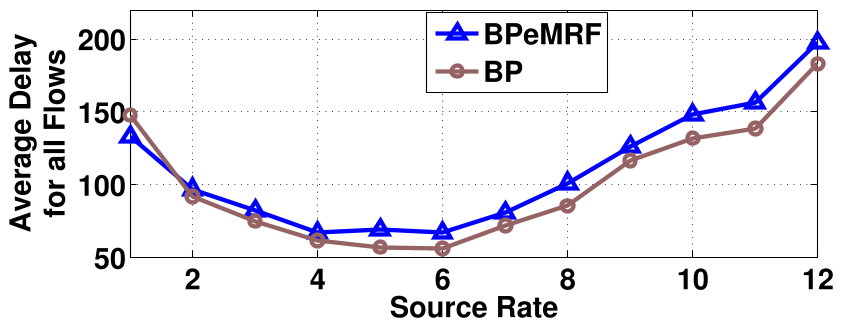 Figure 1: Comparison of the secondary topology before and after Gibbs sampling optimization.
Proving Throughput Optimality
The mathematical core of the paper (Proposition 1) proves that if the MRF parameters are set according to queue differentials, the MRF energy minimization becomes functionally identical to the MWM objective. This provides a theoretical guarantee that BPeMRF is throughput optimal, provided the Gibbs sampler converges.
Experimental Validation: Near-Optimal with Less Complexity
The researchers compared BPeMRF against the traditional MWM-based BP. The results in terms of Sum of Queue Lengths and Average Throughput are striking: the curves almost overlap.
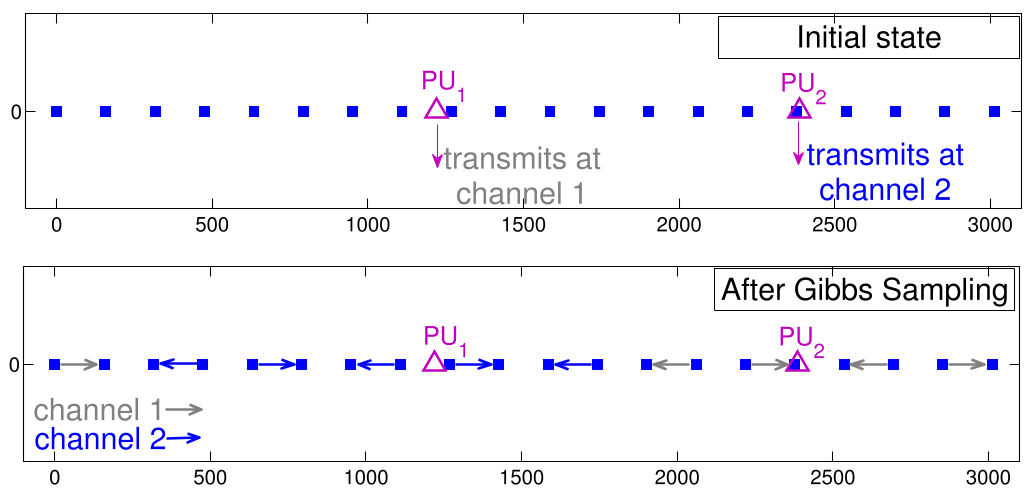 Figure 2: The sum of queue lengths remains stable at higher source rates, matching the performance of the complex BP algorithm.
- Capacity Region: BPeMRF supports source rates up to ~0.8 before instability, matching the theoretical limit.
- Convergence: Using a logarithmic annealing schedule (), the system reaches an optimal state in about 1000 sweeps.
- Throughput/Delay: Across various source rates, BPeMRF maintains service quality (QoS) levels virtually identical to the optimal but centralized solution.
Critical Analysis & Takeaways
The beauty of BPeMRF lies in its stochastic nature. By utilizing Gibbs Sampling, it bypasses the rigid combinatorial requirements of MWM.
Limitations:
- The Gibbs sampler requires a high number of iterations ("sweeps") to guarantee convergence to a global minimum. In ultra-fast fading channels, the channel might change faster than the sampler converges.
- It requires the existence of a centralized spectrum database (common in White Space regulations) to provide initial availability lists.
The Bottom Line: BPeMRF is a major step forward for adaptive QoS in dynamic environments. It shows that by leveraging the spatial dependency modeling of Markov Random Fields, we can design distributed, brain-empowered networks that are as efficient as their centralized counterparts.