
Beyond Binary Trust: Mastering Consensus with Opinion Dynamics and Social Networks
Multi-attribute group decision making with opinion dynamics based on social trust network
This paper introduces a Multi-Attribute Group Decision Making (MAGDM) framework that integrates social trust networks (STN) and opinion dynamics. The core method utilizes trust propagation and self-confidence values to build a Social Weight Influence Matrix (SWIM), achieving superior consensus efficiency in complex scenarios like supplier selection.
TL;DR
Reaching a "soft consensus" in large groups is notoriously difficult because experts aren't just data points—they have social ties and varying levels of self-assurance. This paper presents a breakthrough MAGDM (Multi-Attribute Group Decision Making) model that uses Social Trust Networks (STN) and Opinion Dynamics to simulate how real people change their minds. By accounting for the transitivity of trust and individual self-confidence, the model reaches consensus faster and with less "opinion manipulation."
The Missing Link: Why Traditional GDM Fails
Most Group Decision Making (GDM) models assume experts operate in a vacuum. Even newer Social Network GDM (SNGDM) models often oversimplify trust as a binary "I trust you" or "I don't."
In reality:
- Trust is Transitive: If I trust Alice, and Alice trusts Bob, I likely have a partial trust in Bob, even if we've never met.
- Self-Confidence Matters: A highly confident expert is less likely to be swayed by the group, yet traditional models often ignore this psychological "anchor."
- Willingness to Change: Experts don't just follow "feedback advice" blindly; they are influenced primarily by those they trust.
Methodology: The Three Pillars of STN-MAGDM
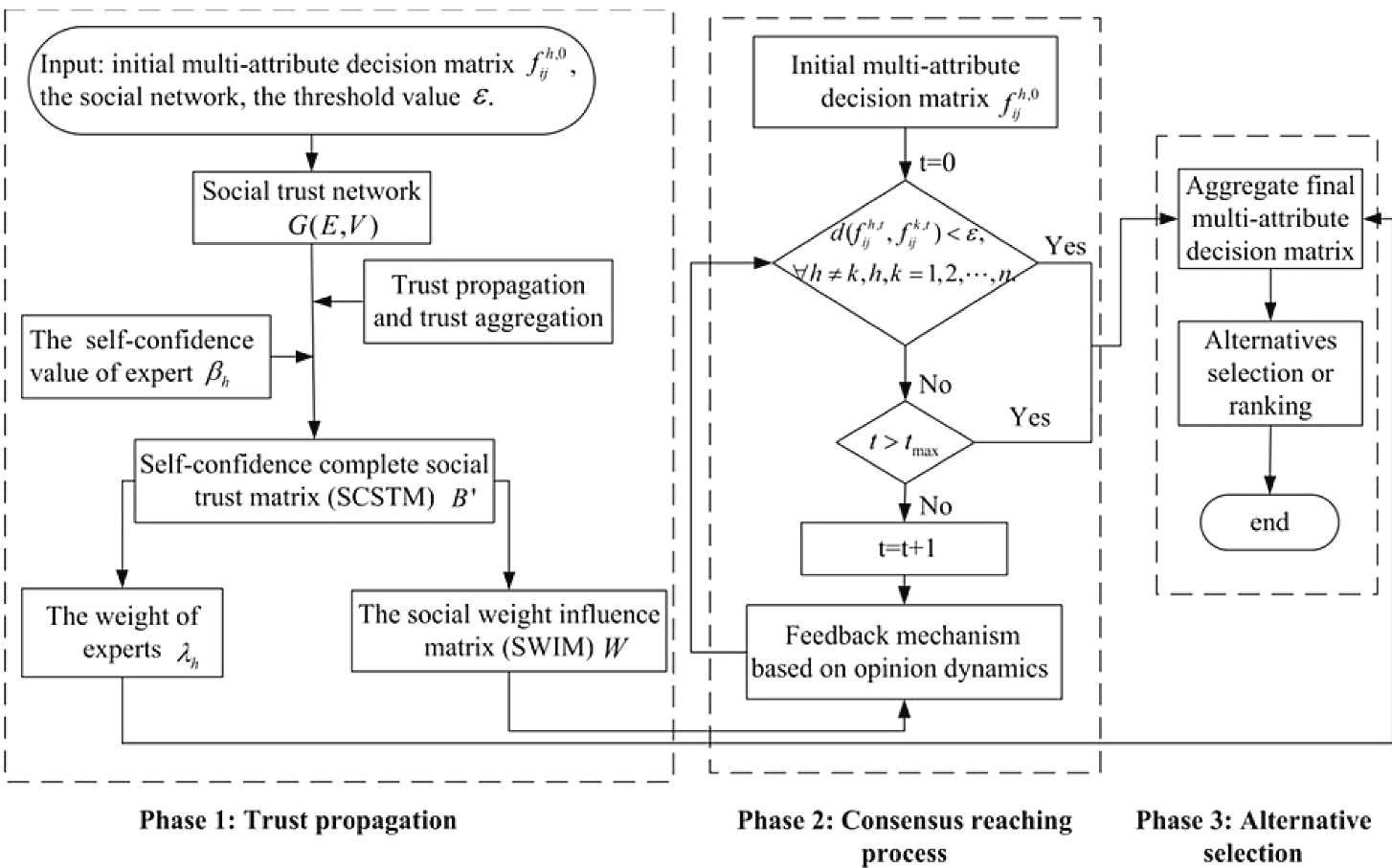
1. Building the Social Trust Matrix (STN)
Since trust networks are rarely complete (not everyone knows everyone), the authors use t-norms (specifically the Einstein product) for trust propagation. This allows the model to estimate "indirect trust" through paths in the social graph.
2. The Weight of Confidence
The study introduces the Self-Confidence Complete Social Trust Matrix (SCSTM). Unlike standard models where weights are assigned externally, here an expert's weight is a hybrid of:
- Objective Trust Score: How much the rest of the group trusts them.
- Subjective Self-Confidence: Their own belief in their expertise.
3. Opinion Dynamics & Feedback
Using a modified DeGroot model, the opinion of an expert at time is calculated as a weighted average of their own current opinion and the opinions of those they trust. This creates a natural "pull" toward consensus without requiring a central authority to force adjustments.
eq h}^{n} w_{hk} imes f_{ij}^{k, t}$$ *(Where $\beta_h$ is the self-confidence value and $w_{hk}$ is the influence weight)* ## Crucial Findings: Efficiency in Numbers The authors validated the model through a supplier selection experiment (evaluating suits based on color, comfort, brand, and style). 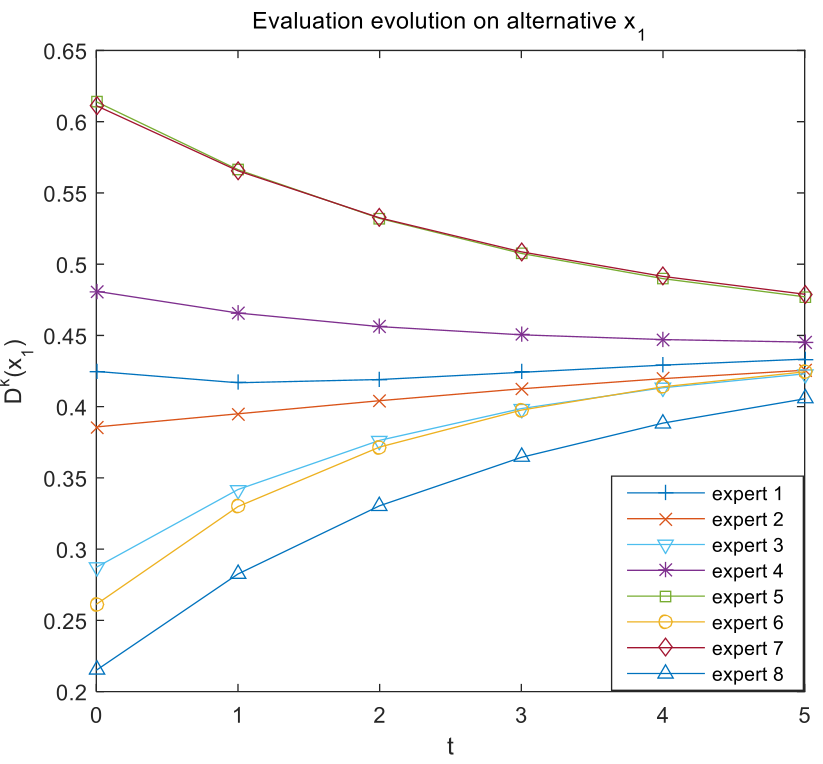 In large-scale simulations (1,000 runs), the results were definitive: * **Higher Success (R)**: The model consistently reaches consensus (Level $\epsilon$) where simpler social network models fail. * **Faster Convergence (N)**: The number of iterations required to align the group dropped significantly. * **Lower Adjusted Degree (AD)**: Experts didn't have to drastically abandon their initial beliefs, preserving the "wisdom of the crowd." 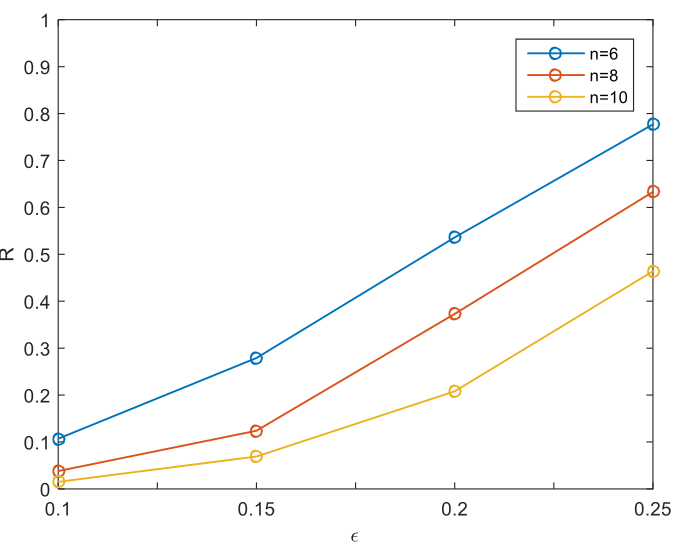 ## Critical Insight: The Future of Dynamic Decision Making The true value of this work lies in its **Inductive Bias** toward social realism. By acknowledging that experts are stubborn (self-confident) and socially influenced, the model becomes a more accurate representation of corporate or political decision-making. However, a limitation remains: the trust values here are static. In real-world long-term projects, trust fluctuates based on the quality of an expert's previous suggestions. The next frontier in this research will likely be **Dynamic Social Networks**, where trust values evolve alongside the opinions themselves. ## Takeaway for the Industry For organizations implementing decision-support systems, this research proves that "forcing" consensus is less effective than "guiding" it through existing trust channels. If you want a group to agree, find the trust leaders and leverage the social graph.