
Unmasking the Invisible: A Multi-Feature Shield Against Stegobot Social Botnets
A multi-feature approach to detect Stegobot: a covert multimedia social network botnet
This paper introduces a multi-feature host-based detection framework for "Stegobot," a stealthy multimedia social network botnet that uses image steganography for covert Command and Control (C&C) communication. By integrating image steganalysis, user profile behavior, and social graph metrics, the proposed system achieves a detection accuracy of approximately 96% across various platforms like Facebook and Flickr.
TL;DR
As social media shifts toward multimedia-first communication, botnets are evolving to hide in plain sight. This paper explores the detection of Stegobot, a malicious network that uses image steganography to mask its Command and Control (C&C) traffic. By fusing image steganalysis, behavioral profiling, and social graph theory, the researchers developed a system that identifies these "invisible" bots with over 96% accuracy.
The Evolution of Stealth: Why Stegobot Matters
Traditional botnets are relatively "noisy." They connect to unusual IP addresses or use specific protocols like IRC or P2P that security systems can flag. However, Stegobot is a different beast. It hijacks the image-sharing behavior of Online Multimedia Social Networks (OSNs).
When an infected bot needs to send stolen data ("botcargo") or receive instructions, it embeds the information inside a standard image (JPEG) using steganography. To a network monitor, it looks like a user simply uploading a vacation photo to Facebook or Flickr. This makes the communication channel probabilistically unobservable.
Methodology: The Trident Attack on Detection
The core insight of this research is that while a bot can mimic one aspect of a human (like profile details), it is nearly impossible to mimic all aspects simultaneously—especially the hidden structural patterns of social interaction. The authors propose a three-pronged feature extraction strategy:
1. Image Content Analysis (The "Micro" View)
Instead of just looking at metadata, the system performs deep steganalysis. It uses Contourlet Transforms and Discrete Cosine Transform (DCT) subband modeling to detect the microscopic statistical distortions caused by data embedding.
2. Profile Behavior (The "Action" View)
Bots typically exhibit specific tell-tale signs:
- High Following/Follower Ratios.
- Repetitive Message Similarity.
- An unusual frequency of URL sharing.
3. Social Graph Metrics (The "Macro" View)
This is the paper's most potent weapon. By treating the social network as a mathematical graph, the authors extract:
- Clustering Coefficient: Measures how interconnected a user's friends are.
- Betweenness Centrality: Identifies nodes that act as "bridges" in the communication chain.
- PageRank: Evaluates the relative influence and interaction levels of a profile.
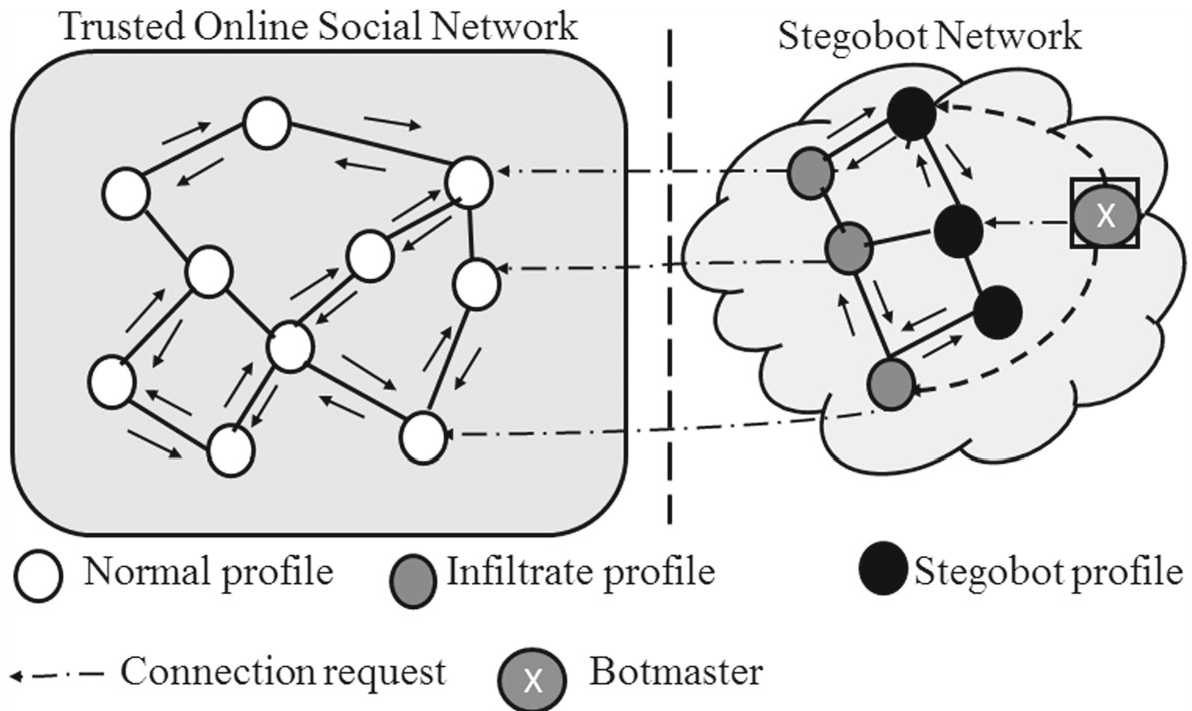 Figure 1: The functional block diagram of the proposed host-based detection method.
Experimental Showdown: Graph Theory Wins
The authors tested their approach using datasets from Barracuda Labs and ICWSM, covering platforms like Facebook and Twitter.
The most striking finding from their Ablation Study (using the test for feature importance) was that Graph Characteristics were the top discriminators. The Clustering Coefficient and Betweenness ranked #1 and #2, respectively, proving more effective than even the best image-based features.
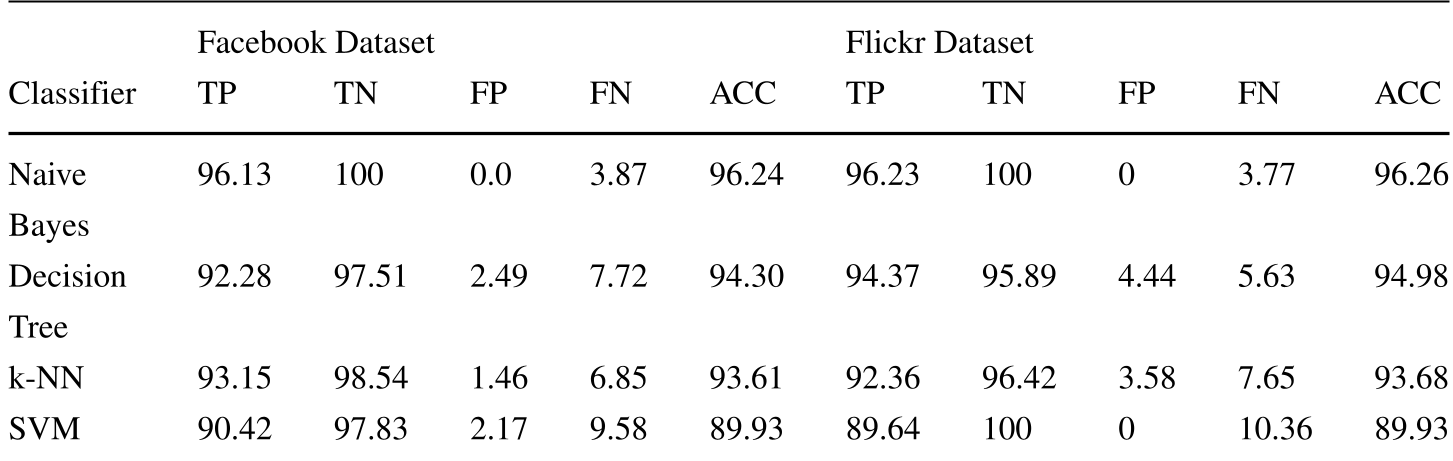 Table 1: Performance of various classifiers. Naive Bayes consistently hit the ~96% accuracy mark.
Key Results:
- Best Classifier: Naive Bayes (Noise-robust and efficient for real-time use).
- Accuracy: ~96.24% on Facebook data.
- Detection Rate Improvement: Combining all three feature sets (Image + Profile + Graph) significantly outperformed using any single view alone.
Critical Insight & Future Outlook
The primary takeaway is that steganography is no longer a perfect mask. While an individual image might pass a filter, the pattern of sharing that image within a social network creates a "topological footprint" that bots cannot easily hide.
Limitations: The study notes scalability challenges. Analyzing millions of images in real-time is computationally expensive. Future Work: We can expect future iterations to utilize Graph Neural Networks (GNNs) and Deep Learning to automate feature extraction, potentially spotting these malicious profiles even before they upload their first "stego-image."
Ultimately, this work serves as a vital blueprint for forensic analysts and OSN providers to secure the next generation of multimedia-heavy social interactions.