
Bridging Cyber and Physical Spaces: A Multi-Modal Approach to Public Safety
Multi-Modal Description of Public Safety Events Using Surveillance and Social Media
This paper introduces a multi-modal framework for describing public safety events by integrating physical surveillance camera data with cyber-space social media "social sensors." By associating these heterogeneous data sources through semantic, spatial-temporal, and visual links, the method achieves a comprehensive event reconstruction that surpasses single-source analysis.
TL;DR
When a public safety event occurs, surveillance cameras often see what happened, but social media users explain why and who. This paper presents a framework that fuses these two worlds. By linking the high-resolution "eyes" of surveillance with the semantic "voice" of social sensors (Weibo/Twitter), the authors create a precise, multi-modal description of emergencies, significantly improving event detection accuracy where traditional computer vision fails.
Problem & Motivation: The Gap Between Video and Context
Public safety management faces a paradox. We have millions of cameras, yet we struggle to understand complex urban emergencies automatically. The authors identify three critical pain points:
- Blind Spots: Cameras cannot cover every corner of a city.
- Semantic Blindness: While a camera can detect "a group of people," it struggles to distinguish between a "festive crowd," a "parade," or a "violent protest."
- Social Media Noise: Social media is pervasive but riddled with "noise"—low-quality images, vague locations, and redundant messages.
The Research Insight here is simple yet powerful: the weaknesses of surveillance (lack of semantics) are the strengths of social media, and the weaknesses of social media (low precision/high noise) are the strengths of surveillance.
Methodology: The Four Pillars of Integration
The framework operates across three layers: the Social/Physical Layer (data collection), the Integration Layer (the core engine), and the Description Layer (output).
1. Semantic Integration (The "What")
The system uses the VIREO-374 detector to label videos and extracts keywords from social media. To bridge them, it employs Pointwise Mutual Information (PMI) via search engine queries to calculate the correlation between a keyword (e.g., "ambulance") and an event type (e.g., "fire").
2. Spatial-Temporal Integration (The "Where" and "When")
Social "check-ins" are aligned with camera GPS coordinates using map distance algorithms. Only videos within a specific time window and radius (e.g., 300 meters) are cross-referenced to filter out irrelevant social noise.
3. Visual Integration (The "Who")
By utilizing SIFT features and saliency analysis, the system matches high-level visual elements—like a suspect's face or a specific car's license plate—captured by a witness's smartphone with the professional surveillance stream.
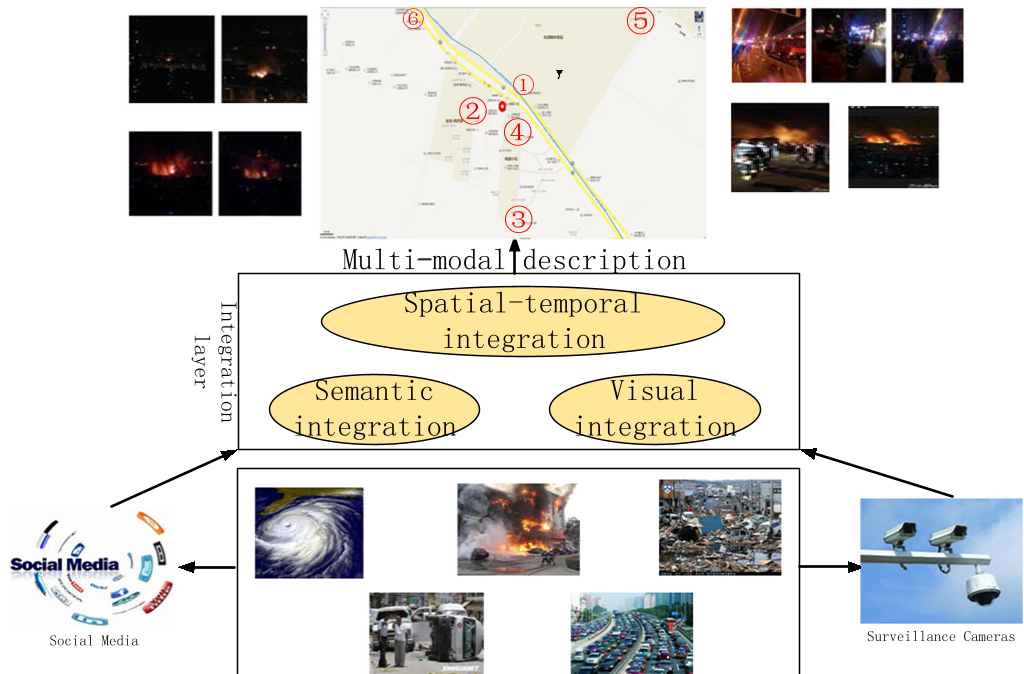 Figure 1: The three-layer integration framework combining social and physical spaces.
Experiments: Proving the Synergy
The authors tested the model on five event types: Fire, Car crash, Parade, Crowd, and Protest.
- The Baseline Problem: Using only surveillance video, the accuracy for "Protest" and "Parade" was abysmal, as these look visually similar to general "Crowds."
- The Multi-Modal Boost: By integrating social media keywords, the system achieved near-perfect classification. The social "voice" provided the missing Inductive Bias needed to categorize human behavior correctly.
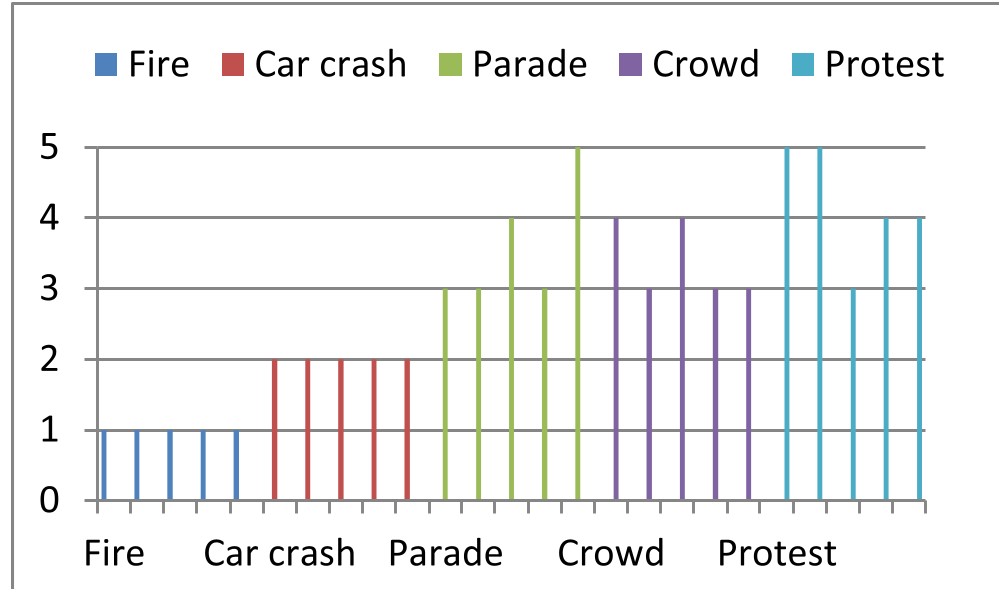 Figure 2: Significant accuracy improvements observed after merging social media semantics with raw video data.
A Real-World Case: The "Sanhao Street" Car Crash
In a case study of a crash in Shenyang, China, the system efficiently:
- Filtered 36 Weibo messages down to 6 high-value reports.
- Identified the event as a "car crash" rather than just a "crowd" by matching the frequency of the word "driver" in social posts with video movement.
- Cross-verified the vehicle's license plate from both a surveillance feed and a user-uploaded photo.
Critical Analysis & Conclusion
Takeaway
This work demonstrates that Mobile Crowd Sensing is not just a digital trend but a functional extension of physical security infrastructure. The integration of cyber-physical data creates a "Global Sensor" that is more resilient than its individual parts.
Limitations
- Latency: The reliance on external search engines (Bing) for PMI calculation might introduce delays in true real-time scenarios.
- Dependence on "Active" Witnesses: If no one tweets about an event, the semantic bridge collapses.
- Ethics: The paper focuses on technical feasibility but leaves open questions regarding the privacy of "social sensors" when their data is funneled into police surveillance systems.
Future Outlook
The next step for this research trajectory lies in Deep Multi-modal Representation Learning (e.g., CLIP-like architectures) that can encode these associations automatically without relying on manual keyword extraction or traditional PMI.