
MCM: Balancing Profit and Battery Life in Mobile Video Crowdsourcing
A Multi-Objective Crowdsourcing Method for Mobile Video Streaming
The paper introduces MCM (Multi-Objective Crowdsourcing Method), a novel framework for mobile video streaming that optimizes the trade-off between provider income and energy consumption. It leverages DBSCAN for spatial clustering of requestors and an Improved Dynamic Programming (IDP) algorithm to generate optimal service strategies.
TL;DR
With mobile video traffic accounting for over 70% of network data, traditional cellular infrastructures are struggling. MCM (Multi-Objective Crowdsourcing Method) introduces a dual-layered optimization approach. By using DBSCAN for spatial clustering and an Improved Dynamic Programming (IDP) algorithm, MCM ensures that mobile video providers maximize their income while minimizing the battery drain—the two biggest hurdles in crowdsourcing adoption.
Problem & Motivation: The Crowdsourcing Dilemma
Mobile users today demand HD and UHD content anywhere, anytime. While crowdsourcing (Device-to-Device communication) can offload traffic from core networks, it creates a conflict of interest:
- Requestors want high-quality streaming without delays.
- Providers want to earn rewards but are terrified of depleting their smartphone batteries.
Previous works like Voronoi-based partitioning often fail to account for the "noise"—isolated requestors that consume too much travel time/energy for too little reward. The authors' insight is that by grouping requestors spatially and optimizing the sequence of service, providers can achieve the "Goldilocks" zone of high revenue and sustainable energy usage.
Methodology: The MCM Core
The MCM framework operates in three distinct phases:
1. Spatial Filtering via DBSCAN
Unlike Voronoi diagrams that partition the entire space, MCM uses DBSCAN to identify core clusters of requestors. This allows the system to ignore "noise requestors"—those too far away to be served profitably. This prevents providers from wasting energy on long-distance travel.
2. Fine-Grained Selection with IDP
Once clusters are identified, the system must decide the order of service. The Improved Dynamic Programming (IDP) algorithm calculates the potential income based on service time and data volume. It doesn't just find one optimal path; it tracks a set of top-tier strategies () to allow for multi-objective evaluation.
 The IDP formula used to maximize income () at given time intervals.
3. Multi-Objective Evaluation
Finally, MCM uses Simple Additive Weighting (SAW) to normalize income and energy consumption. This allows the system to select the strategy that provides the best "bang for the buck" for the provider.
Experiments & Results
The researchers tested MCM against three baselines: VDP (Voronoi+DP), DDP (DBSCAN+DP), and VIP (Voronoi+IDP).
- Income Superiority: MCM consistently outperformed VDP and DDP across all scales, showing that the "Improved" part of IDP effectively captures more high-value service windows.
- Energy Efficiency: While MCM has slightly higher absolute energy consumption (because it serves more requests and stays "active" longer), its Efficiency (Energy per Dollar) is superior.
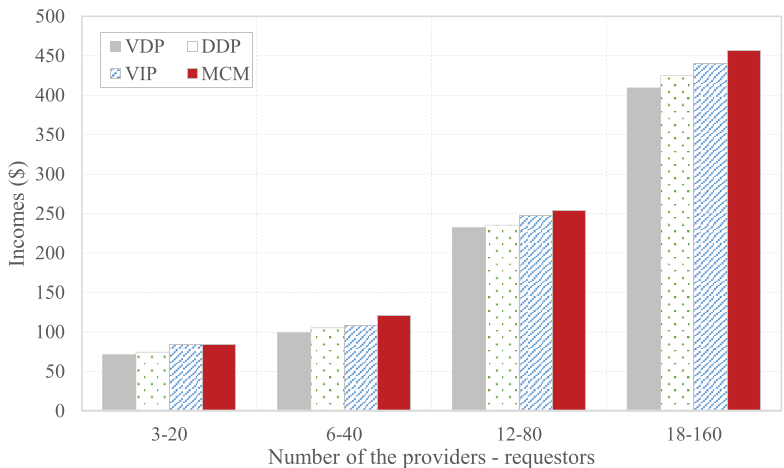 Figure 1: MCM consistently secures higher rewards for providers compared to legacy methods.
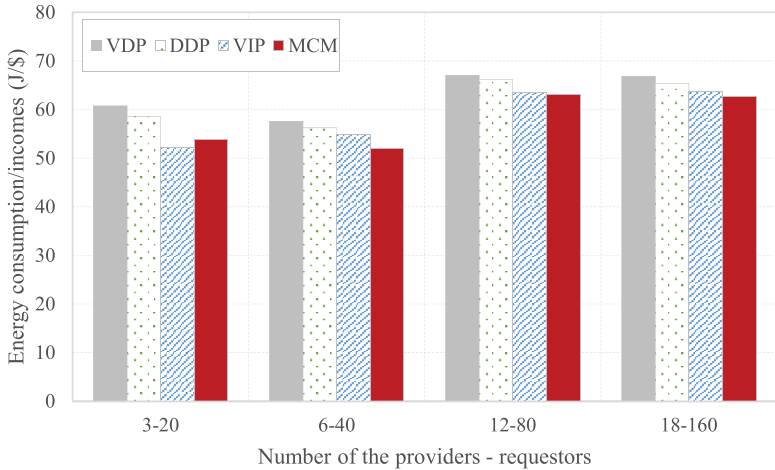 Figure 3: As the network scales, MCM becomes significantly more cost-effective, effectively lowering the "cost" of earning a dollar.
Critical Analysis & Conclusion
Takeaway
The MCM method proves that crowdsourcing is not just a routing problem, but an economic and physical trade-off. By filtering out unprofitable requests via clustering and fine-tuning service schedules via IDP, MCM makes crowdsourcing a viable "gig economy" model for mobile users.
Limitations & Future Work
One limitation is the assumption of static or predictable movement for requestors during the service window. Future iterations could integrate Mobility Prediction models to handle users moving at high speeds (e.g., in cars or trains). Additionally, exploring the "cost-efficiency" of different clustering methods beyond DBSCAN could further refine the system's overhead.
In the era of 5G and beyond, MCM provides a blueprint for decentralized, sustainable video delivery.