
Ensemble Age Estimation: Bridging the Racial Gap in Facial Analysis
Multi-race age estimation based on the combination of multiple classifiers
This paper introduces a robust multi-race age estimation framework that combines Neural Networks (NN) with the Least-Squares Probabilistic Classifier (LSPC). By ensemble-weighting regression and classification outputs, the method achieves stable age prediction across diverse ethnic groups including Caucasian, African American, Hispanic, and Asian.
Executive Summary
TL;DR: The authors propose a hybrid approach combining the representation power of Neural Networks with the statistical robustness of the Least-Squares Probabilistic Classifier (LSPC). By integrating regression and classification scores through a weighted ensemble, the system achieves stable age estimation across five distinct racial categories, effectively overcoming the "Long Tail" problem of age-bracket distribution.
Academic Positioning: This work serves as a practical bridge between traditional statistcal learning (kernel methods) and modern deep learning (NN features). It addresses the "In-the-Wild" challenges of data imbalance and ethnic diversity, which are often overlooked in laboratory-constrained SOTA benchmarks.
The Motivation: Why Age Estimation Varies Across Races
Estimating age is not just a computer vision problem; it is a biological one. Different ethnicities exhibit varying skin aging patterns, bone structure changes, and growth rates. Most prior works achieved success on "homogeneous" datasets (e.g., all Japanese or all Caucasian), but these models suffer significant performance degradation when deployed in global environments like international airports or shopping malls.
The core difficulty lies in Data Imbalance. In a typical real-world dataset, samples for "middle-aged" adults are abundant, while infants and the elderly are scarce. Neural networks tend to overfit the majority class, leading to poor generalization in the "younger" (-19) and "older" (50+) categories.
Methodology: The Synergy of NN and LSPC
The authors' breakthrough is not in a new neural architecture, but in how the outputs are processed.
1. The LSPC Advantage
The Least-Squares Probabilistic Classifier (LSPC) is the "secret sauce." Unlike many classifiers that require iterative optimization (like SGD), LSPC has a global optimal solution that can be computed analytically.
- Decoupled Learning: Because the solution can be computed in a class-wise manner, the model remains stable even if one age group has 10x more samples than another.
- Feature Refinement: The authors take the 100-dimensional embeddings from the last hidden layer of a pre-trained NN and feed them into the LSPC. This treats the NN as a feature extractor and the LSPC as a robust probabilistic head.
2. Weighted Score Fusion
The system generates four distinct scores and blends them:
- NNR (Regression): Predicts a continuous value.
- NNC (Classification): Predicts discrete age brackets.
- NNR+LSPC & NNC+LSPC: The hybridized models.
To combine these, the authors use a clever Gaussian-shaped scoring for regression, where the variance () is adjusted based on human perception—reflecting the reality that it is harder to guess a 60-year-old's age accurately than a 5-year-old's.
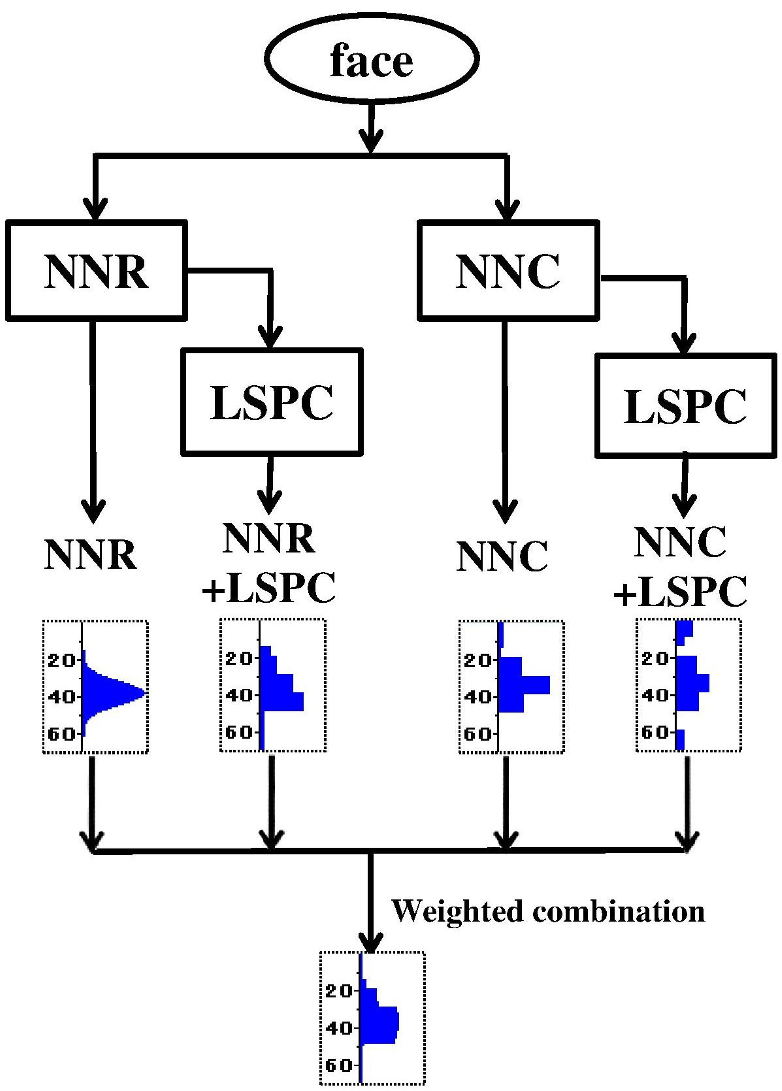 Fig 1: The system architecture showing the extraction of NN features followed by LSPC classification and weighted ensemble fusion.
Experiments & SOTA Comparison
The method was tested on a massive in-house dataset combined with public sets like FG-NET and MORPH, covering Caucasians, Asians, African Americans, Hispanics, and Middle Eastern individuals.
Key Findings:
- Imbalance Mitigation: Plain NNR was accurate for middle-aged subjects but failed for the edges of the age spectrum. Adding the LSPC layer (NNR+LSPC) significantly flattened the error curve across all age groups.
- The Winning Weights: Interestingly, the optimization process assigned the highest weights (0.6 - 0.7) to the NNR+LSPC predictor, confirming that analytical probabilistic fitting is superior to standard backpropagation for the final classification stage in imbalanced tasks.
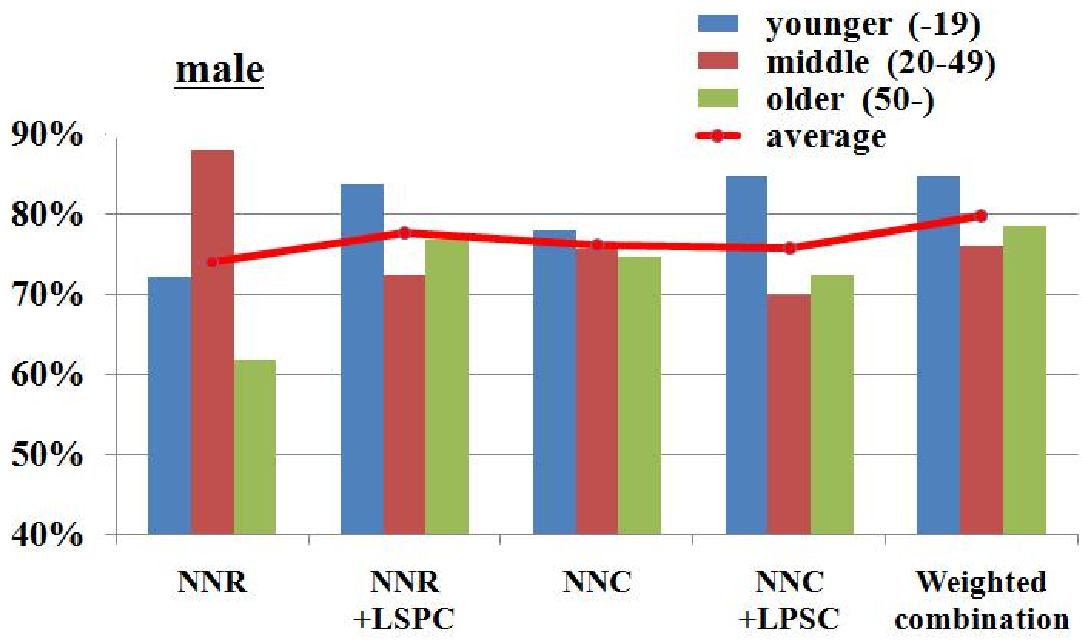 Fig 2: Performance comparison across age groups. Note how the "Combined" model stabilizes performance where individual methods dip.
Critical Analysis & Conclusion
Takeaway: This paper demonstrates that in "noisy" and "imbalanced" real-world scenarios, an ensemble of different learning paradigms (Regression vs. Classification, Iterative vs. Analytical) is more resilient than any single model.
Limitations:
- The system currently assumes gender is correctly identified beforehand (separate models for male/female). In a real deployment, gender misclassification would cascade into age estimation errors.
- The reliance on "in-house" data makes literal reproduction difficult, though the LSPC theory is mathematically sound and applicable to any feature set.
Future Outlook: The next logical step, as suggested by the authors, is Race-Aware Estimation. By first classifying the race and then using race-specific age experts, the system could account for the biological nuances of aging even more precisely.