
Multi-Dimensional Fusion: Elevating Social Recommendations Beyond Simple Similarity
A ultidimensional omprehensive Recommendation Method Based on Social Network
This paper introduces a Multi-dimensional Comprehensive Recommendation Method based on social networks, integrating user tightness, entity similarity, and user interest. By combining these three dimensions, the method achieves superior performance on the Douban dataset compared to traditional collaborative filtering and content-based approaches.
TL;DR
This research addresses the shortcomings of traditional recommendation algorithms by introducing a Multi-dimensional Comprehensive Recommendation Method. By fusing User Tightness (how close friends are), Entity Similarity (how items relate), and User Interest Degree (behavioral weighting via PageRank), the authors provide a more granular and effective way to suggest products within social networks. Tested on Douban data, the model consistently outperforms standard hybrid and collaborative filtering methods.
Problem & Motivation: The Gap in Social Context
Most existing recommendation engines are "one-dimensional." Content-based systems look at what you liked before; Collaborative Filtering looks at what similar people liked. However, in a social network, these isolated views miss a critical factor: the influence of the social circle.
Traditional methods struggle because they don't account for the strength of social ties or the nuance of user interest. Simply being a "friend" doesn't mean you share the same taste in every product category. The authors' insight is that a truly effective recommendation must balance the relationship between users, the properties of the items, and the specific historical interest levels of the target individual.
Methodology: The Three Pillars of Precision
The core contribution of this work lies in its multi-faceted mathematical modeling. Instead of a single similarity score, it builds a composite recommendation engine based on three distinct calculations:
1. User Tightness (Social Closeness)
This component moves beyond binary friendship. It evaluates:
- Mutual Reliability: Based on comments, forwards, and "likes" (direct interactions).
- Interaction Frequency: Analyzes how often and for how long two users interact.
- Common Neighborhoods: Uses community scale to determine intimacy—smaller, denser communities imply higher trust.
2. Entity Similarity (Hierarchical Item Context)
Unlike simple tag matching, the system uses a tree model to calculate Type Similarity:
- It measures the "distance" between categories in a taxonomic tree.
- It incorporates Price Similarity using elasticity coefficients and Quality Similarity based on normalized community scores.
3. User Interest Degree (PageRank Weighting)
Perhaps the most innovative part is the interest calculation. The authors treat different user behaviors (browsing, clicking, purchasing) as nodes in a graph. They use a PageRank-style algorithm to assign weights to these behaviors; for example, a "purchase" or "review" is more influential than a mere "view," and its weight is adjusted based on its relationship to other behaviors.
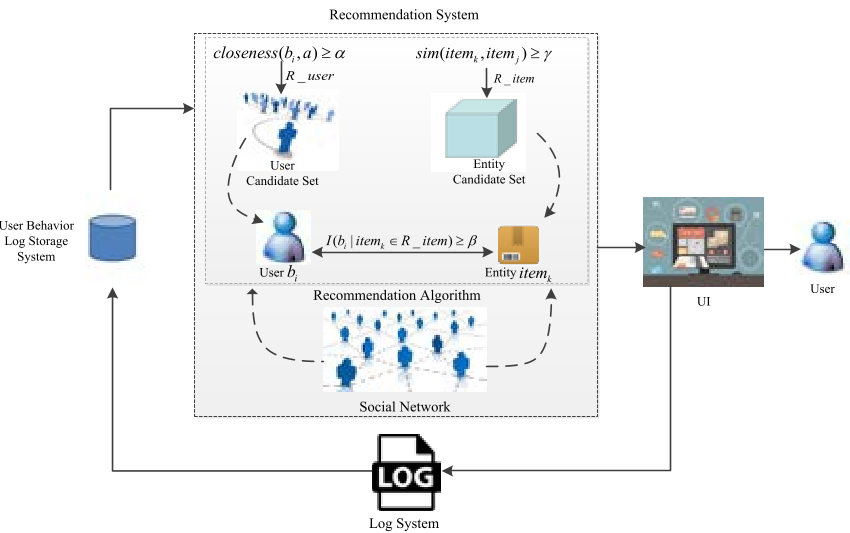 Figure 1: The architecture demonstrates the flow from user behavior logs to the multi-dimensional calculation engine.
Experiments & Results
The authors validated their model using a dataset of 8,500 entries from Douban Reading, a popular Chinese social book-reviewing site.
Key Performance Findings:
- Optimized Thresholds: Through ablation studies, the authors identified optimal thresholds (α=0.4, β=0.6, γ=0.4) where the balance of precision and recall was strongest.
- Comparison with SOTA: The proposed method achieved an F1-measure of 0.217, significantly higher than Content-Based (0.205) and Collaborative Filtering (0.199).
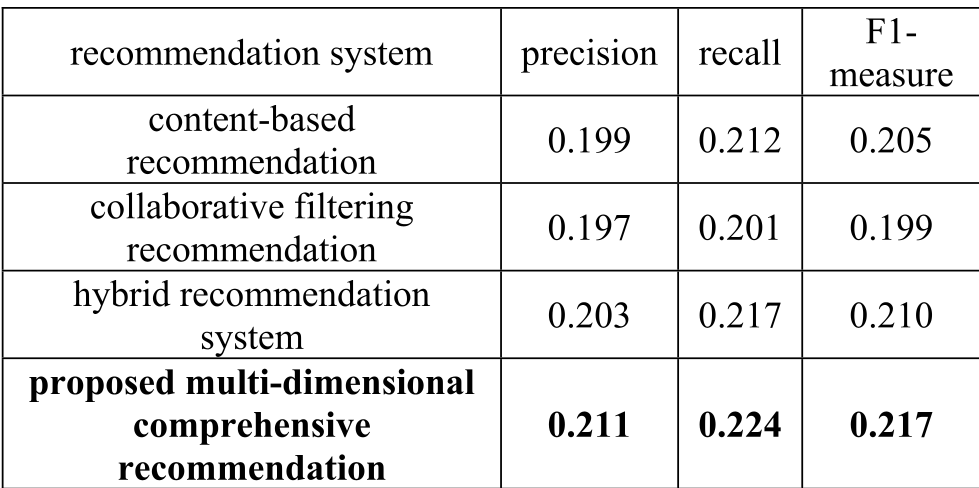 Table 1: Performance metrics showing the proposed method leading across Precision, Recall, and F1-measure.
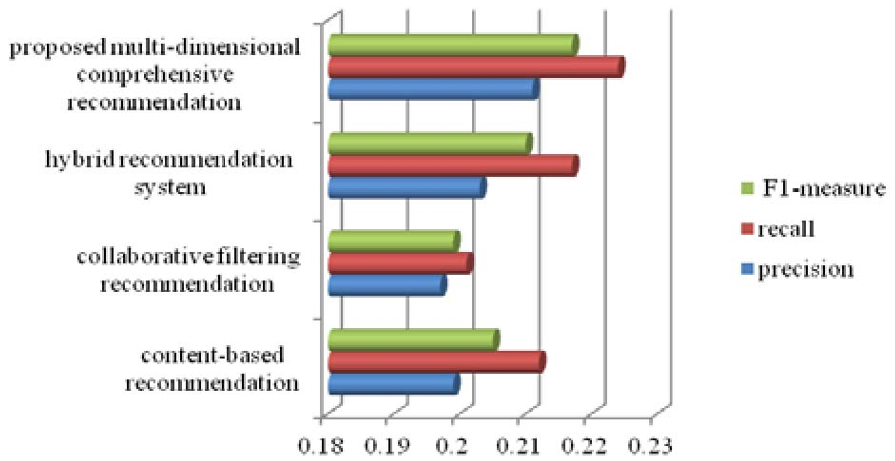 Figure 2: Statistical visualization of the performance gains over traditional models.
Critical Analysis & Conclusion
The value of this research lies in its holistic approach. While many papers focus solely on social graphs or item embeddings, this work recognizes that the e-commerce experience is a trinity of who you know, what the item is, and how you act.
Limitations:
- Sparsity: While the model performs well on active datasets like Douban, it may still face challenges in extremely sparse networks where interaction frequency is low.
- Static nature: The current model focuses on historical data; incorporating real-time social "trends" could be a future enhancement.
Future Outlook:
The authors plan to extend this research by merging data from distinct platforms (e.g., combining a social media site with an external e-commerce giant). This would test the model's ability to handle cross-domain knowledge transfer, a major frontier in modern AI recommendation research.