
Human-Centric Environmental Intelligence: Beyond Simple IoT Sensors in Smart Cities
A multidimensional human-centric framework for environmental intelligence: Air pollution and noise in smart cities
The paper proposes a holistic, human-centric framework for monitoring urban air quality and noise by integrating heterogeneous data sources. The system, involving static and mobile IoT sensors combined with citizen-driven crowdsourcing, aims for high-precision micro-scale environmental intelligence in smart city environments.
TL;DR
Researchers from the University of Patras have unveiled a holistic framework that bridges the gap between hard IoT data and human psychology. By combining a hybrid network of static/mobile sensors with crowdsourced "well-feeling" reports, the system provides a 360-degree view of how air pollution and noise impact city life, moving beyond mere measurement toward actionable personalized health insights.
Context & Motivation: The Gap in the Smart City
Current smart city initiatives often treat "environment" and "citizens" as two separate entities. We have sensors measuring PM2.5 levels, and we have healthcare systems treating asthma, but we rarely close the loop.
The authors argue that traditional monitoring is spatially restricted (too few stations) and experientially blind (it doesn't know how you feel). High pollution levels might cause localized aggression, anxiety, or altered commuting routes—data that a standard sensor station can never capture. The motivation here is to create a "techno-social" hybrid that tracks both the physical pollutant and the psychological response.
Methodology: The Hybrid Architecture
The core of this work is its three-layer architecture (Inputs, Storage/Processing, and Dissemination).
1. Hybrid Sensing Strategy
The system doesn't just rely on expensive fixed stations. It uses:
- Static Nodes: High-precision "anchor" units at bus stations.
- Mobile Nodes: Battery-powered, energy-harvesting units mounted on public transport.
- The Calibration Trick: When a bus (mobile node) passes a station (static node), it syncs data and self-calibrates via BLE/IEEE802.15.4, ensuring low-cost mobile sensors stay accurate.
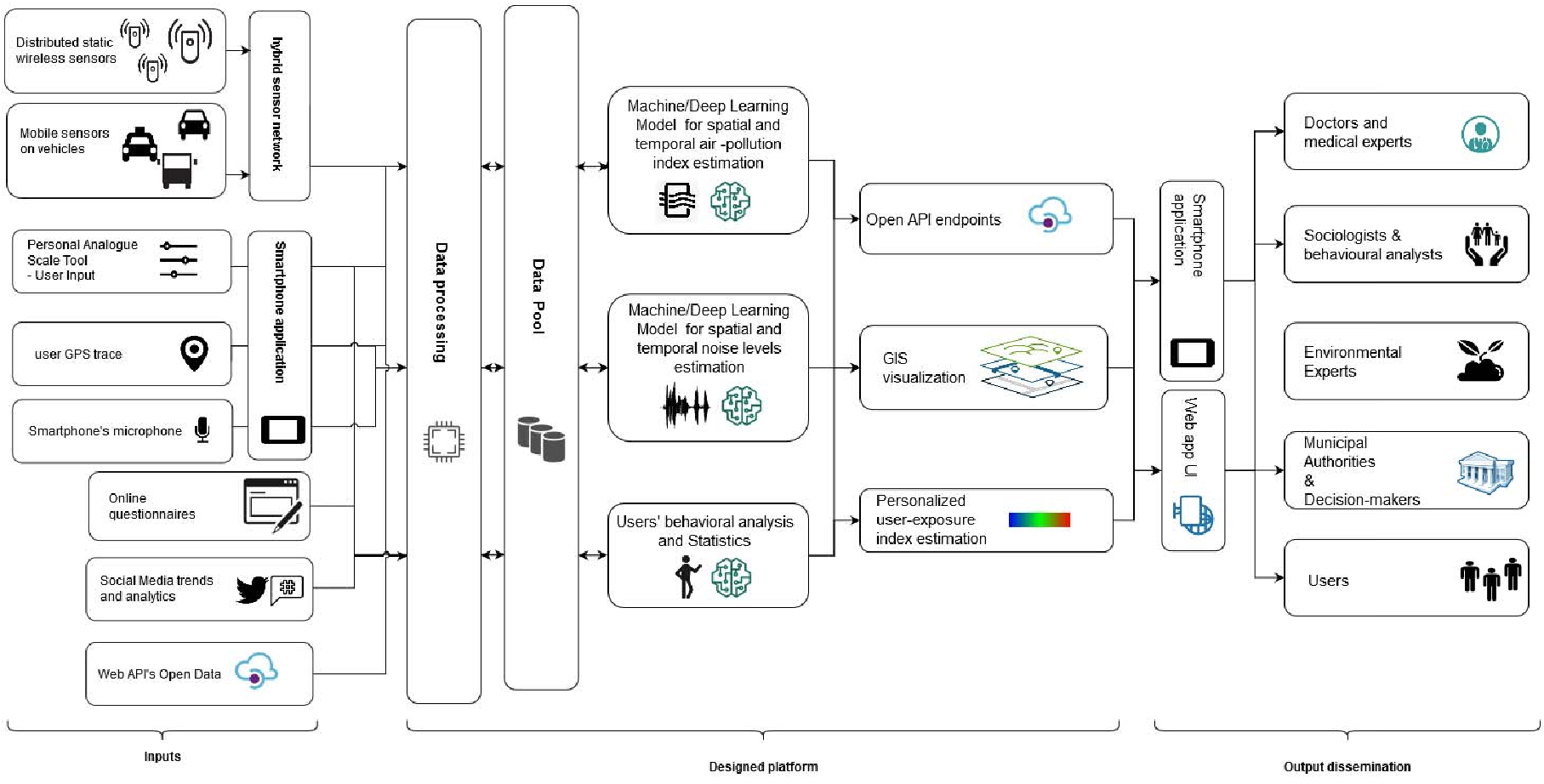 Fig 1: The multi-layered reference architecture showing the fusion of sensor data and human input.
2. The Human Factor (Crowdsensing)
Through a dedicated mobile app, users provide a Personal Analogue Scale (PAS). This isn't just "Is it noisy?"; it tracks mood, anxiety, and "well-feeling." This subjective data is fused with random microphone sampling (anonymized to protect privacy) to create a "subjective rank" for city areas.
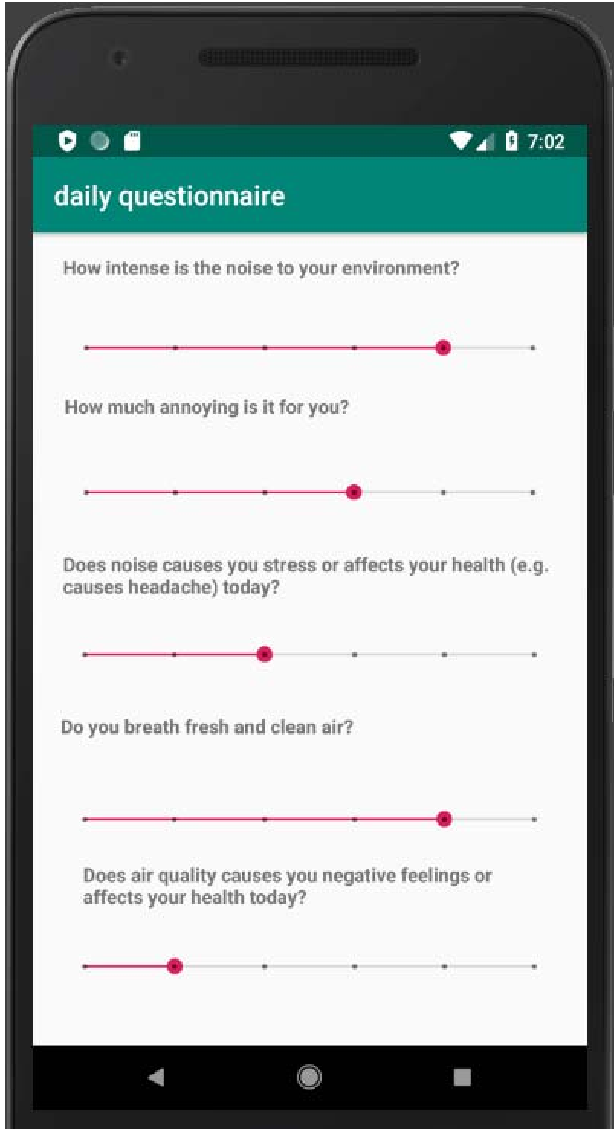 Fig 2: Participatory data collection app tracking physical and psychological state.
Experiments & Intelligence: Mapping the Invisible
To turn raw data into intelligence, the framework employs Land Use Regression (LUR). This model correlates pollutant concentrations with urban features (road length, population density, meteorology).
The mathematical heart of the system is the Personalized Exposure Score: By mapping an individual's trajectory against the dynamic pollution heatmap, the system calculates actual "inhaled" risk rather than just ambient levels.
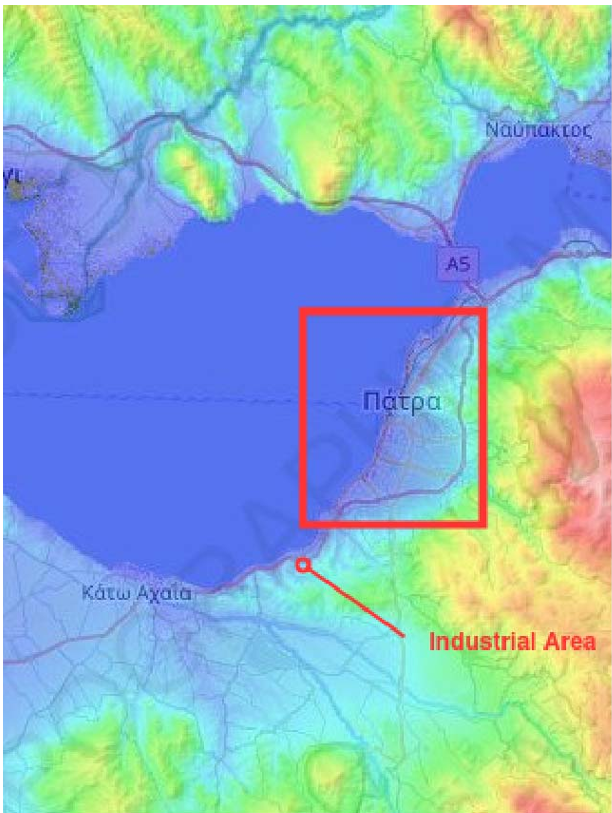 Fig 3: Example output: A spatiotemporal heatmap of Patras city center.
Critical Insight & Conclusion
The true value of this framework lies in Dissemination. It isn't just for researchers; it targets three specific groups:
- Medical Experts: Tracking patient exposure to trigger preventative asthma care.
- Policy Makers: Identifying where anti-noise walls or Low Emission Zones (LEZ) are actually needed based on human distress.
- Citizens: Empowering them to choose "healthier" routes via GIS-based navigation.
Limitations: The system's success depends heavily on "citizen engagement." If users don't fill out the PAS questionnaires, the behavioral layer collapses. Future work must bridge the "incentive gap"—finding ways to keep users participating without "survey fatigue."
In summary, this paper moves the needle from "Smart Cities" to "Intelligent Environments" by treating the human citizen as a sophisticated, feeling sensor.